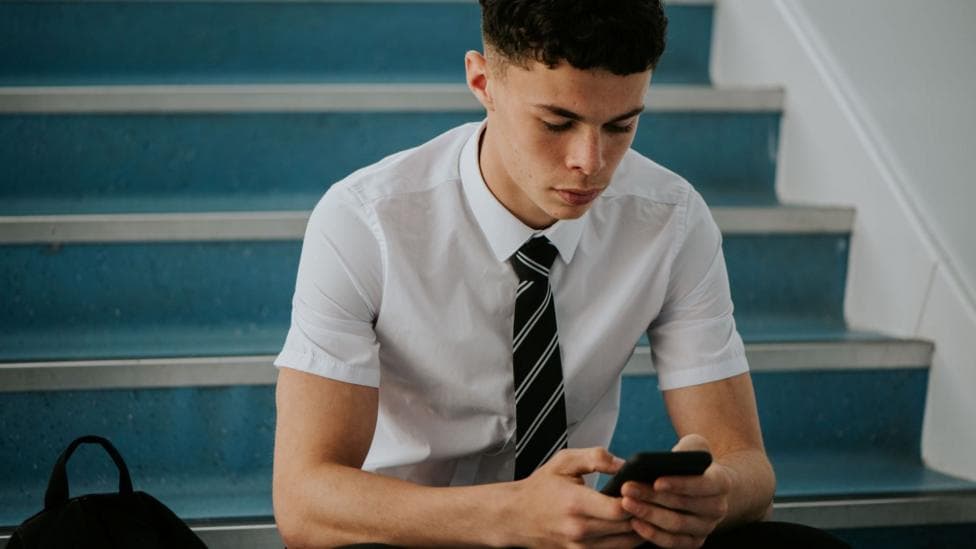
Northern Ireland is exploring whether to introduce legislation that would ban smartphones in schools, mirroring action taken earlier this year in England.
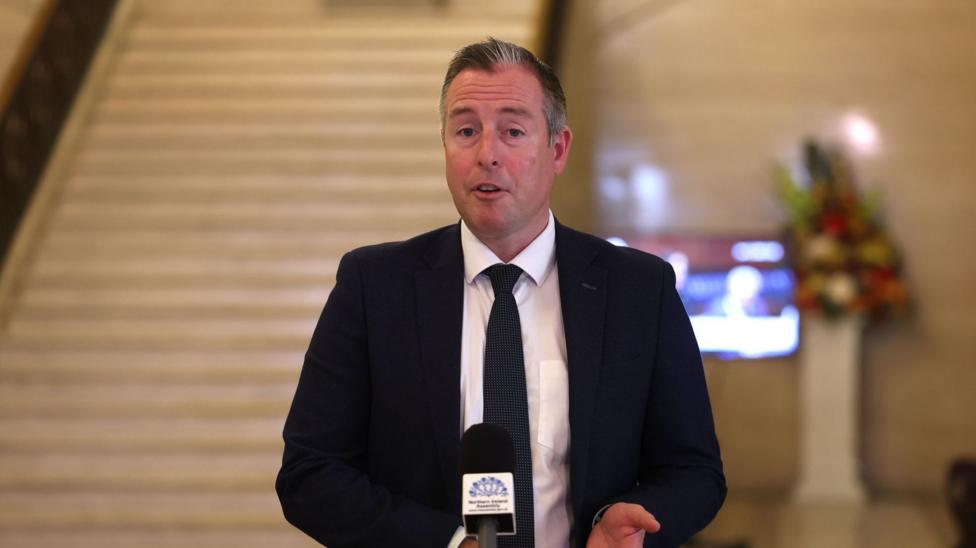
Education Minister Paul Givan is conducting a consultation on the proposed law. He emphasised that the initiative is not "anti-technology" but rather focused on creating schools that are "safe and supportive" environments where pupils can "focus on learning." Ahead of the new academic year, he intends to distribute revised guidance to schools on managing mobile phone use.
Several schools in Northern Ireland have already participated in a pilot initiative requiring pupils to place their phones in magnetic pouches upon arrival. According to the Department of Education, the pilot involved more than 8,000 young people across nine schools, with five institutions scheduled to launch the scheme from September 2025. The Department confirmed that the pilot used lockable fabric pouches with a magnetic latch, while allowing flexibility for pupils requiring access for health, disability or other needs. The scheme cost £250,000 across the nine participating schools, a figure that has drawn criticism.
Research conducted by specialists from Kings College London into the pilot scheme revealed that the restrictions produced measurable improvements in classroom behaviour. Teaching staff reported that phone restrictions reduced classroom disruption and enhanced interaction among pupils. Pupils themselves held more varied perspectives, with younger students demonstrating greater willingness to comply with the ban than their older peers.

Stephen Moore, principal at Friends' School, stated that the school-wide ban had encouraged "young people to interact with each other." He observed:
I think there are very few schools that implement a ban on phones and then go back to having phones. I think the benefits far outweigh any disadvantages there might be.Moore further noted:
I think pupils have been quite receptive to the new rule and we've certainly encouraged them to interact with adults and sort problems out for themselves.
The Kings College London research team identified "negligible changes" in overall pupil wellbeing among participants, though the study documented "some decrease in self-reported anxiety and depression symptoms." Researchers recommended that teachers and school staff limit their own smartphone use during school hours to serve as role models for pupils. They also suggested that schools should explore permitting older pupils to use phones for educational purposes.
What do school leaders say about phone use?
Some school principals have characterised smartphone use in schools as the "most serious issue facing schools in a generation." One head teacher stated that smartphone use was "affecting the development of children's brains as well as their well-being." In recent years, individual schools have developed their own policies on the matter, with many restricting phones during class time and requiring parents to contact reception if they need to reach their children. Several institutions have also explicitly banned smartwatches and smart glasses.
What is the government's next step?
Givan stated that although many schools maintain robust phone policies,
I believe we now need a stronger and more consistent approach across our education system.He announced that the consultation on potential legislation would run for 12 weeks, concluding on 19 November. In his statement, he said:
Before any final decisions are taken, it is important that parents, pupils, teachers and school leaders have an opportunity to have their say and I would therefore encourage anyone with an interest to respond to the consultation. My aim is simple. I want schools to be places where children and young people can focus on learning, enjoy healthy friendships and thrive in a safe and supportive environment.
Further details on the proposal are scheduled to be published on the Department of Education's website on Thursday. The precise mechanics of any resulting law remain unclear at this stage.
How does this compare to other parts of the UK and Ireland?
England has recently implemented a legal ban on smartphones in schools. The UK government made its mobile-phone-in-schools guidance statutory on 29 June 2026, with schools expected to follow it from 1 September 2026. Scotland and Wales do not have legal bans but do permit head teachers to implement phone restrictions at their discretion. In the Republic of Ireland, state-recognised schools are required to ban pupils' use of and access to personal mobile phones throughout the school day.
Northern Ireland's approach follows England's enforcement of a smartphone ban in schools, which made schools legally responsible for phone-free days. The consultation also reflects broader UK efforts to address mobile phone use in educational settings, with Wales encouraging headteachers to restrict mobile phone use during school hours and Edinburgh banning mobile phones in secondary schools from August.
Key Facts
- The consultation on a potential smartphone ban in Northern Ireland schools will run for 12 weeks, concluding on 19 November
- A pilot scheme involving more than 8,000 pupils across nine schools used lockable magnetic pouches and showed improvements in classroom behaviour and pupil interaction
- Research from Kings College London found some decrease in self-reported anxiety and depression symptoms among participating pupils
- England's legal ban on smartphones in schools came into force on 29 June 2026, with schools required to comply from 1 September 2026
- Scotland, Wales and the Republic of Ireland have different approaches, ranging from guidance to mandatory bans, but none currently match England's statutory requirement