Smartphone Ban Takes Effect in English Schools
From Monday, 29 June, a ban on smartphones in schools across England will be legally enforced, making individual schools and trusts responsible for maintaining a phone-free environment throughout the school day.
This new regulation is distinct from the recent government announcement banning social media use for under-16s. Officials have stated that the legislation will provide "legal force to what schools are already doing in practice."
What changes will this bring, and how will it affect pupils, parents, and teachers?
Can I Still Bring My Phone to School?
Whether students can bring phones to school depends on each school's specific rules, but in most cases, the answer is likely yes.
Many schools currently allow students to bring phones, provided they are not used, seen, or heard during the school day.
Earlier this year, Education Secretary Bridget Phillipson encouraged head teachers to adhere to guidance recommending that "all schools should be smartphone-free environments by default."
This guidance has now been codified into law through the Children's Wellbeing and Schools Act, passed in April, legally obliging head teachers to comply.
Where Will Phones Be Stored During the School Day?
Practices vary widely among schools, though nearly all already implement some form of phone restriction.
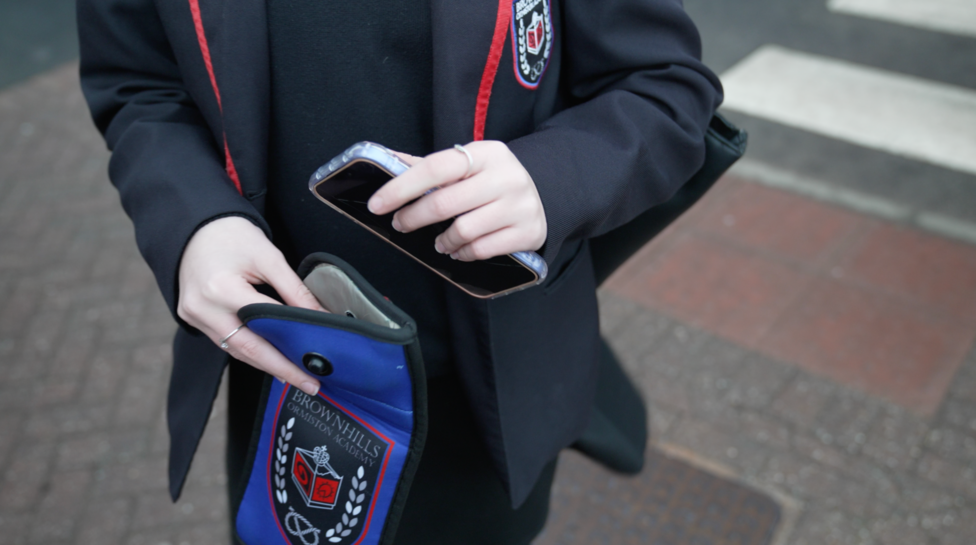
Some schools provide special lockers for phones, while others use sealed pouches to secure devices.
For example, a school in Hampshire permits only "brick" or "dumb" phones, which can make calls or send texts but have very limited internet access.
In Essex, a school recently invested in magnetically locked pouches to replace a previous policy of simply keeping phones out of sight. Students requiring phone access during the day for medical reasons, such as managing an insulin pump, use Velcro-sealed pouches instead.
Staff and pupils at a school in Hull report that such pouches have made a "phenomenal difference."
Other schools operate "no see, no hear" policies, allowing phones to remain with students as long as they are stored away and not visible or audible.
The government has emphasized that head teachers understand their schools and pupils best and may select the method of enforcing the phone ban that suits their context.
However, some unions advocate for additional government funding to support enforcement beyond "no see, no hear" policies, such as funding for lockers, secure storage areas, or phone pouches.
Pepe Di'Iasio, general secretary of the Association of School and College Leaders, stated: "More funding is needed to support bans beyond 'no see, no hear', to help pay for things like lockers, secure storage areas or phone pouches."
Why Is This Ban Being Implemented?
The issue of smartphone use in schools has been under political debate for several years.
The Conservative Party campaigned for an outright ban, while the Liberal Democrats claimed they had been "dragging the government" towards introducing such a ban before it was announced in April.
The Labour government had previously argued that a statutory ban was unnecessary since schools were already following the guidance.
At a school in Barnsley, phones are collected during morning form time and returned at the end of the day.
Maths teacher Bill Morris, 26, views the ban positively, believing it encourages more conversation among pupils and fosters real-world communication skills.
He also believes the ban helps students develop independent thinking and reduces overreliance on Google.
Mr. Morris notes that the lockers used at his school create a better environment compared to his own school experience, where phones were allowed during breaks and lunchtime.
He supports the government's plans to ban social media for under-16s outside school hours, citing concerns about the negative effects of doomscrolling and short-form videos.
He added, "One of my pupils had arrived at school very tired recently, having been on TikTok until 03:00."

What Are the Rules for Teachers' Phones?
The government's guidance also addresses staff phone use.
It advises that school staff should avoid using their personal phones for non-school-related reasons in front of pupils during the school day.
This measure aims to "empower staff" to better enforce school expectations among pupils.
The guidance specifies circumstances where phone use by teachers may be appropriate, such as issuing homework, rewards, or sanctions, and for accessing secure accounts via two-step verification.
How Does This Compare Across the UK?
Education policy is devolved, so approaches to phone use in schools differ across the UK.
The Scottish government introduced guidance in 2024 allowing head teachers to implement phone bans in schools.
Following consultation, all state secondary schools in Edinburgh will ban phones after the summer holidays.
In Wales, there is no national ban, but head teachers have the authority to restrict or ban device use in their schools.
Welsh Education Minister Anna Brychan has pledged to establish "clear national expectations on how mobile phones are used in schools."
In Northern Ireland, a phone-free pilot scheme involving nine schools concluded earlier this year, with a report expected soon.
- Phones to be banned in schools by law in England under government plans
- Make sure pupils don't ever use phones at school, Phillipson tells teachers