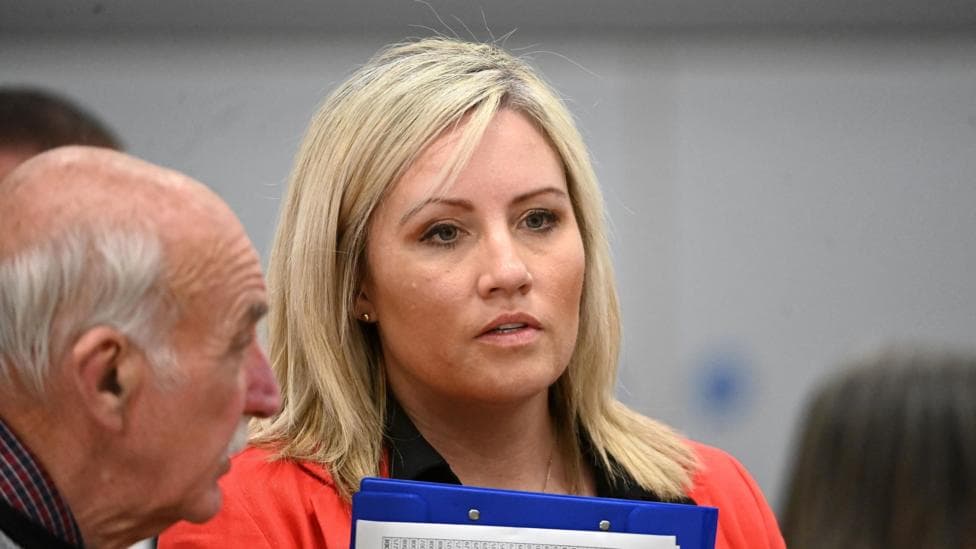
A Democratic Unionist Party assembly member has added her voice to calls for Stormont's First Minister Michelle O'Neill to step down, citing what she describes as broken commitments to hold the Sinn Féin leader accountable over her role in the Drumcree parade dispute. Diane Forsythe said the "profound consequences" pledged in response to O'Neill's involvement in protests must be honoured, echoing concerns raised by DUP MP Carla Lockhart, who according to BBC News, stepped down from the party's officer board last week in protest at the leadership's refusal to remove their deputy first minister.
The dispute centres on O'Neill's participation in demonstrations on the Garvaghy Road in Portadown, County Armagh, where residents blocked a contentious Orange Order parade from proceeding along the predominantly nationalist street. Police have interviewed O'Neill and several other senior Sinn Féin figures as part of an investigation into the protests, with unionists alleging the party acted unlawfully. O'Neill has defended her attendance, stating she would "continue to stand with the Garvaghy Road residents".
Forsythe, who represents South Down and sits on the DUP's party officer team, expressed her support for Lockhart at a rally in Portadown on Monday night via a Facebook post. She characterised the mood within the unionist community as one of "immense" anger at O'Neill's conduct and accused Sinn Féin of "arrogance" in its handling of the matter.
"There have been commitments made to deliver profound consequences and that it cannot be business as usual. These must be honoured," Forsythe stated. "It is my view that Michelle O'Neill should be removed from office. The assembly and other ministerial offices would continue until the next election."
Forsythe proposed that if such "meaningful action" is not taken, official engagements carried out by O'Neill in her capacity as first minister through the joint Executive Office should be suspended immediately as a "bare minimum" response.
What is the DUP's position on removing O'Neill?
Party leader Gavin Robinson has resisted calls to force O'Neill from office, saying he was "sorry" to see Lockhart resign from the officer board but emphasising that she remains "a key part of our team". Speaking on the BBC's The View programme, Robinson stated the DUP had reached a democratic decision on how to respond to the Drumcree fallout and questioned the logic of "punishing everyone in Northern Ireland when actually we should be punishing those who broke the law".
However, according to BBC News, Robinson has indicated that the outcome of the police investigation into Sinn Féin figures will be crucial to determining the party's next steps. "We have considered all options and we keep all options on the table," he added, leaving the door open to further action depending on what the investigation reveals.
The political tension reflects broader divisions within the DUP over how forcefully to respond to what unionists view as a serious breach of protocol. O'Neill has faced mounting pressure from the DUP as the PSNI investigation continues and the secretary of state has banned the Orange Order march, intensifying the row over her involvement in the protests.
What are the constitutional implications of removing O'Neill?
Lockhart has clarified that removing O'Neill would not collapse the Assembly or grant the Secretary of State additional powers, according to BBC News. Under reforms introduced in 2022, if the DUP's deputy First Minister were to resign, the parties would have up to 24 weeks to agree on a replacement before an Assembly election would be triggered, providing a window for negotiation and alternative arrangements.
What happened during the Drumcree dispute?
The row stems from events surrounding an Orange Order parade scheduled to pass along the Garvaghy Road in Portadown. Residents and nationalist politicians, including O'Neill, organised protests to block the march from proceeding along the predominantly nationalist street. Court submissions have disclosed that negotiators proposed a 4am march and a residents' protest as possible accommodations, but talks broke down because neither side accepted the proposed route.
Four Sinn Féin ministers faced no-confidence votes at Stormont over their involvement in the protests blocking the Orange Order march, though those votes were expected to fail due to assembly rules requiring cross-community support.
What happens next?
A legal challenge to Northern Ireland Secretary Chris Bryant's ban on the Drumcree parade has concluded, with Mr Justice Scoffield expected to deliver judgment next week. The outcome of this ruling, combined with the results of the police investigation into Sinn Féin figures, will likely shape the DUP's next moves and determine whether pressure for O'Neill's removal intensifies or subsides.