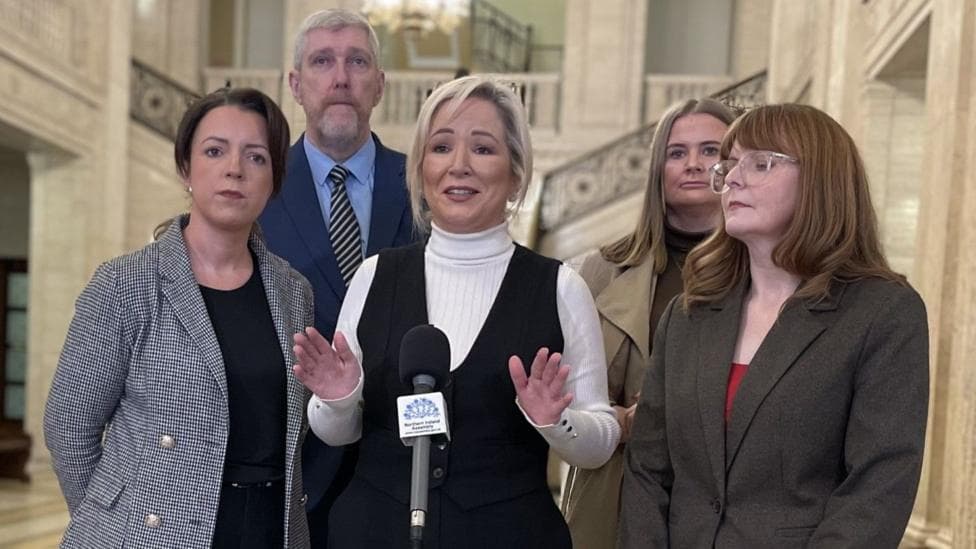
Four Sinn Féin ministers will face no-confidence votes at Stormont on Monday following their involvement in protests that blocked an Orange Order march in Portadown, County Armagh. The motions target First Minister Michelle O'Neill, Finance Minister John O'Dowd, and ministers Caoimhe Archibald and Liz Kimmins. Although the votes have secured backing from unionist parties, they are expected to fail because Northern Ireland's assembly rules require cross-community support from majorities of both unionists and nationalists to remove ministers.
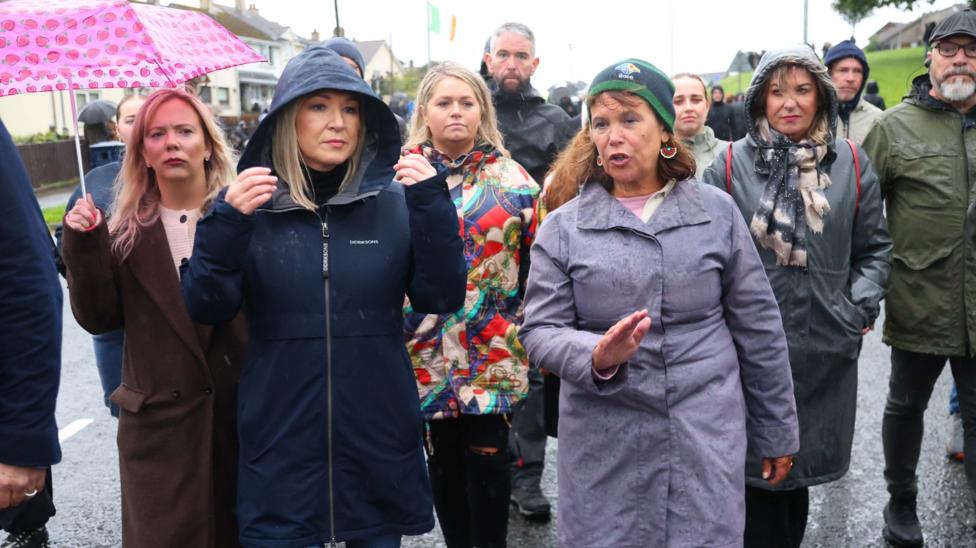
The dispute centres on a planned parade along the Garvaghy Road, a predominantly nationalist area where residents and Sinn Féin politicians have mounted sustained opposition. O'Neill and other senior party figures joined demonstrations that prevented the march from proceeding, drawing heavy criticism from unionists and triggering a large-scale police criminal inquiry into the protests.
O'Neill has publicly defended her participation in the blockade.
"I was proud to stand with the residents and when the law is wrong I will stand firmly against it,"she stated. The First Minister's position reflects Sinn Féin's view that the parade should not have been permitted to proceed along Garvaghy Road.
What triggered the current crisis?
The Parades Commission's decision on 25 September marked a significant shift in a dispute spanning decades. For the first time in 28 years, the commission determined that the Orange Order could march down Garvaghy Road, albeit with restrictions. However, the parade did not take place after protesters successfully blocked the route. This reversal of a 1998 ban—maintained consistently until this year—reignited tensions rooted in the violent Drumcree stand-offs of the 1990s, which involved riots, roadblocks and killings.
The escalation continued when Northern Ireland Secretary Sir Chris Bryant intervened. On Friday, Bryant banned the Portadown District Lodge parade, citing the interests of peace. This decision came after PSNI Chief Constable Jon Boutcher requested the secretary of state review the Parades Commission's determination, using powers under section 9 of the Public Processions (Northern Ireland) Act 1998.
Who is pushing for the no-confidence votes?
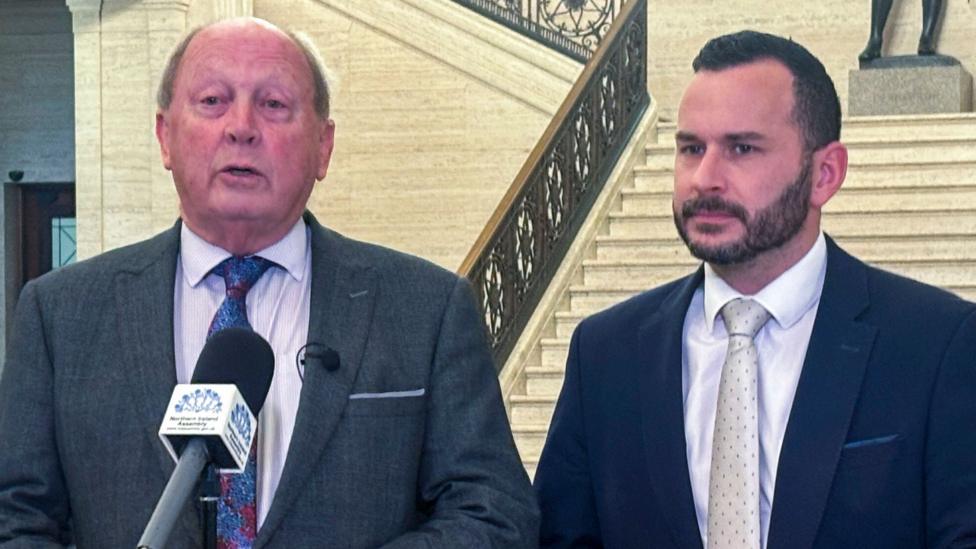
The motions were tabled by Timothy Gaston, a Traditional Unionist Voice (TUV) assembly member, who has branded O'Neill the "first minister of lawlessness". The motions secured the required 30 signatures with backing from members of the Democratic Unionist Party (DUP) and the Ulster Unionist Party (UUP). TUV leader Jim Allister acknowledged the votes cannot succeed under the current system but argued the exercise highlights pressure on the DUP.
"Let me be absolutely clear, of course this debate today is not going to succeed because the absurd system whereby it needs cross community support, but that accentuates the pressure on the DUP to be seen to do something because as things stand lawbreakers are sitting in our executive,"Allister told BBC Radio Ulster's Good Morning Ulster programme.
Why will the no-confidence votes fail?
Motions of no-confidence in the assembly are not binding even if a majority of MLAs vote in favour, and cannot automatically force a minister from office. The requirement for cross-community support—needing backing from majorities of both unionist and nationalist members—makes removal of Sinn Féin ministers virtually impossible given the party's substantial nationalist representation. This structural protection reflects Northern Ireland's power-sharing arrangements designed to prevent one community from dominating the other.
What is the DUP's position?
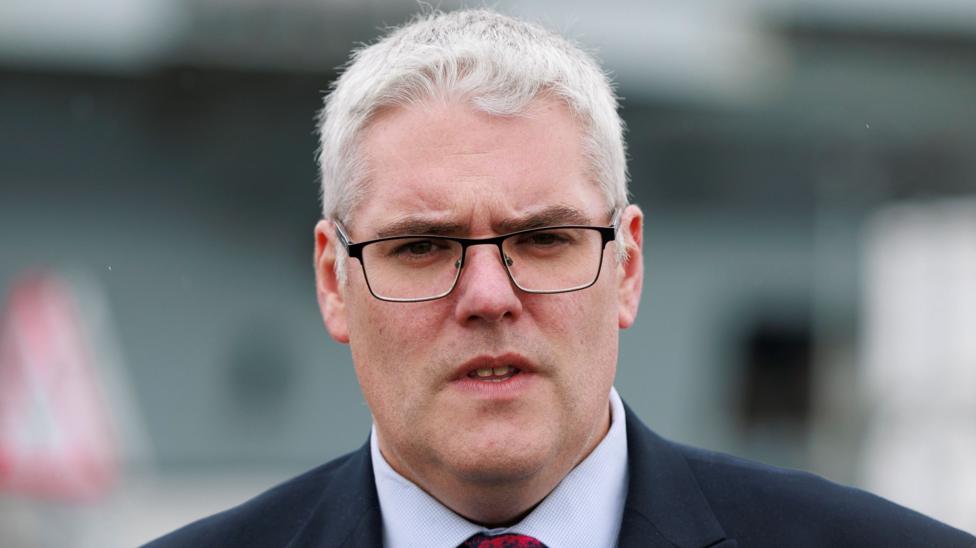
DUP leader Gavin Robinson stated that those breaking the law should face punishment but resisted calls to destabilise the devolved government.
"When somebody breaks the law they should be punished for breaking the law,"Robinson told Good Morning Ulster. However, he argued that removing deputy first minister Emma Little-Pengelly would
"punish everybody else"by collapsing the four-party executive that includes Sinn Féin, the DUP, the Ulster Unionist Party and the Alliance Party.
Robinson acknowledged that
"colleagues and I have discussed continually about options that are available to us"but stressed he is
"not in the territory to destabilise"the administration. He added that party consensus would determine the DUP's next steps.
However, DUP MP Carla Lockhart offered a contrasting view.
It "cannot be business as usual" at Stormontand the DUP has it
"within its gift to remove"O'Neill from her position, Lockhart stated. Under the assembly's rules, if Little-Pengelly resigned as deputy first minister, O'Neill would automatically lose her position as first minister. Robinson acknowledged that Lockhart has
"the right to stand up for her constituents"but indicated the party had not reached consensus on such action.
What do other parties say?
John O'Dowd, the finance minister facing a no-confidence motion, rejected the suggestion that Sinn Féin had reopened the Drumcree dispute.
"Those who seek to drag us backwards need to be stood up against,"he told Good Morning Ulster on Monday. O'Dowd indicated his focus remained on executive business, stating:
"I am seeking engagements around the budget, I want to work with parties to make a better society for everyone."
Matthew O'Toole, leader of the opposition SDLP, said politicians were entitled to express their views but needed to move forward once proceedings concluded.
"If they work in the public sector, they might be waiting on a pay rise. They might have a family member stuck on a waiting list,"O'Toole said, urging attention to broader issues affecting people across Northern Ireland.
What happens next?
The High Court adjourned the Orangemen's appeal against the secretary of state's ban until Monday, after ruling it was not an emergency case. Separately, the Court of Appeal has reserved judgment on Garvaghy Road residents' challenge to the original decision allowing the parade, with no date yet set for its ruling. These legal proceedings will determine whether the parade ban stands or whether further challenges succeed in altering the outcome.
Key Facts
- Four Sinn Féin ministers face no-confidence votes on Monday but removal is blocked by cross-community voting requirements in the assembly
- The dispute stems from a Parades Commission decision allowing an Orange Order march down Garvaghy Road for the first time in 28 years, reversed by the Northern Ireland Secretary's ban on Friday
- Police are conducting a large-scale criminal inquiry into the protests that blocked the parade
- The DUP is divided on whether to trigger O'Neill's removal by withdrawing its deputy first minister from the executive
- Multiple legal challenges to the parade decision remain pending in the High Court and Court of Appeal