

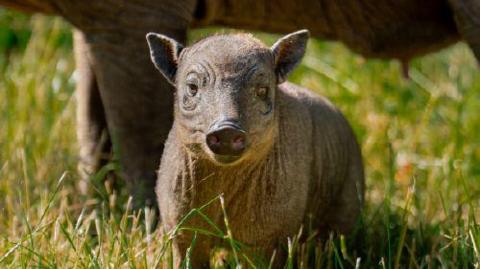
A critically declining species has gained a new member after Chester Zoo announced the birth of a babirusa piglet named Rana, who conservationists say weighed so little at birth that she resembled "a grapefruit with legs." Rana has now made her first public appearance at the zoo, with staff reporting she has grown substantially and is thriving. Her arrival comes as wild babirusa populations face a sharp decline following the spread of African swine fever across their native habitat.
Babirusas, sometimes called "pig-deer," survive in the wild only on a handful of Indonesian islands. According to Chester Zoo, the disease reached these islands roughly five years ago and has since devastated local populations. Hannah Owens, a representative of the zoo, said Rana was extremely small when born but has since developed well.
"Tiny" at birth, Rana has "grown a lot and is doing really well."
Why is the babirusa's conservation status changing?
The species is on the verge of being reclassified from "vulnerable" to "critically endangered" by the International Union for the Conservation of Nature, reflecting how quickly wild numbers have fallen. Owens noted that although babirusas are flourishing under human care, their wild counterparts are experiencing a steep and worrying reduction.
It would be "horrendous if they disappeared, because they were amazing, charismatic animals."
"Piglets like Rana are a lifeline for the species."
Additional context from wildlife researchers helps explain why recovery is so difficult. According to Animal Diversity Web, babirusas typically produce only one or two piglets per birth, with newborns weighing between roughly 380 and 1,050 grams — figures that illustrate just how slow population growth can be after losses. The same source estimates that the entire wild population numbers only around 4,000 individuals spread thinly across several islands, underscoring the fragility of their range.
Who is Rana's family, and how many descendants does the line have?
Rana is the fifth piglet born to Matano, who herself was born at Chester Zoo eleven years ago. Matano's offspring have since been distributed among other zoos across Europe, contributing to a wider breeding network intended to safeguard the species' genetic diversity.

How are keepers protecting the new mother and piglet?
Because babirusa mothers are known to be highly sensitive to disturbances after birth, zoo staff monitored Matano and Rana remotely using a baby monitor rather than approaching directly. Only once both animals appeared settled were they introduced to public viewing areas.
Owens explained that the species' name comes from its distinctive appearance rather than any relation to deer.
Babirusa means "pig-deer" in Malay because of their distinctive look.
"They're much less hairy than other pigs - Rana had ginger fuzz when she was born, but that's gone now."
"Males are the only pigs whose upper tusks erupt through the snout bone and curve back towards their face."
What role do babirusas play in their ecosystem?
Chester Zoo's conservation team is collaborating with international partners through the Action Indonesia Global Species Management Plans to help protect remaining wild populations. Conservationist Amy Humphreys described Rana's birth as an encouraging moment in what she called a "race against time" for the species.
Humphreys said babirusas play an important ecological function, since their foraging habits help disperse seeds that support forest regeneration. She added that the species also serves as an indicator of overall ecosystem health on the islands where they live.
"We risk losing a truly unique species, one that's an important part of Indonesia's cultural and natural heritage and one of the oldest pig species still living."
This birth follows a broader pattern of conservation-focused animal births at UK wildlife parks in recent months, including the arrival of endangered Amur tiger cubs at Longleat in Wiltshire and a newborn vicuna named Xoco at the Highland Wildlife Park, both part of wider efforts to support species facing pressures in the wild.
Key Facts
- Rana is the fifth piglet born to mother Matano at Chester Zoo.
- Babirusas live in the wild only on a small number of Indonesian islands.
- African swine fever reached those islands roughly five years ago, driving sharp population declines.
- Wild babirusa numbers are estimated at around 4,000, according to Animal Diversity Web.
- The species is expected to be reclassified from "vulnerable" to "critically endangered."


