

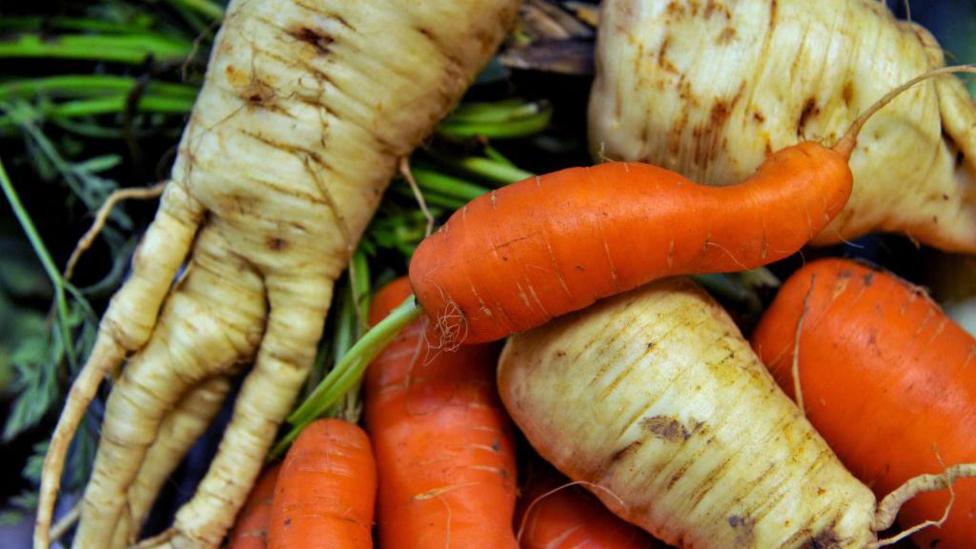
Farmers and supermarkets across the UK are contending with fruit and vegetables that look unusual after one of the driest, hottest growing seasons in decades. Cauliflowers are emerging yellow instead of white, cucumbers are curling into spirals, pak choi leaves are riddled with tiny holes and potatoes are growing extra knobbles, yet growers and retailers insist all of it remains safe and pleasant to eat.
Retailers typically enforce strict cosmetic standards on size, shape and colour, rejecting produce that falls outside them. But with supplies under strain from repeated heatwaves following an unusually warm spring, many chains are now expected to relax those rules rather than leave shelves empty in the coming weeks.
Why are cauliflowers turning yellow?
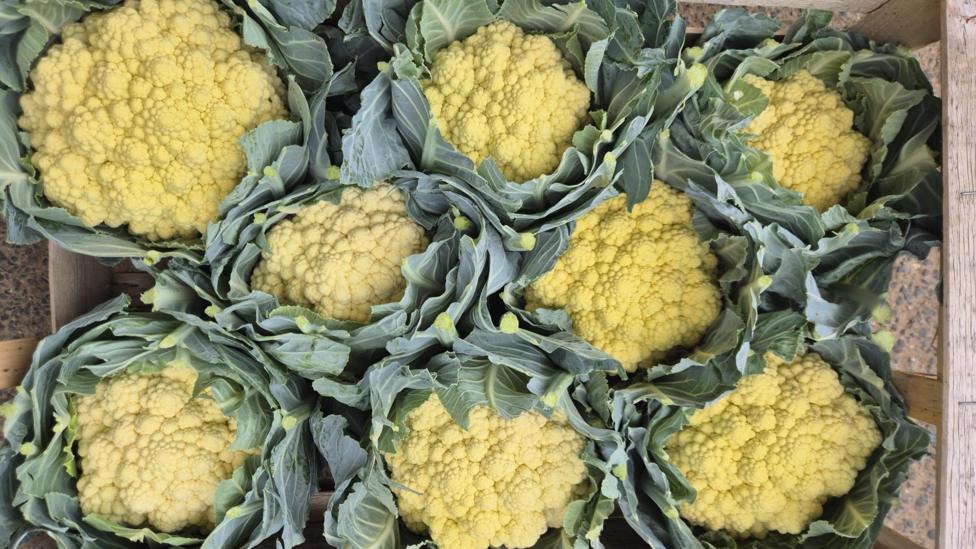
Cauliflower needs large amounts of water and is especially vulnerable to extreme heat, which is why this year's crop is showing unusual colouring. The vegetable's head is normally protected from sunlight by its leaves, but this season more light has been reaching it, giving the florets a yellowish, almost "sun-tanned" tint.
Emilie Vanpoperingh, co-founder of Oddbox, a company that sells surplus produce supermarkets would otherwise reject, described the discolouration as a purely cosmetic issue.
"Purely a cosmetic defect" - Emilie Vanpoperingh
She said Oddbox took on 6,000 cauliflower heads last week that were judged too dark for supermarket shelves. According to Vanpoperingh, growers are reporting depleted water reserves, which is slowing growth across the wider brassica family, including broccoli, and squeezing supply.
She added that shrinking availability may push mainstream retailers to accept the discoloured heads regardless of appearance.
"Their biggest nightmare is empty shelves. They want to make sure that they've got availability of produce all the time." - Emilie Vanpoperingh
What's causing cucumbers to curl?
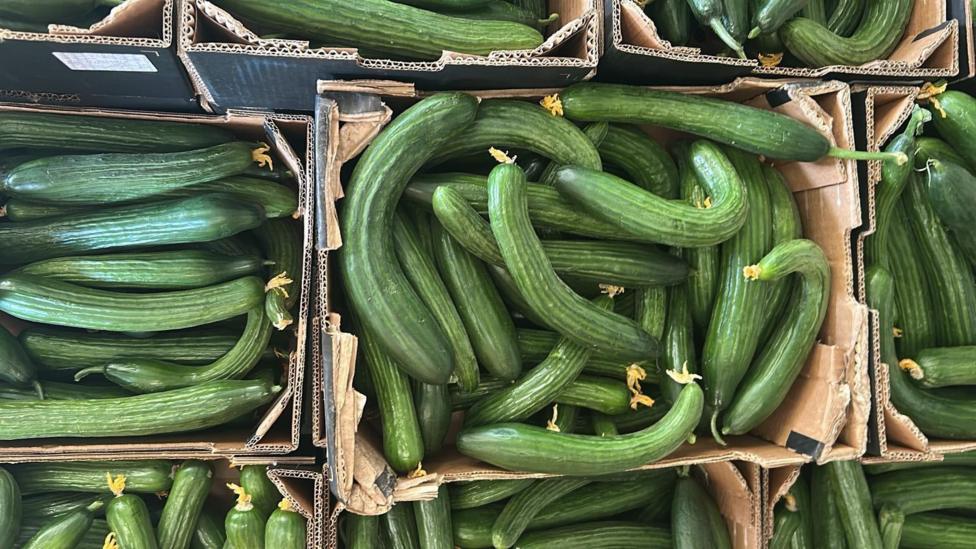
Some cucumbers are emerging bent back on themselves in a spiral shape because the greenhouses they grow in are overheating in the current outdoor temperatures. Vanpoperingh explained that this heat stress leaves the plants unable to develop normally even when watered properly.
"Even if they get the irrigation then it's just extreme heat, which means the plant is not able to grow anymore." - Emilie Vanpoperingh
Why does pak choi have holes in it?
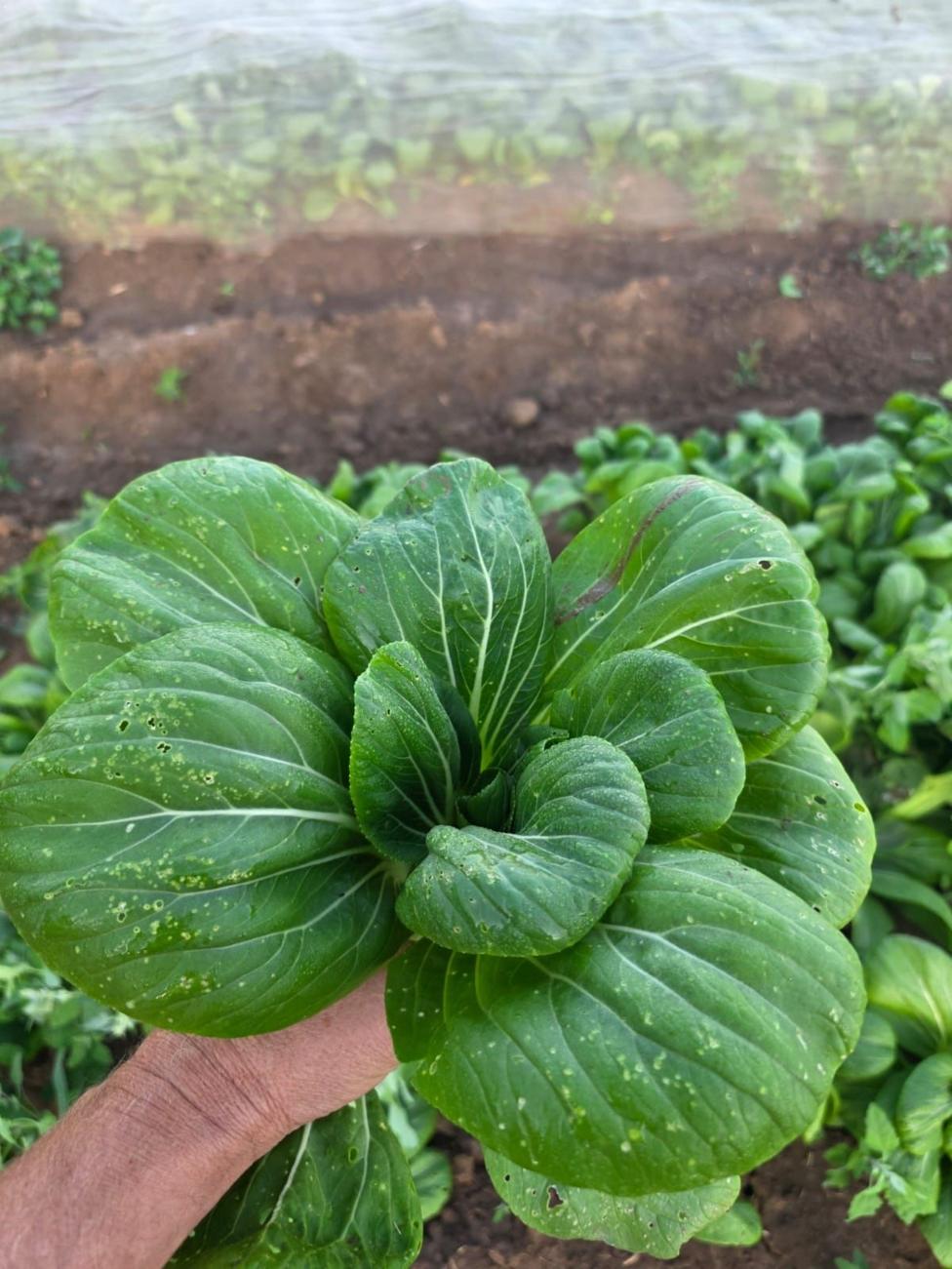
Tiny holes appearing in pak choi leaves are the work of flea beetles, pests that thrive in hot, dry weather. John Harper, a farmer in Worcestershire who supplies Sainsbury's, Aldi and Co-op, said he has had to discard more of his crop than usual this year because of the damage.
He explained that with restrictions on pesticide use now tighter than before, netting is largely his only line of defence against the insects. Strict cosmetic standards previously meant a single hole could disqualify a plant from sale, though he said some retailers have eased those requirements temporarily.
"One tiny little hole can render the plant useless." - John Harper
"We've been working with them through this hot period and in general they sort of get it." - John Harper
Harper said the great majority of affected pak choi remains perfectly edible, even joking that the vegetable appears to be popular with the beetles too.
"It seems to be quite tasty" - John Harper

Why are some potatoes coming out knobbly?
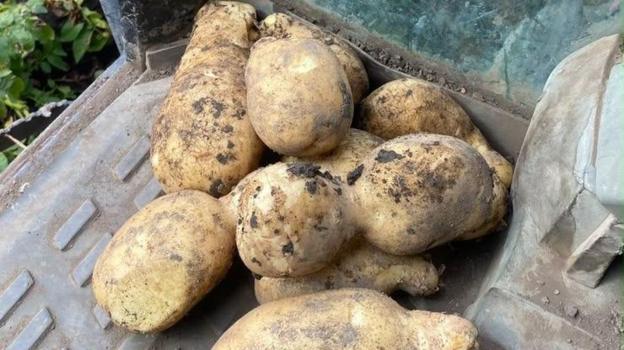
Extreme heat stunts potato growth, and when temperatures later cool the tuber can develop an odd extra knob rather than continuing to grow evenly. Lucy Munns, a potato farmer in Cambridgeshire who supplies supermarkets and chip shops, said this makes many of her potatoes unsellable under normal purchasing standards.
"Trying to find people that will accept potatoes like that is very difficult. So that ultimately means a lot of wastage for us." - Lucy Munns
She argued that discarding so much usable food is unjustifiable.
"It's criminal, to be honest, to be chucking that much food away." - Lucy Munns
Munns said the misshapen potatoes are entirely fit to eat, with only a slight extra effort required in the kitchen.
"The only difficulty is peeling them, but just cut the knobbly bit off and peel it separately." - Lucy Munns
How are supermarkets responding?
Several major chains, including Sainsbury's, Tesco, Morrisons and Waitrose, already run dedicated ranges for imperfect-looking vegetables and are now widening the leeway given to growers. Calum Kelly, Waitrose's produce technical manager, said the retailer is loosening its size and shape guidelines for key vegetables during the current conditions.
"We relax size and shape guidelines for key veg to avoid waste and provide more income to our growers and farmers." - Calum Kelly
"Baking potatoes might be a little smaller than usual this harvest if the drought continues. All these veg still taste great, but like many of us in a heatwave, they might just look a little less than perfect." - Calum Kelly
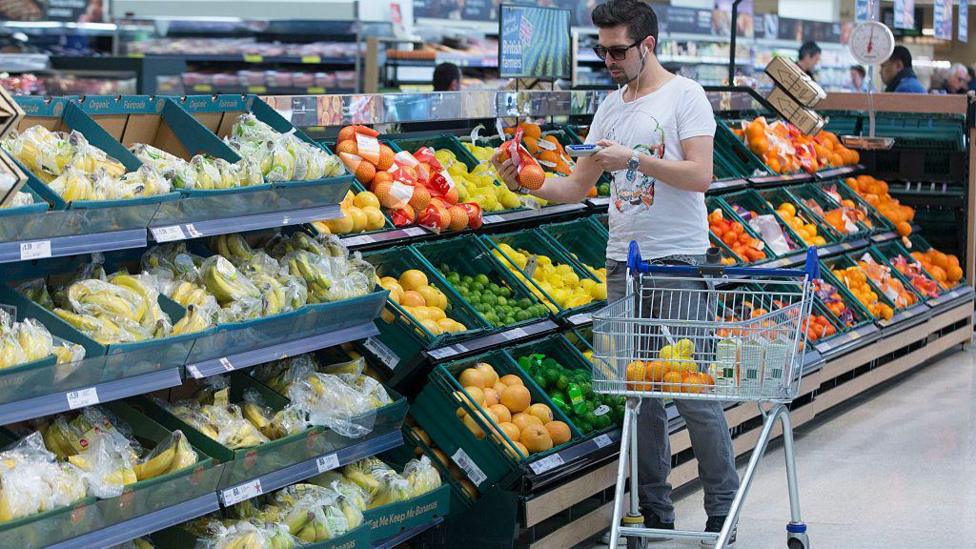
Andrew Opie, director of food and sustainability at the British Retail Consortium, said loosened cosmetic rules cannot fully close the gap, and that supermarkets are increasingly turning to imports as domestic supply tightens.
"Retailers face the dilemma of supporting British farmers, but also making sure that we, as customers, have what we expect to buy when we go in the shop." - Andrew Opie
"It's going to be a challenging period right through into the autumn. We're hearing potentially it could affect things like cherries as well." - Andrew Opie
How does this fit into the wider picture?
This is not an isolated seasonal quirk. Our earlier reporting noted that the National Farmers' Union has already warned that continuing drought could cause shortages of some foods as poor yields, water shortages and heat combine to pressure farms across England and Wales, with wheat among the crops hit hardest and harvests arriving earlier than usual. Separately, we previously reported that heatwaves and drought are straining farms, supply chains and supermarket refrigeration, raising the prospect of higher food prices if yields keep falling.
The scale of the disruption appears to extend beyond the crops highlighted here. According to a national newspaper's report, farmers expect the broader UK harvest to be the worst since records began, and retailers are already importing more vegetables from abroad to fill gaps left by domestic drought and heat. A separate farming video report broadcast in July 2026 indicated that vegetable losses during the heatwave were not confined to cauliflower and cucumbers but spread across a wider range of crops.
The pressure is not unique to Britain. A French newspaper's report from 2 August 2026 described a collapse in French vegetable production even where irrigation was in place, with young plants failing to survive the drought, suggesting the strain on crops is a wider European pattern rather than a solely British problem.
How extreme has the weather actually been?
The Met Office has described the 2026 season as an extraordinary summer, according to a Met Office statement, pointing to three distinct heatwaves stretching through the season. Separately, an online reference summarising the 2026 European heatwaves records the UK reaching 38.0°C in June 2026, with several other European countries approaching or setting their own temperature records, underlining the scale of the heat behind this year's crop stress.
Is this the shape of things to come?
Scientists and farmers alike are increasingly framing this season not as a one-off but as a preview of what British agriculture may face regularly as summers grow hotter and drier under a changing climate. Farmers will likely be left choosing between accepting higher levels of waste, investing in improved irrigation and water storage, or working harder to persuade shoppers to buy imperfect produce.
Munns, the Cambridgeshire potato farmer, urged consumers to be more open to buying vegetables that do not look flawless.
"Be a bit less picky. We've been too spoilt in the UK … In other less fortunate countries we wouldn't have a choice." - Lucy Munns
Key Facts
- Oddbox took on 6,000 rejected cauliflower heads last week after heat turned them yellow.
- Flea beetles, which thrive in hot, dry weather, are chewing holes in pak choi leaves grown by Worcestershire farmer John Harper.
- Cambridgeshire farmer Lucy Munns says heat-stunted potatoes are being wasted because buyers won't accept their knobbly shape.
- Sainsbury's, Tesco, Morrisons and Waitrose already run 'imperfect veg' ranges and are loosening size and shape rules further.
- A national newspaper report says the UK is importing more vegetables as farmers brace for what could be the worst harvest since records began.


