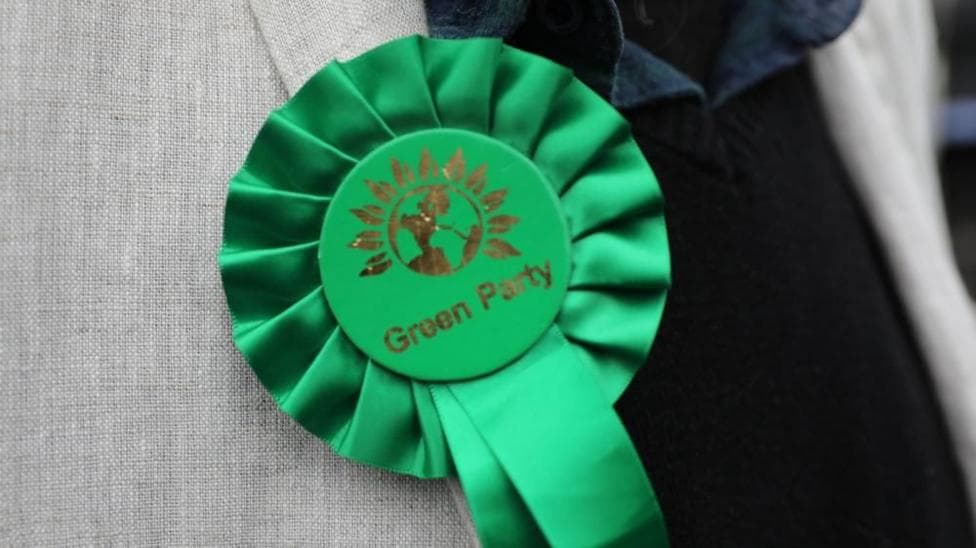
The Board of Deputies of British Jews, the UK's largest Jewish representative body, has formally declared the Green Party of England and Wales a racist organisation following the party's adoption of a controversial policy equating Zionism with racism. According to BBC News, the Board of Deputies passed the declaration by 118 votes to one in response to a motion passed at the Green Party's conference earlier this month.
The Green Party's conference motion, which passed 1,022 votes to 813, defined Zionism as an ideology supporting "an ethnonationalist Jewish state in historic Palestine to the exclusion and/or domination of the non-Jewish population". The same motion also backed a single democratic state throughout historic Palestine, the right of return, the Boycott, Divestment and Sanctions (BDS) movement, and a full arms embargo on Israel.
Board of Deputies president Phil Rosenberg stated that by adopting what he characterised as an antisemitic platform, the Green Party had become a racist organisation.
"No political party has the right to tell Jews that a central part of our identity, rooted in thousands of years of history, faith and peoplehood, is racist. The Green Party's policy brands much of our community, including our synagogues and communal organisations, with that slur. It gives prejudice against Jews a political licence."
Rosenberg called on the Green Party's leadership to reverse the policy and confront the antisemitism it had legitimised. The Board of Deputies also urged other political parties to refuse coalition deals with the Greens unless they rejected the motion, warning that forming such arrangements would amount to "failing to take antisemitism with the requisite seriousness" unless local Green leadership had explicitly disowned the policy and committed to overturning it. The Board of Deputies' motion additionally stated it would engage with and support Green Party members who reject the policy and call for it to be reversed.
The Green Party's response rejected the Board of Deputies' characterisation of both the motion and the party itself. A party spokesman insisted the Greens do not discriminate against people holding Zionist views and said the Board's declaration
"will not stop us from speaking out against the genocide in Gaza and pushing for stronger sanctions against the Israeli government and its leaders". Israel has repeatedly denied that its military operations in Gaza constitute genocide.
Labour has already escalated its response by issuing an ultimatum to local Green groups with which it currently shares power. Labour has ordered councils to end power-sharing agreements unless local Green councillors publicly reject the controversial motion. Green council groups had until Sunday, 25 October, to respond to Labour's demand to disown the policy, with Labour's National Executive Committee then due to decide whether to continue local power-sharing deals.
The motion was criticised not only by Jewish groups but also by four Green MPs and two former party leaders, as well as opposition political parties. In a joint statement, the Board of Deputies and Jewish Leadership Council said that
"Zionism is anti-racism, creating a refuge for Jews in their ancient homeland after millennia of persecution outside it".
What is the Green Party leader's position?
Green Party leader Zack Polanski, who is Jewish, did not participate in the vote on the motion as he left the conference early to campaign in the Holborn and St Pancras by-election, which took place days later. Polanski has said he would like to amend the motion but will not overturn it, with the policy remaining in place until 2028. When asked about his position on the BBC's Sunday with Laura Kuenssberg programme, he stated he would not have voted for the motion himself but declined to reverse it.
Polanski's refusal to overturn the policy has triggered significant scrutiny, including from the Equality and Human Rights Commission. Israel's foreign ministry has also taken action in response, banning Polanski from entering Israel following the party's adoption of the motion.
What happens next?
The dispute is set to intensify as local authorities and political parties respond to the Green Party's policy. Labour councils have set a deadline for Green partners to publicly reject the motion, with the party's National Executive Committee scheduled to review whether to continue power-sharing arrangements based on those responses. The Green Party itself faces mounting pressure from Jewish organisations, internal party divisions, and international responses to reverse or substantially amend the policy before the 2028 deadline Polanski has set.