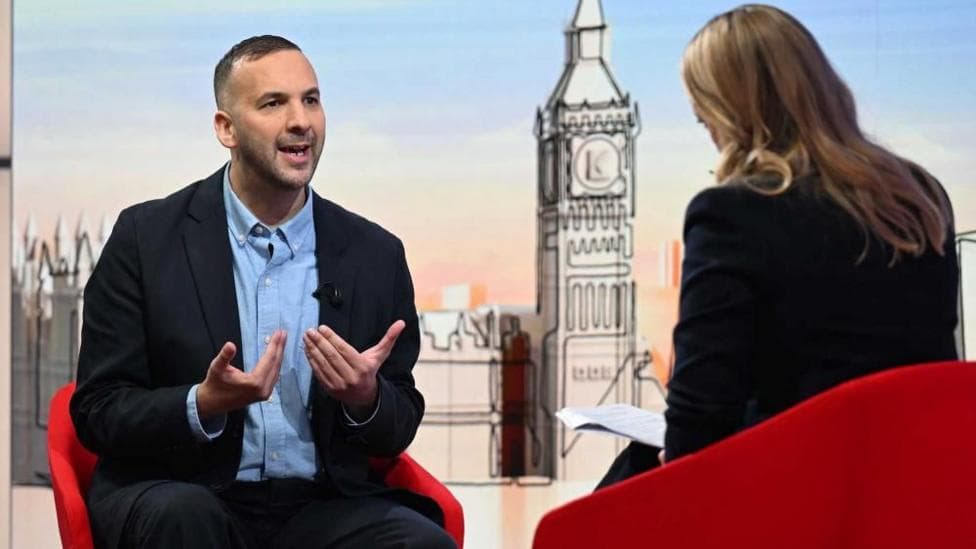
Green Party leader Zack Polanski has confirmed he will not overturn a motion passed by party members declaring Zionism to be racist, though he indicated a desire to amend the language in future. In an interview with Laura Kuenssberg on Sunday, Polanski explained that the motion, adopted at the party's conference earlier this month, will remain official policy until 2028 under party rules, and he rejected suggestions that it was divisive.
According to BBC News, the motion describes Zionism as an ideology supporting "an ethnonationalist Jewish state in historic Palestine to the exclusion and/or domination of the non-Jewish population". The measure passed with 1,022 votes in favour and 813 against, though this represented only a small fraction of the party's 230,000 members.
The motion has triggered substantial controversy across the political spectrum. Jewish campaigners, government officials, Labour MPs, and the broader European Green movement have all criticised the decision. The fallout dominated the final stages of Polanski's campaign in the Holborn and St Pancras by-election, which he lost to Labour, and raised questions about his continued leadership of the party.
Polanski came under particular scrutiny for abstaining from the vote on the motion itself. When asked whether he would use his authority as leader to reverse the decision, he stated:
I'm not going to try to overturn it. At the first available opportunity, I do want to amend it - I want to move away from one state, towards saying that Israelis and Palestinians should decide that future for themselves.
He explained the timing constraint, saying:
You can't [amend it] within the rules, so when you vote on something in our party conference that's then policy for two years.When Kuenssberg pressed him on whether he would change the party's rules as leader to allow an earlier amendment, Polanski responded:
I think if members have made a decision, then I respect the democratic will of our members.
What does the motion actually propose?
Beyond its definition of Zionism, the motion also backs "a single democratic Palestinian state in all of historic Palestine," with Jerusalem as its capital, equal rights for all, and a right of return for Palestinians and their descendants. The breadth of the motion has made it controversial not only among Jewish groups but also within the Green Party itself, where four of the party's five MPs opposed the motion.
What regulatory scrutiny is the party facing?
The Equality and Human Rights Commission has written to the Green Party seeking information to assess the motion's practical effects and potential impact on equality law. The watchdog has indicated it will decide whether to take formal action after reviewing the party's response. The EHRC's assessment will likely focus on whether the motion's practical application complies with the Equality Act, rather than the motion's text alone.
The Green Party has sought to reassure members and the public, stating that the motion does not change membership conditions or internal disciplinary processes and that it will not exclude people for holding Zionist views. However, Israel's foreign ministry said it had barred Polanski from entering Israel after the motion passed.
More than a dozen Labour MPs have reported the Greens to the EHRC, raising concerns about whether Jewish members could participate freely and equally in the party. The European Green movement has also distanced itself from the decision, with colleagues saying they "unequivocally distance" themselves from the motion.
What is Polanski's previous position on the issue?
Polanski had previously stated he would not have voted for the motion without amendments. His absence from the conference debate drew criticism, which he attributed to electoral campaigning commitments in the Holborn and St Pancras by-election. At a Jewish community hustings in the constituency ahead of the vote, he had declared himself an anti-Zionist and characterised Zionism as racism, remarks that drew heckling from attendees.
Green MPs, including Ellie Chowns, have called for the party's member-led decision-making procedures to be reviewed given the relatively low turnout in the vote. The controversy has intensified pressure on Polanski's leadership, coming as it did alongside his defeat in the by-election.
What happens next?
The EHRC will assess the Green Party's further information and then decide whether formal action is appropriate, though no decision date has been announced. A Green Party leadership vote is scheduled for next year, according to reporting on the mounting pressure facing Polanski over his handling of the motion and the by-election loss.