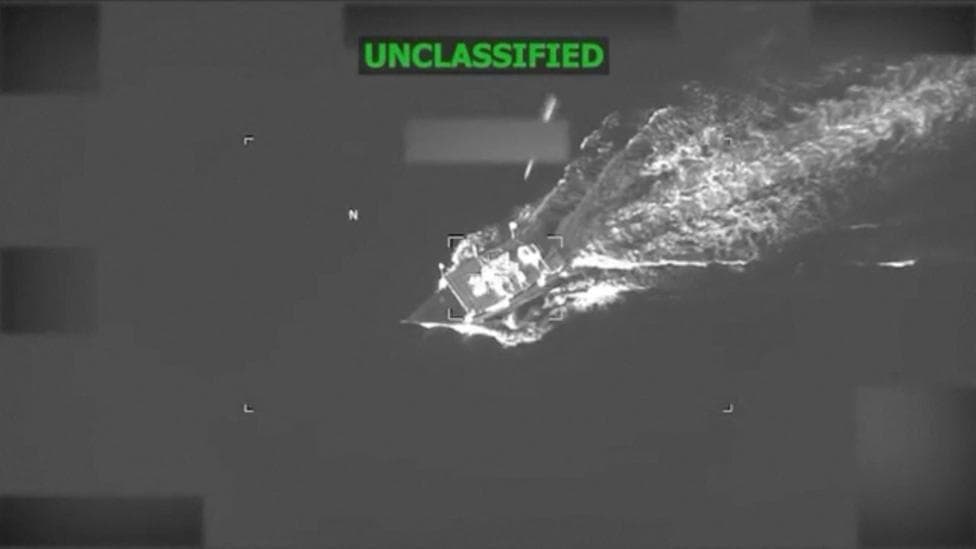
A United Nations investigation has determined that American military operations targeting vessels suspected of drug trafficking in the Caribbean and Pacific have breached international law and could amount to crimes against humanity, according to findings released by the UN Human Rights Council.
Special Rapporteur Ben Saul's report documented at least 68 strikes conducted outside US territorial waters since September of the previous year, resulting in more than 220 deaths. According to , the US military reported a strike on September 20 that killed four people in the Caribbean, bringing the campaign to at least 69 strikes and 231 deaths.
Saul's analysis concluded that even where targets could be identified as members of designated terrorist organisations, they had not launched an armed assault against the United States that would justify a self-defence response under international law. The report stated that
such attacks amount to serial extrajudicial killings in violation of the right to life, being unjustified in national or personal self-defence or under international humanitarian law, the international law of the sea, narcotics suppression conventions, or international counter-terrorism law.
In his formal conclusion, Saul asserted that
there are reasonable grounds to believe that the reported 68 attacks that killed 223 people constituted crimes against humanity of murder under customary international law.
What does the US military say about these operations?
The US Southern Command, which oversees military operations in the region, has defended the strikes as targeting narco-traffickers. Following the most recent attack, Southcom stated that
confirmed intelligence revealed the vessel's active involvement in narco-trafficking. The operation killed four narco-terrorists, accompanying the statement with video footage of the strike.
Defence Secretary Pete Hegseth has characterised the overall campaign, known as Operation Southern Spear, as aimed at removing
narco-terrorists from our hemisphereand protecting the United States from
the drugs that are killing our people. The operation commenced in early September.

However, officials have not released definitive evidence demonstrating that the targeted vessels were engaged in trafficking activities. According to ABC News, independent analysts have raised questions about the verification procedures used to identify targets.
What do independent monitors say about the strike count?
Discrepancies exist between different tallies of the operation's scope. While the UN report cited 68 strikes and 223 deaths, InSight Crime's strike tracker listed 77 strikes and 230 killed as of September 17, 2026, suggesting variations in how different organisations count and verify individual incidents.
What legal concerns have been raised?
Since the campaign's inception, legal experts have questioned the strikes' compliance with international law. The UN human rights chief had already condemned the operations as unacceptable and called for prompt, independent and transparent investigations into the deaths.
On September 2, 2026, UN-appointed experts renewed calls for an independent investigation and stated that victims' families are entitled to compensation and guarantees that such operations will not be repeated. The experts emphasised that the strikes raise fundamental questions about due process and the right to life under international human rights law.
How have regional leaders responded?
The strikes initially drew strong criticism from Latin American leaders whose citizens have been killed in the operations. However, the political landscape has shifted. Nicolás Maduro, who led Venezuela when the campaign began and opposed the strikes, was apprehended by US forces in a controversial night-time raid on Caracas at the beginning of this year. Gustavo Petro, Colombia's left-wing president at the time and another vocal critic of Operation Southern Spear, stood down in August after a Trump-backed candidate won June's presidential election.
What happens next?
The UN report has been submitted to the Human Rights Council, but no specific hearing or decision date has been publicly identified. The White House and State Department have been contacted for their response to Saul's findings, though formal replies have not yet been released.
Key Facts:
- UN Special Rapporteur Ben Saul concluded that at least 68 US strikes outside territorial waters killed more than 220 people and may constitute crimes against humanity
- The US military characterises the operation as targeting narco-terrorists but has not provided definitive evidence that targeted vessels were engaged in trafficking
- Independent strike trackers report varying totals, with some counting as many as 77 strikes and 230 deaths as of mid-September 2026
- UN experts have called for independent investigation and compensation for victims' families
- Political opposition to the campaign in the region has diminished following leadership changes in Venezuela and Colombia