President Donald Trump was quietly moved from Air Force One to a smaller military jet before leaving Ankara, Turkey, on 8 July 2026, after officials detected what they described as a credible threat that Iran might target his aircraft, according to US media reports. The switch, described by a US official as a deliberate deception operation, was carried out using a catering truck raised to the height of the plane's door, and most reporters and staff on board were unaware the president was no longer with them.
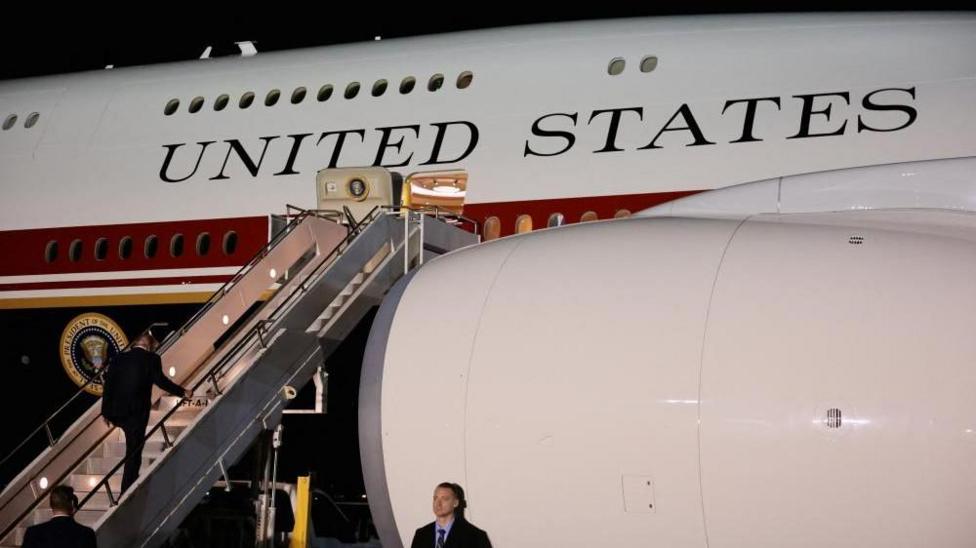
Trump had flown into the NATO summit aboard a newly outfitted Boeing 747-8 donated by Qatar, but told aides he wanted to depart on the older Air Force One "for old time's sake." Television cameras captured him boarding that jet in full view of the press pool, reinforcing the impression that he remained aboard for the outbound leg of the journey.
How did the plane swap unfold?
According to the Washington Post, Trump was discreetly transferred from the legacy Air Force One to a C-32A, a modified Boeing 757 typically used for vice-presidential travel, using a catering truck positioned on the opposite side of the aircraft from where he had boarded. Defence Secretary Pete Hegseth reportedly boarded the C-32A separately by way of the external stairs, a move intended to preserve the appearance of a routine departure.
A New York Post report added that several aides accompanied Trump inside the raised catering container during the transfer, and that the C-32A subsequently landed at Mildenhall Air Force Base in the United Kingdom, broadly matching the timeline described by other outlets.
Journalists and some White House staff remained on the original Air Force One, which the Washington Post says effectively became a decoy, and were instructed to close their window shades without being told why. The report adds that Trump and several aides left the original plane through the raised catering truck rather than the stairway used by the press and staff, a detail that had not previously been disclosed.
Separately, CNN aired video and reporting on the switch, with correspondent Dan Lamothe describing how the catering truck was used to move Trump from Air Force One to the C-32A. Lamothe said, "This was a surreal story to cover," in discussing the account.
Reuters reported that the C-32A arrived in Britain at around 10:20 p.m., with the older Air Force One and the accompanying press corps landing only minutes later, a sequence consistent with earlier accounts of the flight's endpoint.
Trump then continued to the United Kingdom, where he reboarded the old Air Force One before it landed at RAF Mildenhall. How he moved from the C-32A back onto the legacy jet has not been explained.
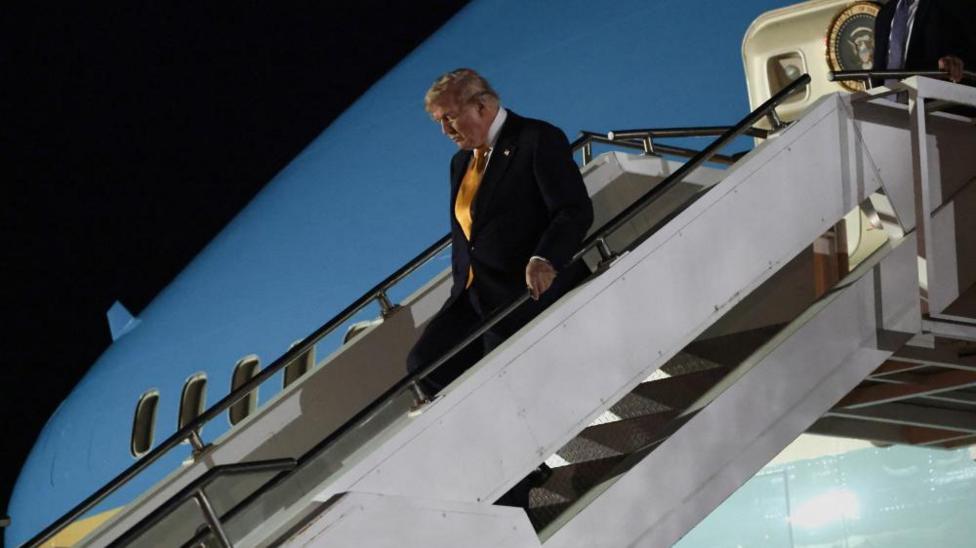
From Mildenhall, Trump transferred again, this time onto the Qatari-donated aircraft, for the final leg back to Washington. Trump later said the newer jet had been sent ahead so that US service members stationed in Britain could tour the aircraft, according to the Associated Press's live coverage of the trip.
Why did security officials see a threat from Iran?
Officials briefed CBS News, the BBC's US partner, that intelligence had identified a credible threat of a missile strike aimed at the president's aircraft, tied to broader hostilities involving Iran. During the summit itself, Trump had told those present that he considered himself Iran's "number one target."
The elaborate manoeuvre took place only a day after the United States resumed military strikes on Iran once negotiations between Washington and Tehran collapsed. That renewed campaign followed the breakdown of an earlier ceasefire; US forces reportedly struck 170 targets over 48 hours after Trump declared the Iran truce over, prompting Iranian retaliation against US bases in Bahrain, Kuwait and Qatar and heightening tensions around the Strait of Hormuz.
What did Trump say about the switch?
Trump has since personally confirmed the plane swap, telling reporters that the decision was made for him by his security detail rather than of his own choosing. "I go by Secret Service and the military. They wanted me to go in a different flight, different plane," he said. "I just have to do what they say."
Asked about concerns that journalists and staff left on the decoy Air Force One had been placed in danger, Trump maintained that the military jet he was moved onto was actually at greater risk than the plane the press remained aboard.
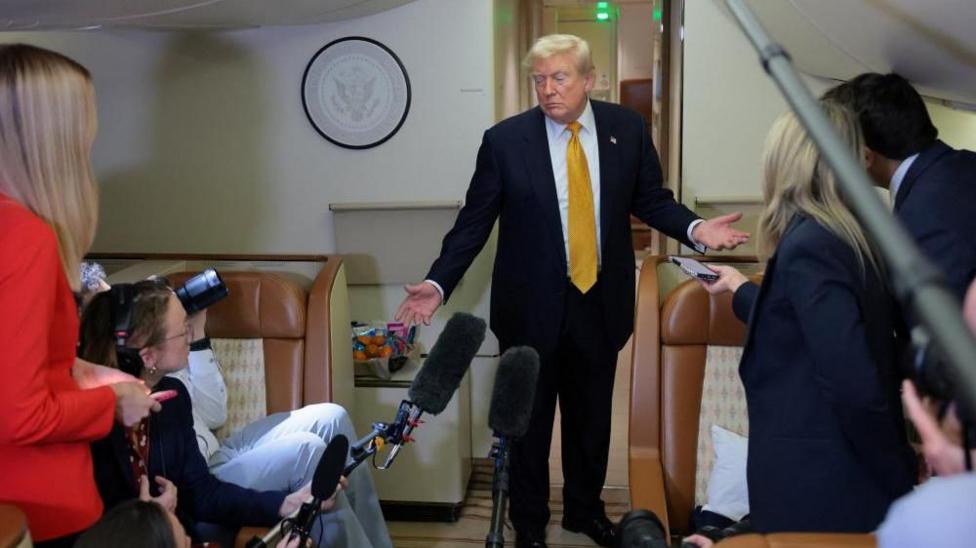
Speaking to reporters once he was aboard the Qatari jet on the final leg home, Trump acknowledged the danger he believed he faced from Iran. Asked why journalists had been told to lower their window shades on the flight out of Turkey, he said:
"Because you're probably on a dangerous flight because of the sleazebags we have to deal with."
He went on to describe living under constant threat, saying he had a "threat all the time" on his life and that he was "number one" on Iran's "list." He added:
"But if I go, you go, right? Perhaps someday you want to change professions."
What has the White House said?
White House communications director Steven Cheung declined to directly confirm or deny the accounts of the plane swap, instead describing the new Air Force One as a "state-of-the-art aircraft" equipped with security features designed to protect the president and his staff.
However, Reuters reported that the White House declined to characterise the switch as being driven specifically by a threat from Iran, instead pointing to standard security protocols governing the Qatari-donated aircraft, which was being used as a temporary Air Force One at the time. This account sits alongside the Washington Post's description of a threat that officials called credible and tied to Iran, and the two versions of events have not been reconciled.
A later New York Times report offered a further variation, saying US officials had judged the threat to have come specifically from Iranian proxy forces rather than a general Iran-linked concern, and that the danger was understood to be aimed at Trump personally and whatever aircraft happened to be carrying him, rather than at the Qatari jet in particular. That account differs in emphasis from the earlier characterisations offered by the Washington Post and the White House.
Press secretary Karoline Leavitt told CBS News that the aircraft was already safe for presidential travel but would undergo further upgrades in the autumn, a process expected to take about a month to complete.
The scrutiny follows earlier reporting by the New York Times on security concerns surrounding the Qatari-donated jet, including claims that the Secret Service had urged Trump to switch aircraft on his return from the NATO summit. Several journalists from that publication were subsequently summoned to testify under oath, and the Justice Department has told the BBC it is investigating unauthorised disclosures related to the coverage.
Who knew about the threat at the time?
According to a report from the Israeli outlet Ynet, some senior US officials and relevant members of Congress were not briefed on the threat at the time, with details kept from much of the wider administration. The same report said the aircraft swap reportedly followed a separate warning from Israeli intelligence about a fresh Iranian assassination plot, which was described as distinct from the threat identified by US agencies.
What is the background to the Iran tensions?
The current standoff has moved through several distinct phases in recent months. Trump had earlier threatened Iran over its blockage of the Strait of Hormuz, warning of severe consequences if Tehran did not comply with US demands. Tensions later appeared to ease when Trump said he had cancelled planned strikes on Iran to allow room for a swift negotiated settlement, and he subsequently confirmed that new talks with Iran were set to begin after negotiators had reportedly agreed on the outlines of a deal.
Earlier still, Trump said Iran's supreme leader had become personally involved in the US talks and claimed Tehran had agreed not to pursue a nuclear weapon, though the situation continued to shift in the weeks that followed. The tensions had already produced a dramatic episode in April 2026, when a US airman was rescued after his F-15 was downed over Iran, an operation Trump later described as one of the most daring rescues in US history, even as threats to American operations in the region persisted. More recently, Trump also denied that the US was facing munitions shortages and defended Hegseth amid questions over missile stockpiles during the war with Iran. The Ankara plane swap took place against this volatile backdrop, with the renewed strikes preceding it by only a day.
The concern about a possible assassination attempt has deeper roots. According to a report from the Telegraph, the threat traces back to the US killing of Iranian commander Qassem Soleimani in January 2020, after which Iranian officials and state media repeatedly referenced revenge against Trump in the years that followed.
US officials have said older Air Force One aircraft carry laser systems intended to disrupt incoming missiles. According to a Yahoo News report citing the New York Times, the newly donated Qatari Boeing 747-8 had not been fitted with comparable anti-missile defences at the time of the July threat. The Pentagon has spent an estimated $400m retrofitting that aircraft for presidential use.
What happens next?
The Qatari-donated aircraft is expected to be taken out of service for roughly a month in the autumn of 2026 for the additional security upgrades described by Leavitt, according to the Yahoo News report citing the New York Times. Trump is expected to continue using the older Air Force One in the meantime, meaning the aircraft involved in the Ankara switch could remain his primary transport well into the coming months.
Key Facts
- The plane swap took place in Ankara, Turkey, on 8 July 2026, after officials identified a threat linked to Iran.
- Trump was moved from the legacy Air Force One to a C-32A military jet via an elevated catering truck, with several aides reportedly inside the container.
- Journalists and staff remained aboard the original Air Force One, unaware the president was no longer on board.
- Reuters said the C-32A landed in Britain around 10:20 p.m., with the original Air Force One and press corps arriving minutes later.
- Trump later confirmed the switch, saying the decision was made by the Secret Service and military rather than himself, and claimed the military jet was at greater risk.
- The New York Times reported the threat was attributed to Iranian proxy forces and aimed at whatever aircraft carried Trump, rather than the Qatari jet specifically; some officials and members of Congress were reportedly not briefed.
- The Qatari jet is expected to be taken out of service for about a month in autumn 2026 for further security upgrades.