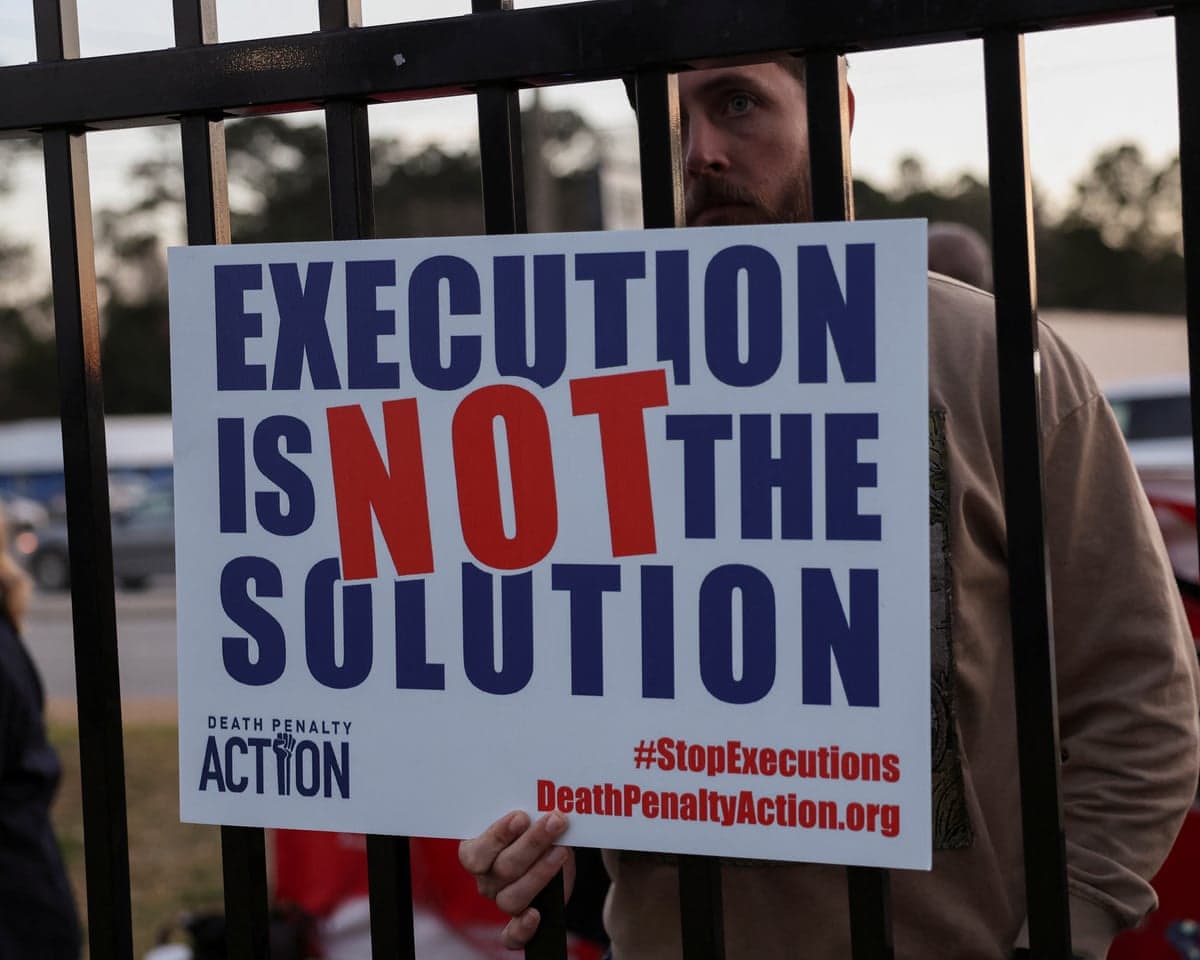
A collection of letters published by The Guardian on 16 October 2026 examines the tension between public revulsion at proposed livestreaming of executions and the historical publication of execution photographs in newspapers.
The Core Contradiction
One reader questioned the apparent inconsistency in editorial standards. While widespread condemnation followed Pete Hegseth's proposal to livestream a judicial execution, The Guardian had published photographs of two historical executions on its pages: a man awaiting execution in an electric chair in 1928 and conspirators in the assassination of Abraham Lincoln on the gallows in 1865. The reader expressed relief that these images were not filmed, yet noted the paradox of their print publication.
The controversy over livestreaming executions has intensified following Hegseth's announcement. According to polling data, eight in ten Americans opposed livestreaming the execution of Nidal Hasan, with opposition spanning 91 per cent of Democrats, 83 per cent of independents and 64 per cent of Republicans. Additionally, seventy-two retired senior military leaders signed an open letter condemning the livestream proposal, including retired Army General Johnnie Wilson and retired Army General Claudia Kennedy.
However, President Donald Trump reversed the livestream plan on 15 October, announcing that Hasan's execution would proceed as scheduled but would not be streamed publicly. Hasan was convicted in 2013 of killing 13 people and attempting to murder 32 others in the 2009 Fort Hood attack, with his execution scheduled for 3 December at Fort Hood.
Other Reader Concerns
Beyond the execution photography debate, readers raised several other editorial matters. One correspondent noted the omission of Sir Charles Evans from a feature about the Pen-y-Gwryd Hotel and its connection to the first ascent of Everest. Evans, a hero of British mountaineering who lived near Capel Curig in Wales, had his tankard displayed behind the hotel bar, yet received no mention in the coverage despite being central to why the hotel featured in the Everest story.
A reader identified a potential tautological error in Guardian reporting about zoo safety procedures. The publication had stated that zoos must "follow strict safety procedures to protect their animals and human staff and visitors," prompting the observation that the phrase "human staff" raises questions about who on the staff might not be human.
Two additional letters addressed personal matters. One reader described his Scottish wife's impersonation of a Birmingham accent as unbearable, building on an earlier letter about her pronunciation of "Sainsbury's." Another correspondent suggested that the upper and lower levels of the Compton stand at Lord's cricket ground should be named after the Dorset villages of Over and Nether Compton.
What Happens Next
Hasan's execution remains scheduled for 3 December, but it will proceed without public livestreaming following the reversal of the initial proposal.