Volodymyr Zelenskyy has expressed deep personal disappointment with Donald Trump following the discovery that Ukraine's armed forces experienced sudden restrictions on their access to Elon Musk's Starlink satellite communications network. The limitation has raised serious concerns about the durability of American backing for Kyiv as the conflict with Russia enters its fifth year.
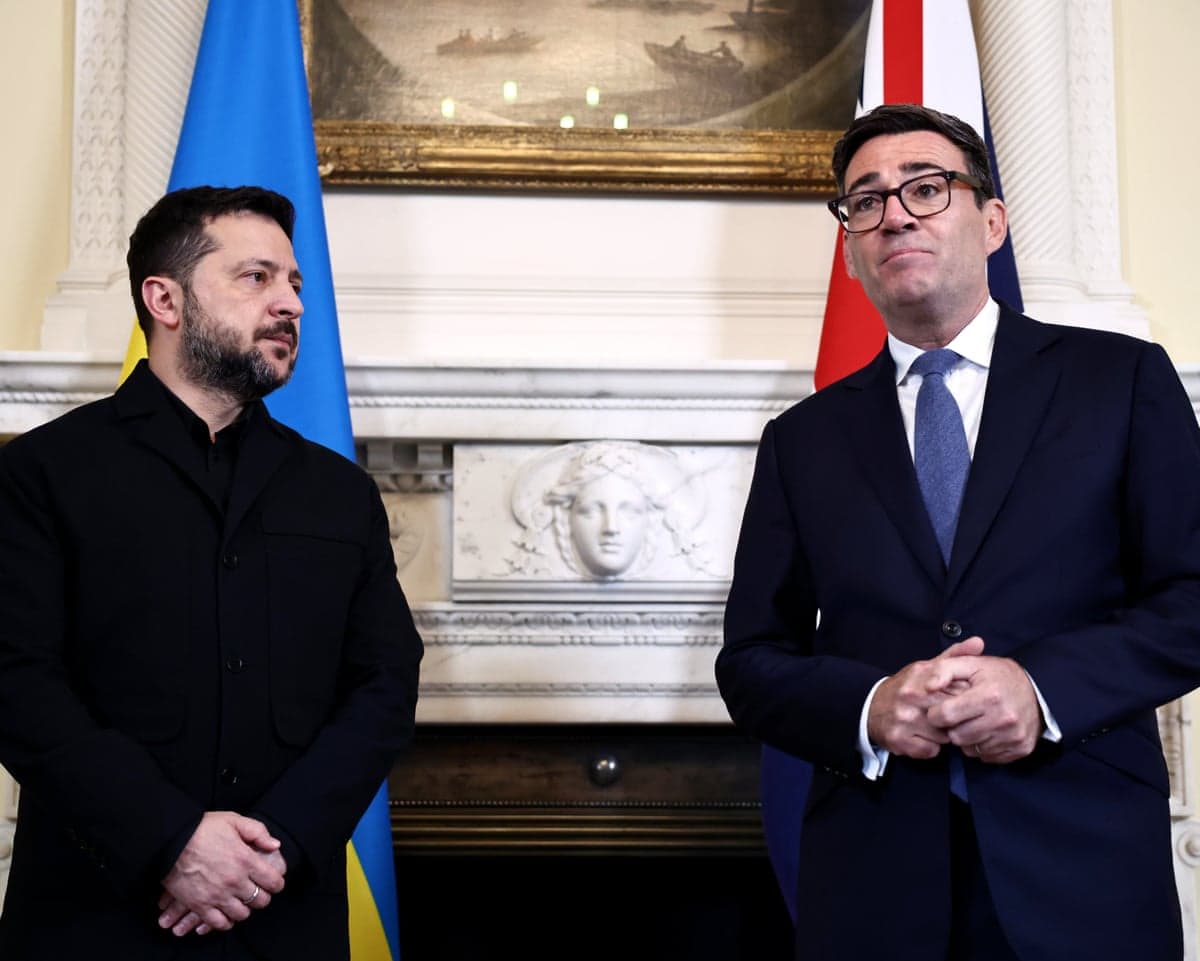
During a visit to London, the Ukrainian leader suggested that Trump has aligned himself with the opposing side in the prolonged war, creating fresh tension in an already fragile relationship. Speaking ahead of discussions with British Prime Minister Andy Burnham at Downing Street, Zelenskyy participated in a television interview where he was directly asked if he felt let down by the American president over the Starlink situation.
Really, yes … but it's a little bit more complicated than just my emotions or my feelings. It's a pity that we are losing, we are losing a strong partner.
In the early hours of the morning, Ukraine's military discovered without prior notification that the Starlink satellite communications infrastructure—manufactured by Musk's SpaceX but administered by the United States government—had experienced a sudden loss of connectivity. According to CNBC, the restriction specifically targeted terminals moving faster than 160 kilometres per hour.
This disruption rendered the majority of unmanned aerial vehicles deployed by Ukrainian forces to conduct strikes deep within Russian-held territory largely non-functional. The outage also compromised what military advisers described as the nation's most effective air defence capability—a system designed to intercept the jet-powered Shahed attack drones that Russia has been deploying in large numbers to bombard Ukrainian cities.
I am sure they knew what they did, absolutely. Because it was 1am at night, Starlink was blocked by SpaceX and the United States. This decision will bring a lot of human losses … of course, people will die.
Zelenskyy made these remarks during an interview with Piers Morgan, emphasizing his conviction that the timing and nature of the outage could not have been accidental.
What triggered the Starlink restriction?
The connectivity loss occurred as Russia launched ballistic missiles at Ukrainian targets for a second consecutive night. The American government has historically supplied Ukraine with advance warning of impending Russian strikes. Trump's administration initially denied responsibility for any reduction in intelligence sharing on Tuesday, but Zelenskyy disclosed in a subsequent interview with an American broadcaster that aired on Wednesday that his military advisers had been warned that future intelligence cooperation could face limitations.
Musk clarified that the decision to restrict Starlink access did not originate from him personally. The communications system operates under a structure where it is not directly licensed to clients engaged in weapons operations. Ukraine's military has been connected to a separate network called Starshield, which remains under direct control of the United States government.
Starshield systems are owned and controlled by the US government. Any limits on speed or usage are decided by the US military and ultimately POTUS.
Serhiy Beskrestnov, a military technology adviser to Zelenskyy and influential military commentator, described the outage as a targeted disruption designed to interfere with military operations. According to CNBC reporting, Beskrestnov stated that Ukrainian armed forces had received no advance notification of these limitations, resulting in the failure of multiple planned missions.
Our armed forces did not receive a warning about these restrictions and this led to the failure of a number of missions. It's clear that this action cannot be a coincidence and is connected to the current political situation.
How does this affect Ukraine's defence capabilities?
The speed restrictions imposed on Starlink have serious implications for Ukraine's air defence systems. Beskrestnov explained that the network forms part of
the most current effective solutionfor intercepting the jet-powered Shahed drones now deployed extensively to strike Ukrainian population centres. The interception rate for these drones had already declined from above 90 per cent to approximately 60 per cent after Russia upgraded the engines to jet propulsion in early summer.
The limitation also complicates Ukraine's deployment of medium-range drones for striking targets within Russian-occupied Ukrainian territory. However, the restriction would have minimal effect on Ukraine's long-range strikes against Russian oil refineries, since Kyiv is already prohibited from using Starlink for operations targeting locations inside Russia.
With their actions, our partners are depriving us of one of the few chances we have to defend ourselves.
Ukraine's former defence minister Mykhailo Fedorov indicated that Starlink speeds of up to 160 kilometres per hour were being restored, while calling for the speed limitation on Starshield to be eliminated entirely, according to the Washington Examiner.
What is the broader context of US-Ukraine tensions?
The two leaders experienced a significant rupture in spring 2025 during a troubled meeting at the White House, where Trump stated:
You don't have the cardsto win the war. That confrontation resulted in a temporary interruption of intelligence sharing and prompted urgent diplomatic efforts by European partners to repair the relationship.
Trump has demanded that Ukraine cease targeting Russian oil refineries, which he has attributed to elevated diesel costs globally. However, most energy analysts contend that the closure of the Strait of Hormuz following the American-Israeli military action against Iran has exerted a substantially larger influence on worldwide energy prices.
Trump announced an energy ceasefire between Russia and Ukraine last week, though the arrangement has not been formally confirmed by both parties. Zelenskyy stated he learned of the proposed ceasefire only after Trump disclosed it on his Truth Social platform. The Kremlin responded on Wednesday by claiming compliance with the ceasefire while simultaneously arguing that Trump had not provided sufficient detail about which energy infrastructure the agreement covered.
Dmitry Peskov, spokesperson for the Russian government, told journalists:
The energy truce proposed by Trump was not specified in detail, so it cannot be claimed that Russia is failing to observe it.
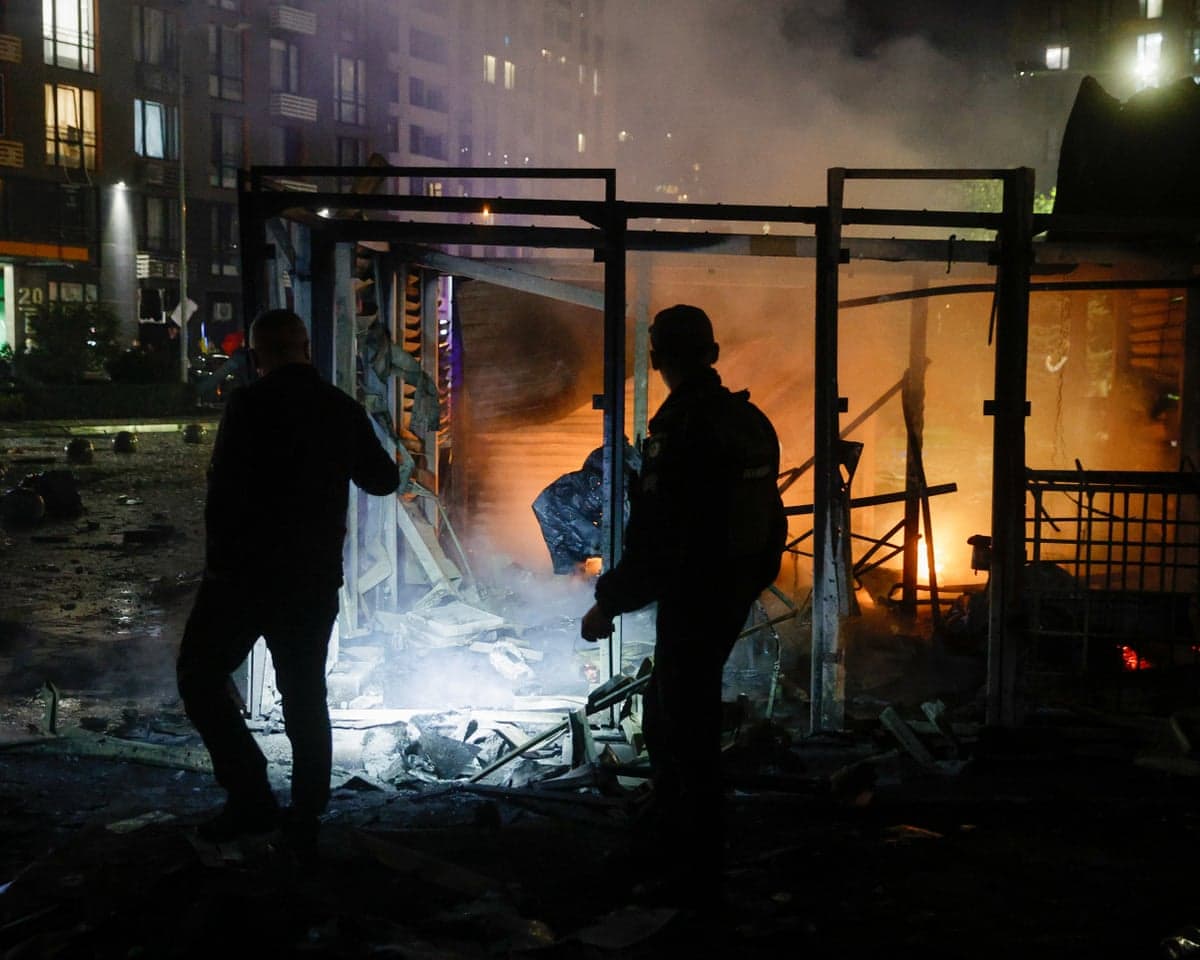
Russia launched a substantial assault on Ukrainian energy infrastructure late on Tuesday evening, according to Zelenskyy's account, deploying 39 ballistic missiles and 120 attack drones against Kyiv and Kharkiv. The strikes damaged five major power generating facilities, critical electrical substations, and other essential infrastructure serving major urban centres. According to CNBC, at least 600,000 residents in the Kyiv and Kharkiv regions lost electrical power, with potential for further widespread outages.
What happened during Zelenskyy's London visit?
Burnham received Zelenskyy at Downing Street on Wednesday, several hours after pledging to Members of Parliament that the Ukrainian president would depart Britain with concrete commitments. The Prime Minister had instructed officials to prepare additional sanctions and expedited military assistance options.
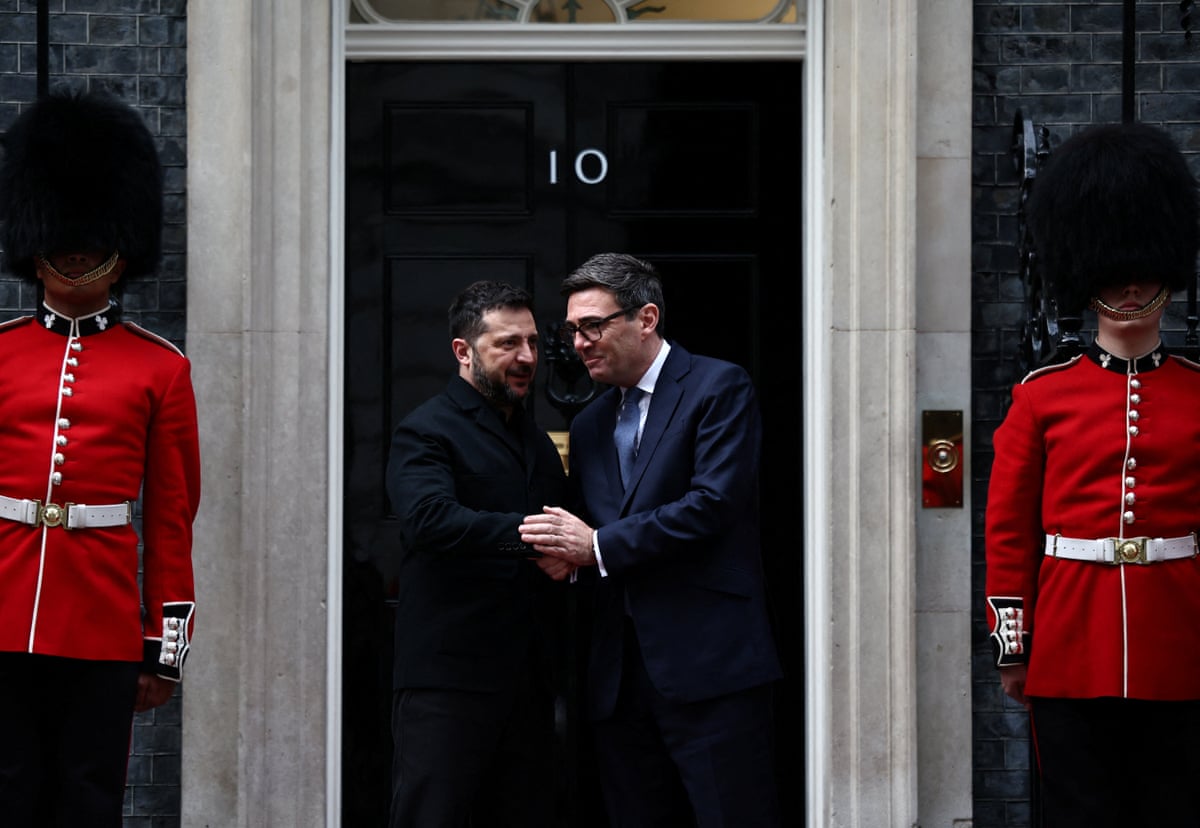
During their meeting at No 10, Burnham reaffirmed Britain's unwavering commitment to Ukraine's cause.
You have seen the solidarity and the support you have got from everybody here in Britain. We are behind you and that will not change.
Earlier on Wednesday, Zelenskyy had been received by King Charles at Buckingham Palace. In remarks to the assembled press, Zelenskyy indicated his intention to raise both Starlink access and intelligence sharing arrangements during his discussion with the British Prime Minister.
Burnham committed to accelerating deliveries of British lightweight multi-role missiles to Ukraine, which the country employs to counter Russian drone operations. He also stated that officials were investigating
all possible avenuesof additional support.
The Prime Minister indicated his readiness to examine the ceasefire proposal Trump had put forward regarding attacks on energy infrastructure, though he acknowledged that Moscow had not adhered to such an arrangement.
Sadly, what we have seen from Russia is further attacks on critical national infrastructure in Ukraine.
During Prime Minister's Questions in Parliament earlier, Burnham had stated he intended to be
carefulabout potential criticism of Trump that might intensify existing tensions. He described his approach as
laying the groundfor a reconciliation between the American and Ukrainian leaders:
I will listen to President Zelenskyy carefully, but he won't be going away from Britain today empty-handed.
The United Kingdom also announced £17 million in funding to support repairs to the protective structure covering the destroyed Chornobyl nuclear power plant, which sustained damage from Russian drone strikes in the previous year.
The meeting, which extended just over an hour, commenced with Burnham greeting Zelenskyy with an embrace on the Downing Street pavement. The two leaders then proceeded to the entrance of No 10 for photographs, positioned alongside Irish Guards in full ceremonial dress.
What are the implications for Ukraine's defence strategy?
The Starlink restrictions have exposed Ukraine's vulnerability to decisions made by foreign governments and private entities. In August, Zelenskyy had indicated that Ukraine was pursuing development of a Starlink alternative in partnership with an unnamed European nation, reflecting growing concerns about dependency on American technology and political goodwill.
The incident underscores the precarious position Ukraine occupies as it attempts to maintain military effectiveness while navigating complex relationships with its principal supporters. The sudden nature of the Starlink outage, combined with warnings about potential reductions in intelligence sharing, has intensified uncertainty about the consistency of American assistance.
What happens next?
Ukrainian officials have expressed hope that SpaceX will eliminate the speed limitation on Starshield entirely, though no timeline for such a decision has been announced. The outcome of Zelenskyy's discussions with British leadership and any subsequent negotiations with the Trump administration remain uncertain. The broader question of whether American support for Ukraine will remain stable through the remainder of the conflict continues to weigh heavily on Ukrainian strategic planning.