A continent-wide erosion of public confidence is fuelling far-right narratives of European decline, according to research that reveals a striking paradox: majorities across Europe want their continent to be stronger and more unified, yet harbour deep scepticism about whether such transformation is possible.
The study, which drew on 5,800 interviews conducted in France, Germany, Italy, the Netherlands, Poland and the UK alongside analysis of how Europe features in the politics and media of 15 nations, portrays a population caught between aspiration and disillusionment.
When asked to characterise Europe's trajectory, 68% of those surveyed described it in language suggesting "general deterioration or loss of normality", whereas only 12% framed the current moment as one of "European awakening and renewal". The findings paint a picture of citizens acutely aware of the continent's difficulties yet frustrated by the institutional response.
What challenges do Europeans see as most pressing?
Respondents identified multiple threats to the continent's future. War ranked highest, cited by 43%, followed by economic strain mentioned by 33%, and the imperative for Europe to achieve greater independence on the world stage, raised by 29%. Yet despite recognising these dangers, three-quarters of respondents—74%—judged that Europe was managing them poorly. More than half, 56%, expressed the conviction that Europe's future stood "in danger".
Do Europeans want a stronger Europe?
The appetite for European integration remains robust. An overwhelming 73% of respondents articulated a powerful vision for Europe centred on political unity and integration (35%), peace and security (28%), or economic prosperity (19%). Conversely, only 13% advocated for "less Europe" or the dissolution of the EU, suggesting that Euroscepticism rooted in a desire for reduced integration remains a minority position.
According to Pawel Zerka, a senior fellow at the European Council on Foreign Relations thinktank and author of the study, the disconnect between ambition and belief reflects a deeper psychological fracture.
"The problem is not that they've stopped wanting a stronger Europe, but that they no longer believe it's achievable,"Zerka explained. He characterised this as an "imagination gap"—citizens can envision the Europe they desire but struggle to conceive of a realistic pathway from the present state to that destination.
"These are matters of policy, not just communication,"he added.
The research comes at a moment of institutional significance. Ursula von der Leyen, the European Commission president, is scheduled to deliver her annual State of the Union address on 16 September 2026 in Strasbourg, an occasion when the Commission takes stock of the past year and sets priorities ahead. Zerka suggested that the evidence from this study pointed toward a need for a recalibrated approach. The bloc required
"fewer grand promises"and instead demanded
"proof of trajectory"—tangible demonstrations that European institutions could deliver results.

The study draws on dozens of conversations with ordinary Europeans to illustrate the texture of this disenchantment. One German respondent expressed a qualified attachment to the continent:
"I'm regularly relieved I live in Europe. It's not perfect and some things are going in the wrong direction, but no region in the world is safer, freer and more democratic."Yet this same individual identified the climate crisis and the rise of far-right parties as Europe's gravest challenges, while lamenting that neither was being addressed with sufficient urgency.
"Elections focus too much on the here and now, and not enough on the future,"he observed. When pressed on his hopes for Europe two decades hence—a vision encompassing freedom, democracy, sustainability, reduced debt, a leftward political shift and peace—he offered a blunt assessment:
"No."
How do researchers categorise European voters?
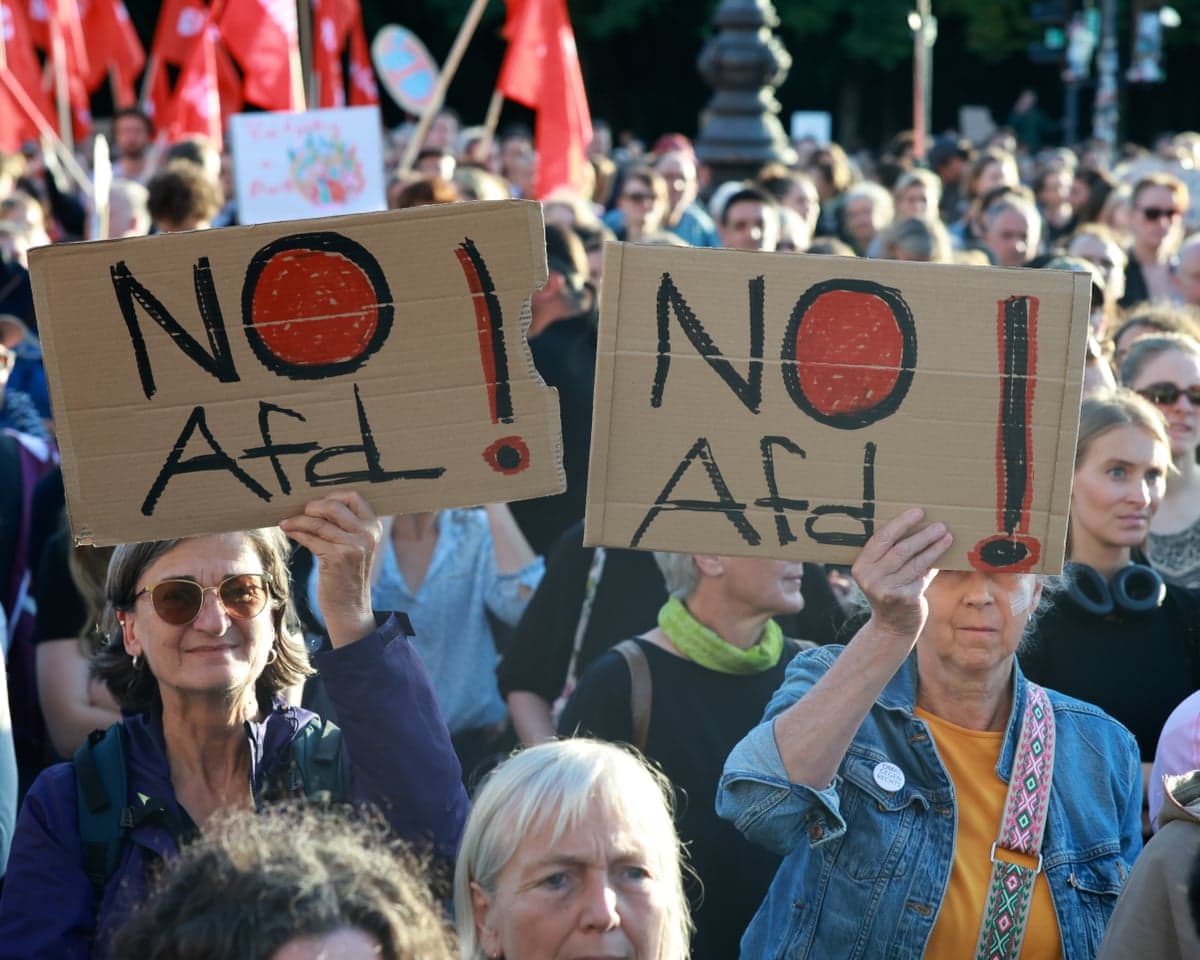
The study segments Europe's electorate into four distinct groups based on their relationship to the European project. The Positives, comprising 19% of respondents, represent committed pro-Europeans who interpret current crises as opportunities for deeper integration and institutional strengthening. The Negatives, at 39%, hold the conviction that Europe's most prosperous and influential years have passed. Almost half of voters in France, Germany and Italy fell into this category, as did nearly all supporters of radical-right movements including Germany's AfD, France's RN, the Dutch PVV and Reform UK. Among the Negatives, 83% articulated their vision of Europe through language of loss and decline.
The Disconnected, numbering 12% of respondents, occupy a position of relative indifference, treating EU integration as peripheral to their concerns. The Uncertain, representing 31%, retain pro-European convictions but are paralysed by doubt regarding the continent's capacity to act with decisiveness, safeguard its citizens or defend its foundational values.
What specific criticisms do Europeans voice?
Two complaints recurred with striking frequency across the survey. Nearly a third of all respondents, 32%, spontaneously raised what they termed "Europe's slowness"—a perception that the continent's institutions are mired in deliberation at the expense of action. One young Polish citizen, born in the 2000s, distilled this frustration with particular sharpness:
"The EU fundamentally discusses a lot, but does nothing."A second grievance, mentioned by 30% of respondents, centred on Europe's apparent inability to assert itself against more powerful international actors. This sense of geopolitical weakness and institutional passivity has become, in the eyes of many Europeans, emblematic of the continent's broader decline.
Why does the "Uncertain" group matter most?
Zerka identified the Uncertain category as pivotal to Europe's political future.
"Leaders tend to preach to the Positives or bow down to the Negatives,"he observed,
"but it is among the 'uncertain' where belief in Europe's future remains up for grabs."Unlike hardened Eurosceptics, the Uncertain retain genuine emotional investment in the European project. Their alienation stems not from ideological opposition to integration but from frustration with institutional lethargy, bureaucratic inefficiency and perceived weakness in the international arena.
Reversing this disenchantment, Zerka argued, would demand that political leaders demonstrate that coordinated European action can resolve concrete domestic challenges. These span energy security and defence—concerns sharpened by geopolitical tensions and NATO's assessment of European defence readiness—to climate change and the cost-of-living crisis that directly affects household finances and wellbeing.
The timing of this research underscores the stakes involved. The European Parliament has announced that MEPs will debate current challenges with von der Leyen immediately following her 16 September 2026 address, providing an institutional platform for wrestling with the very questions this study raises. This will be von der Leyen's sixth State of the Union address and her second in the current legislative term, occurring against a backdrop of critical geopolitical developments.
What happens next?
Von der Leyen's address on 16 September 2026 will offer an opportunity to test whether European leadership can move beyond rhetorical commitment to concrete demonstration of the continent's capacity to act. The Parliament debate scheduled for the same day will provide a forum for scrutinising whether the Commission's priorities align with the concerns and aspirations documented in this study. For the Uncertain voters who hold Europe's trajectory in their hands, the question is whether such institutional moments can translate into the tangible proof of progress they increasingly demand.