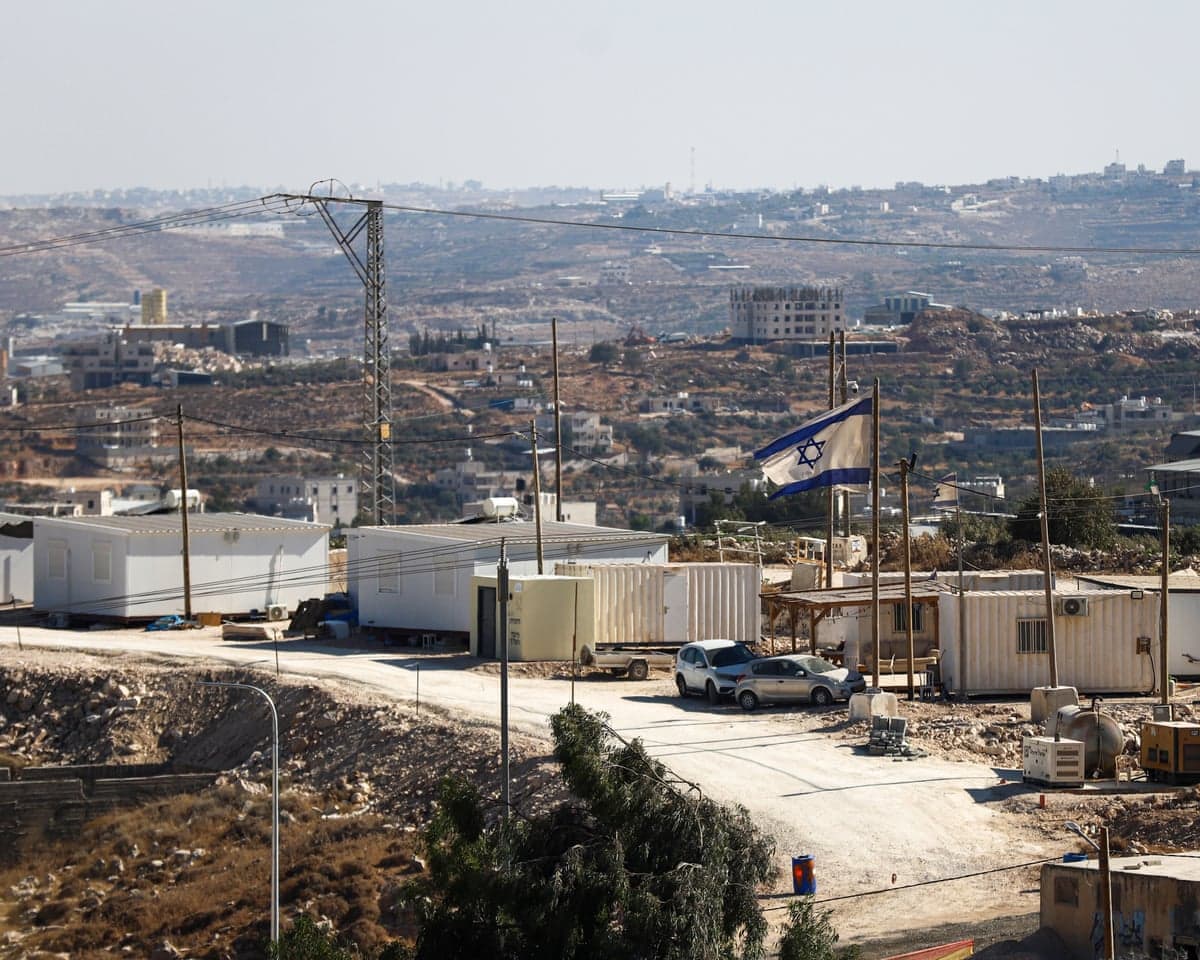
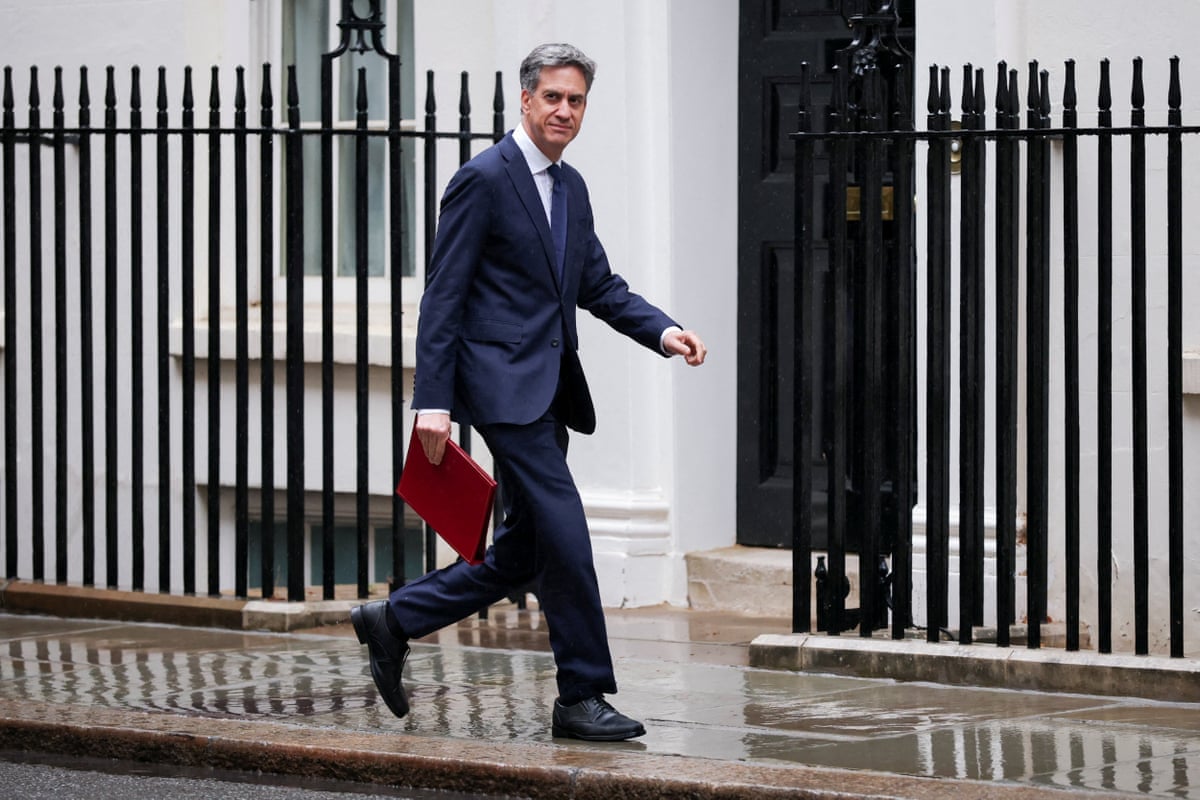
Britain is set to announce a formal trade ban on goods produced in Israeli settlements on the occupied West Bank, a significant shift in policy that has already drawn fierce condemnation from Israeli officials and warnings of retaliation from the United States. Foreign Secretary Ed Miliband will present the measure to Parliament later on 8 September 2026, framing it as essential to preserve the viability of a two-state solution as settlement expansion accelerates.
The announcement represents a departure from years of rhetorical opposition to settlement growth by successive UK governments. According to , the package may extend beyond a simple import ban to encompass a wider sanctions regime covering the exchange of goods and services with Israeli settlements. Although the New York Times reports that settlement goods represent only a small fraction of the roughly US$8 billion in annual UK-Israel trade, the symbolic and political significance of the move is substantial.
The government's decision comes as reports indicate that Prime Minister Andy Burnham's administration is prepared to accept potential diplomatic and economic consequences from Washington and Tel Aviv. Earlier in September, Miliband had signalled that Britain would set out a comprehensive response to Israeli settlement expansion in the coming weeks, and that commitment is now being fulfilled.
How have Israeli officials responded?
Israeli government ministers have reacted with fury and threats of retaliation. Foreign Minister Gideon Saar issued a stark warning, stating:
If Britain acts against Israel, Israel will act against Britain.
National Security Minister Itamar Ben-Gvir, a far-right member of Benjamin Netanyahu's coalition, posted a provocative message drawing a parallel to the Falkland Islands dispute. He wrote:
It's time for the State of Israel to publicly recognize that the Malvinas Islands are Argentine territory under occupation, which the British violently steal from the Argentine people. The British are not content with merely occupying the territory; they also carry out oil drilling there and steal the money from the Argentine people. I call upon Prime Minister Benjamin Netanyahu to recognize Argentina's sovereignty over the Malvinas Islands and to impose sanctions on Great Britain as long as the occupation continues.
Finance Minister Bezalel Smotrich, another leading far-right figure in Netanyahu's government, called for the expulsion of the British ambassador and issued a combative statement:
Expel the British ambassador tonight! We will not be a doormat trampled by an antisemitic government, in a country conquered by radical Islam, trying to save itself from economic and social decline by attacking Jews and the State of Israel. The British Mandate in the Land of Israel is over.
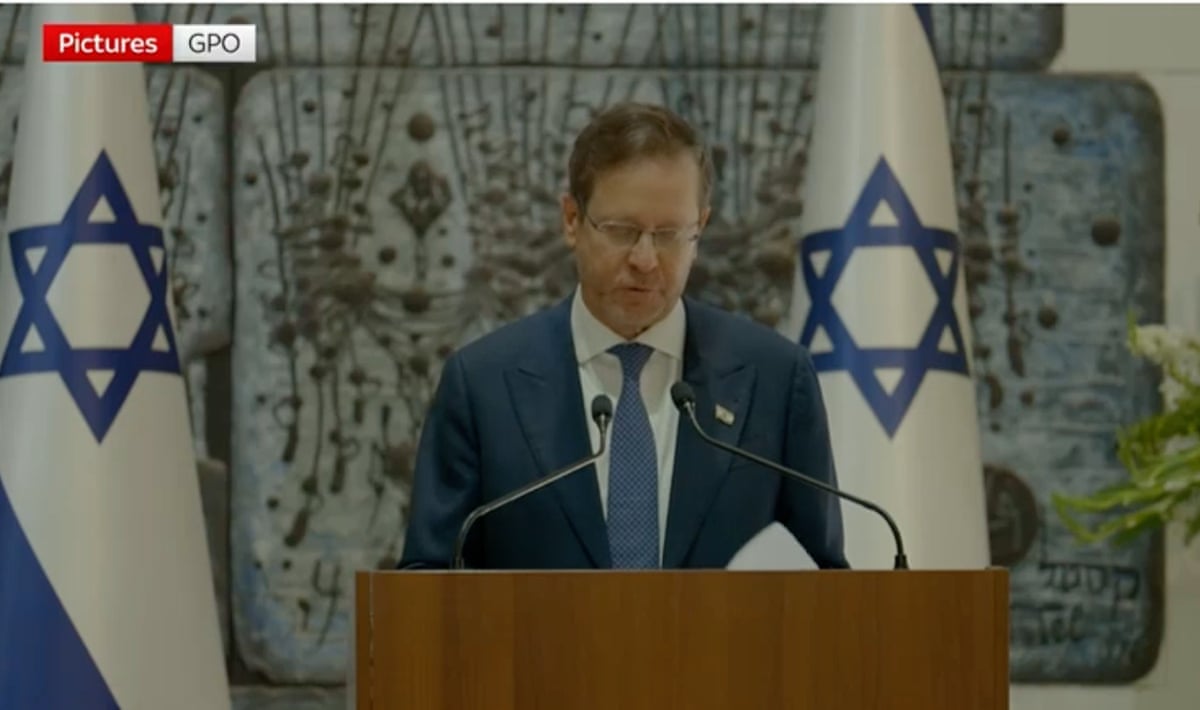
Israeli President Isaac Herzog characterised the trade ban as interference in Israel's democratic process and warned of historical consequences. In a statement delivered on camera, Herzog said:
Later today, we expect to see headlines announcing certain British trade sanctions on Israeli settlements in Judea and Samaria. If this happens – and other nations may join – I believe it will prove to be a grave miscalculation, a decision that will fall on the wrong side of history. In the current context, it would be a gross interference in the democratic elections of a sovereign nation, and it will serve no one. It will directly harm, unfortunately, Palestinians, robbing them of business and employment. And ultimately it will undermine the interests and national security of freedom-loving nations. Sanctions are not a solution. Dialogue is. I say to all foreign governments, stop. Step away from the dead end of sanctions and boycotts, and turn towards constructive dialogue and towards cooperation.
What is the UK government's rationale?
The government's position centres on preventing the permanent foreclosure of a two-state solution through continued settlement expansion. Work and Pensions Secretary Pat McFadden, speaking for the government on morning news programmes, explained the urgency of the measure:
At the heart of the statement is the idea that the UK, along with many other countries, do not want to see the possibility of a two-state solution in Israel and Palestine being erased by changes to the facts on the ground, and the reason that danger has become more urgent is because of expanded settlement activity in recent weeks and months.
McFadden highlighted the particular concern over planned development in the E1 area, which could result in the effective cutting off of the north of the West Bank from the south. He stressed that the measure targets Israeli government policy rather than the Israeli people or the broader UK-Israel relationship:
Israel is an important security ally, and in the context of what we're saying today, I think it's also important to distinguish between action which is announced in response to policies of this Israeli government at this time, and the people of Israel and the links between Israel and the UK, which are important and valuable and will continue to be so.
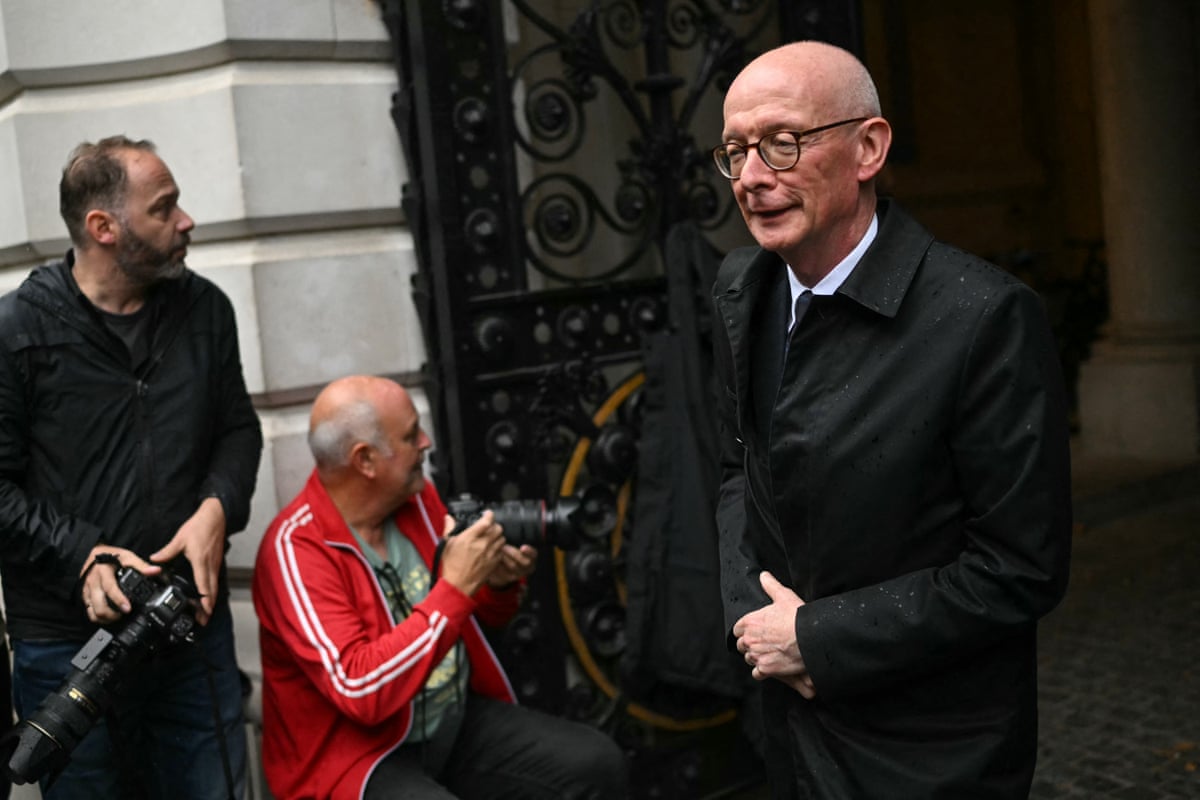
McFadden also rejected characterisations of the ban as a boycott of all Israeli goods, emphasising that Israel remains an important trading partner. He told :
I think it's also important to say that Israel is an important trading partner for the UK. This isn't intended to be a boycott of all Israeli goods.
When asked about accusations of antisemitism levelled by US Ambassador Mike Huckabee, McFadden firmly rejected the claim:
I fundamentally reject that. When it comes to the Jewish community in the UK, this is a really important part of our society. I want Jewish people in the UK to be able to live their lives freely in education, in work, in worship, in all aspects of their lives, and I and every government minister would condemn any attacks on the Jewish community here in the UK.
What warnings have come from the United States?
Mike Huckabee, the US Ambassador to Israel, has warned of significant economic consequences for Britain. In an interview with the Today programme, he questioned whether the UK government understood the implications of its decision:
I don't know if [the British government is] really aware of the implications and how it's going to affect Brits. For example, 25% of pharmaceuticals that are used in the UK are made in Israel. Are they willing to give those up? It looks like they are. Are they willing also to do great damage to any Brits who are doing business in a number of states in the US? I don't know what all of the national sanctions or repercussions or retaliations will be from the US. [That] hasn't been announced yet. But I do know that there are a number of states – let me mention one, one of the largest US states, Florida – it has a law that if this action is taken, then Brits will not be able to do business with any company or business in Florida.
Huckabee characterised the trade ban as irrational and discriminatory. He said:
This is an irrational action. That's what I'm saying. I don't understand what it's supposed to achieve. If the UK is really interested in dealing with issues they feel like are wrong, where are the sanctions against North Korea, China, Russia? Where are the sanctions against many other nations in the world?
The ambassador's observation about sanctions against Russia and other nations was notable given that the UK has maintained and regularly tightened sanctions against Russia since its invasion of Ukraine, and does maintain sanctions affecting trade with North Korea and China.

Huckabee also claimed the ban would constitute discrimination:
I feel like that it's a discrimination against the Israeli government, it's discrimination against the Jewish people and I don't understand the rationale of it.
When asked whether he had discussed the UK trade ban with President Donald Trump during the week, Huckabee said he had not. However, he warned of broader repercussions:
I don't know if they have thought through, it's like throwing a stone and not having an idea of where it's going to land. And I realise the UK is a sovereign country, they can do what they want, but so is the US.
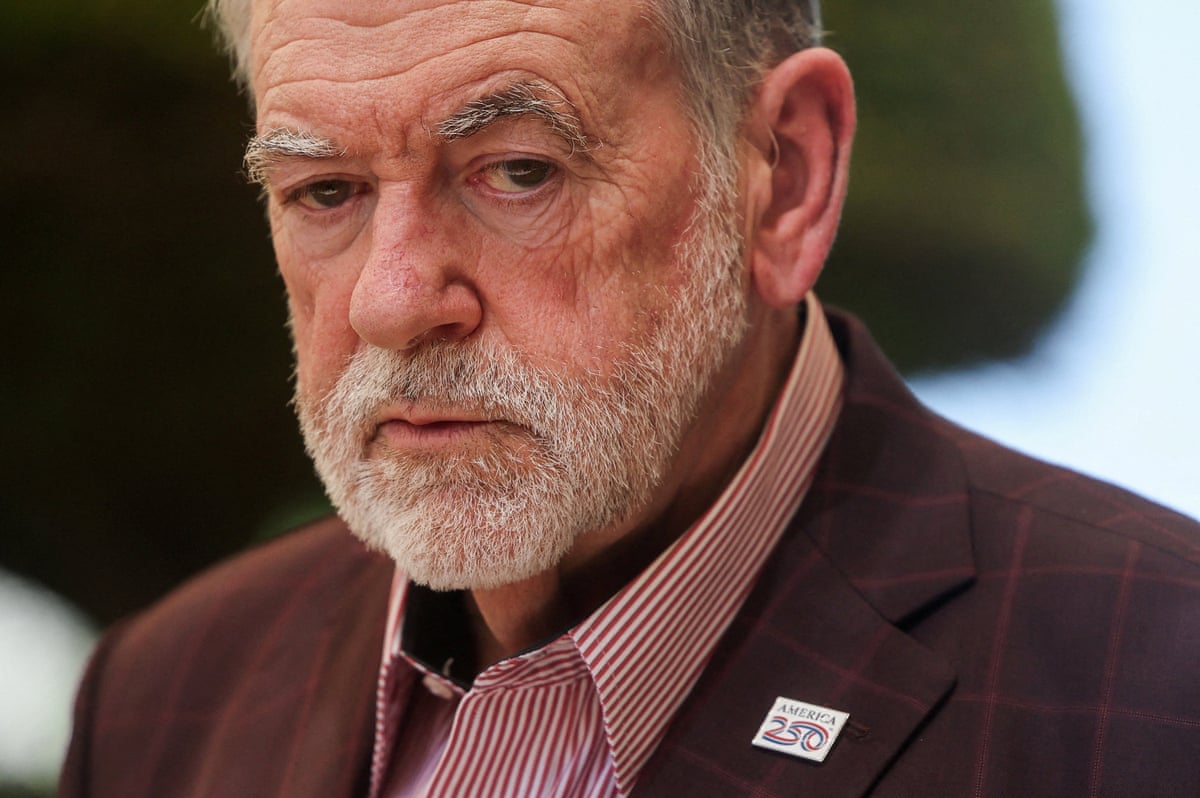
Huckabee defended his earlier accusation that the UK government was guilty of antisemitism, even though he acknowledged that Foreign Secretary Ed Miliband is Jewish. He said:
There are some Americans that don't like America very much. They march in the streets and burn our flags. Doesn't mean that they love America just because they live there. You go by what people do, not just by what they say or who they're related to.
On the question of the two-state solution, Huckabee attributed the failure to implement it to Palestinian rejection rather than Israeli settlement expansion:
The two-state solution has been a policy for a long time, but it's on hold because the Palestinians have rejected a two-state solution. When it was offered to them under Bill Clinton in the year 2000, all the parties were at the table and Yasser Arafat showed up. He was offered 97% of the territory, 97%, including East Jerusalem, and he walked away from it.
Huckabee also claimed there was an imbalance in reporting of West Bank events and that Palestinian violence against Israelis was not adequately covered in the media. He rejected the term occupied West Bank.
What concerns have been raised by British MPs?
The announcement has divided opinion among British parliamentarians. Labour MP Peter Prinsley, vice chair of Labour Friends of Israel, warned that the trade ban could increase the risk of antisemitic attacks on British Jews. In an interview with the Today programme, he said:
My fear is that opponents of Israel won't distinguish between Israeli government policy, Zionistic political philosophy, and British Jews. As far as they're concerned, the whole thing's the same, and I think it carries a real risk of increased chances of attacks on the British Jewish community. Which is exactly what I said to Ed Miliband when I was asked to see him two or three nights ago.
Prinsley also criticised the timing of the announcement, which comes weeks before Israeli elections scheduled for 27 October 2026. He explained:
I think the timing is terrible. I think we need to wait for the result of the Israeli election, and then we need to have another think. We must do whatever we can to preserve the two-state solution, and I think the behaviour of the presently-elected Israeli government is really outrageous in this respect. I have a horrible feeling that what we're doing will not only embolden the present government of Netanyahu, but has the capacity to influence the election itself, which is on a knife edge.
Conservative opposition has focused on the practical and strategic difficulties of implementing such a ban. Shadow Home Secretary Chris Philp described the measure as performative posturing on the Today programme:
We think it's performative posturing. It's very difficult to distinguish goods that come from the West Bank area versus the rest of Israel. So practically, it's very difficult to implement. It also risks damaging an important security relationship because we do rely, the UK relies, on Israel for vital information and intelligence about terrorist threats.
However, Philp acknowledged Conservative opposition to settlement building:
But I would also like to say, that said, we do oppose the building of settlements on land which is Palestinian, whether that's sponsored by the Israeli state or simply allowed to happen, because we do think a two-state solution is the right solution, and building settlements on Palestinian land is obviously wrong.
What is the broader policy context?
The UK's move represents an escalation from previous measures. In June 2026, the UK and several allied nations imposed sanctions on firms and individuals linked to settler violence in the West Bank. Prior to that, the government had issued guidance advising British businesses not to engage in economic or financial activity in Israeli settlements, but this did not constitute a formal trade ban.
The announcement also reflects a shift in approach under the new Burnham administration compared to its predecessor. Prime Minister Andy Burnham's government has signalled a willingness to take more assertive positions on international issues, and this decision on Israeli settlements represents one of the first major foreign policy tests of the new cabinet.
The decision comes amid broader tensions over UK-Israel relations and the government's approach to the Israeli-Palestinian conflict. The previous Starmer administration had faced criticism from progressive voters over its perceived reluctance to take stronger action on Palestinian concerns, though it had previously taken steps to address the issue.
What happens next?
Foreign Secretary Ed Miliband is scheduled to make a formal statement to Parliament on 8 September 2026 outlining the full details of the trade ban and any accompanying measures. The announcement will come after a cabinet meeting chaired by Prime Minister Andy Burnham and a Downing Street lobby briefing. Chancellor John Healey will take questions in the Commons earlier in the day.
The full scope of the sanctions regime remains to be detailed, though reports suggest it may extend beyond a simple import ban to cover a wider range of goods and services. The government will need to clarify implementation mechanisms and timelines for the measures to take effect.
The announcement is likely to trigger formal responses from the Israeli government, the United States, and potentially other nations. Whether other countries follow Britain's lead in imposing similar restrictions on settlement goods remains to be seen, though the government has indicated it is acting in concert with other nations concerned about settlement expansion.