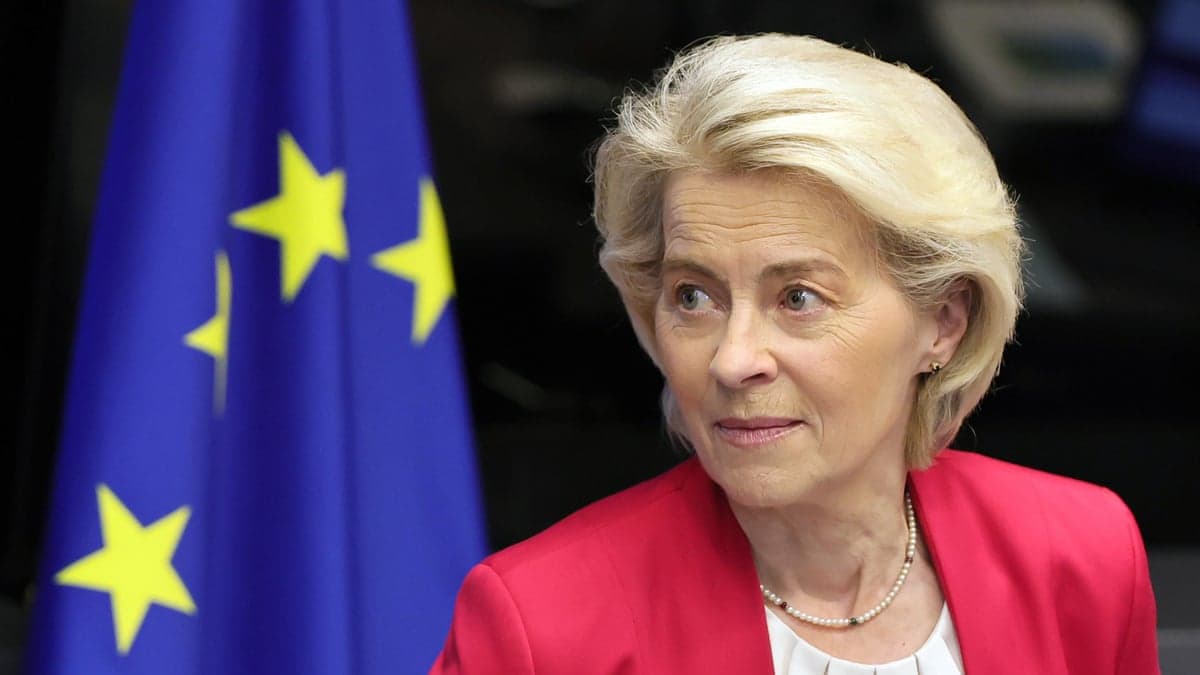
European Commission President Ursula von der Leyen delivered her annual State of the Union address on 16 September 2026 at the European Parliament in Strasbourg, framing the bloc as simultaneously its strongest yet most vulnerable. Drawing a parallel to Charles Dickens's description of the French Revolution—"it was the best of times; it was the worst of times"—von der Leyen outlined an EU navigating unprecedented challenges from geopolitical hostility, climate crisis, and economic competition.
The address, broadcast live from 09:00 to 11:50 CEST, covered security, competitiveness, Ukraine, migration, trade tensions with China, defence, and Arctic concerns. The debate followed the address in Strasbourg with interpretation in all 24 EU official languages and international sign language, marking the 14th State of the Union address since the tradition began.
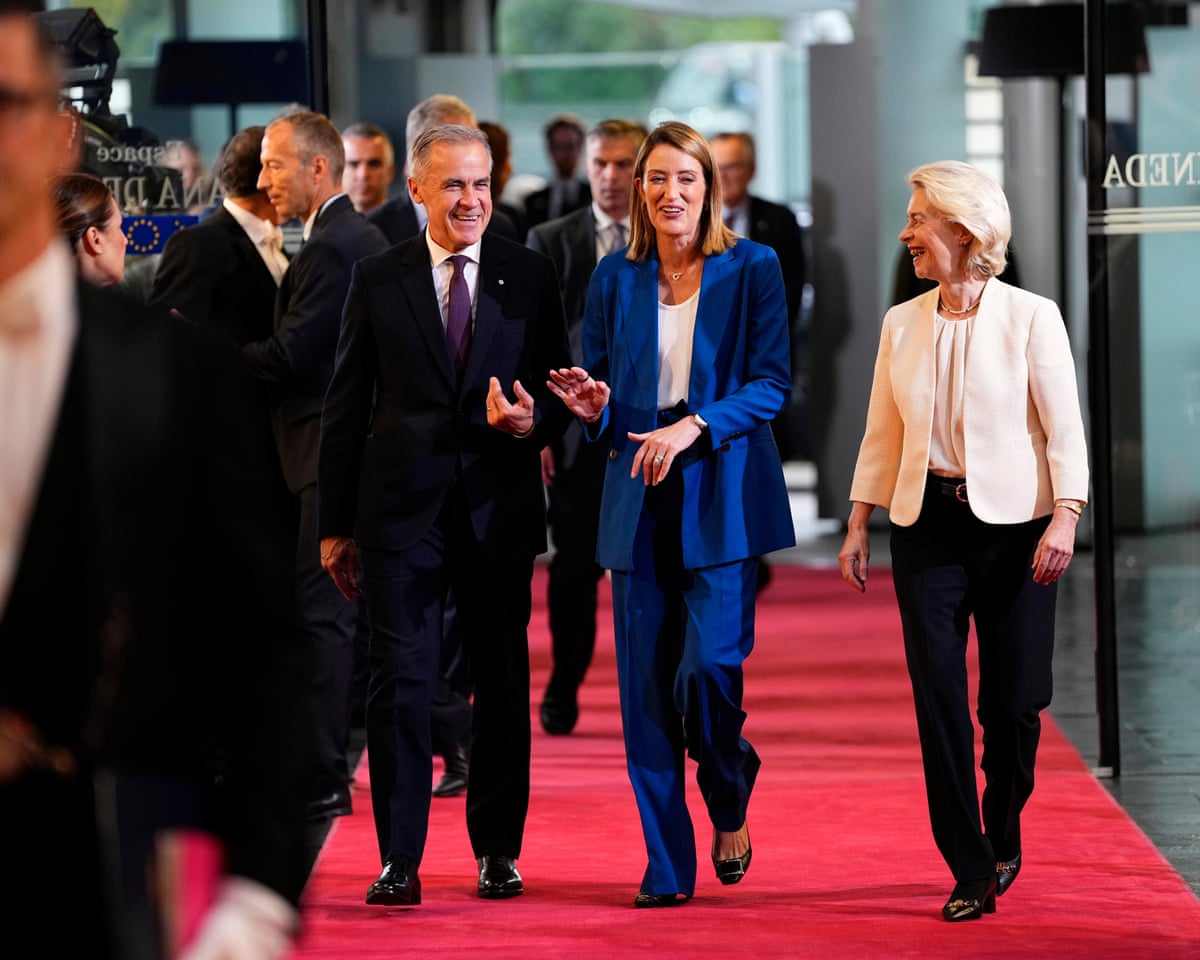
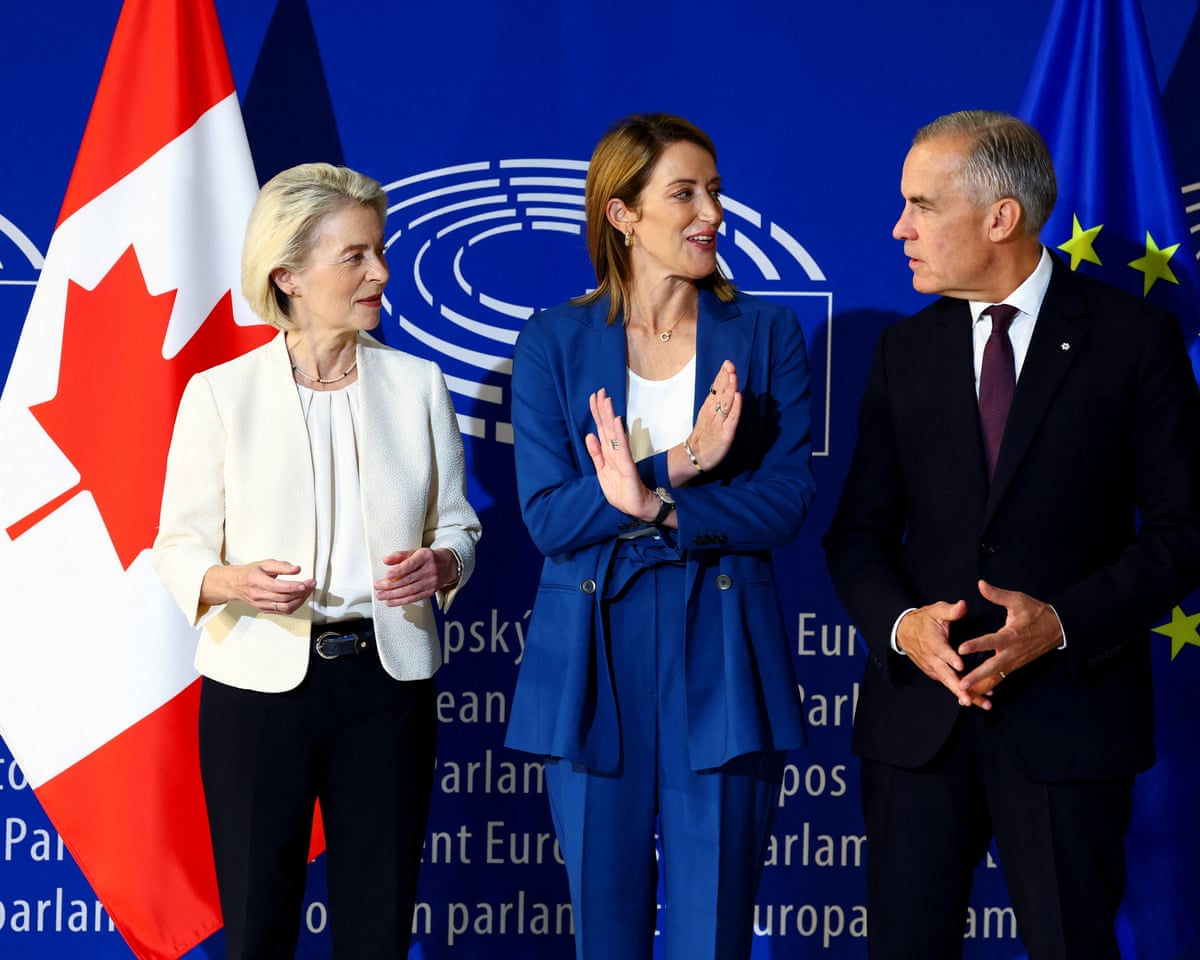
Canadian Prime Minister Mark Carney attended as a special guest, receiving warm applause from EU lawmakers as the bloc seeks closer ties with Canada on defence, digital regulation, and trade amid escalating tensions with the United States.
Tribute to pilot killed fighting Greek wildfires
Von der Leyen opened substantive remarks by honouring a 46-year-old Danish helicopter pilot, Rune Kyndal, who died in July during an emergency wildfire-fighting mission in Greece. With his family present in the chamber, she declared that
all of Europe owes him, prompting the parliament to rise in a standing ovation.
Climate crisis demands urgent action
The Commission President characterised this summer as a turning point for climate awareness across the continent. She warned that
this summer was the summer of truth, with devastating impacts across Europe. The figures she cited were stark: 660,000 hectares burned, approximately 12 million tonnes of crops lost, and over 35,000 excess deaths recorded.
Von der Leyen stressed the accelerating nature of the crisis, stating
this was the hottest summer months ever, but probably the coolest of the years to come. She acknowledged that
the transition is complex and we will need to adjust and learn along the way, but insisted
there is no doubt: can, must and will stay the course on our climate targets.
She announced that the EU would propose a new climate resilience package in the following month, alongside a separate initiative on heatwave preparedness that includes rules on urban adaptation and cooling infrastructure.
Water and agricultural resilience under strain
Turning to resource management, von der Leyen highlighted the paradox of water scarcity amid significant waste. She noted that
European pipes lose almost one litre in every four litres, mostly through leakage, describing this as a critical inefficiency. She warned of
the risks of water scarcity for our farmers, SMEs, energy and supply chains.
Acknowledging farmers' efforts during the challenging summer, she pledged to
support them every step of their way. On wildfires specifically, she stressed that
they are getting more intense, more frequent and more spread out, requiring the EU to
think bigger and learn fasteron preparedness and emergency protocols.
European innovation as a model for growth
Von der Leyen highlighted investment and economic growth as interconnected priorities. She singled out ICEYE, a radar satellite imaging and space-based monitoring company, as a European success story. Founded by Finland's Pekka Laurila and Poland's Rafał Modrzewski after they met through the Erasmus student exchange programme 15 years earlier, the firm has become one of the world's leading space technology companies. She told the founders,
You are a true European success story.
She stressed the need to simplify investment rules and tackle fragmentation to support European start-ups, emphasising that speed and regulatory clarity are essential for attracting capital and creating jobs.
Trade deficit with China reaches unsustainable levels
Von der Leyen turned directly to China, warning that the EU's trade deficit with the country has reached €1 billion per day and
reached its tipping point. She declared that
some say the second China shock is looming, but it's already here. It shows in our communities and factories across our union. It leads to deindustrialisation in the industrial heartlands of Europe. This is unsustainable.
She committed the EU to
use all tools at our disposal to rebalance our relationships, and highlighted the necessity of diversifying access to critical raw materials to reduce dependency.
Energy independence through electrification
On energy policy, von der Leyen stressed that
Europe cannot remain an industrial powerhouse if its energy prices are structurally too high. She noted that while the bloc successfully pivoted toward homegrown clean energy following Russia's full-scale invasion of Ukraine, it
bitterly felt the costof subsequent global supply disruptions.

She called for accelerated investment in renewable and nuclear capacity, stating
we need to electrify Europeand cut fossil fuel import bills. She emphasised that
be it renewables or nuclear, be it biomethane or others. Technologically neutral. But these energies must give us independence and drive down energy prices.
A significant bottleneck, she noted, is grid connection delays. Substantial renewable capacity awaits connection to the network, and speeding up this process is essential to delivering energy independence and lower costs.
Single market reform and regulatory speed
Von der Leyen declared that
kickstarting Europe's economy is our number one priority, requiring the bloc to leverage its vast market, world-class industries, and services. She identified fragmentation within the single market as a persistent obstacle and set an ambitious target: completing further single market reforms by the end of the following year.
She emphasised that in modern economies,
speed is of the essence. A permanent permit or a form, a grid connection of financing decision – all of this can determine where an investment is made and where jobs are created. We need to move much faster. Simplifying EU rules across sectors emerged as a cross-cutting theme throughout her remarks on competitiveness.
Democracy under threat from authoritarianism and disinformation
Von der Leyen framed the geopolitical moment as a choice between
independent [Europe] that stands up for its values in this worldor
letting divisions and dependencies hold us back. She posed a direct question to lawmakers:
Do we want to rally around our European idea that together we can decide our own destiny? Or do we let our democracies be undermined by the proxies and puppets of authoritarians?
She identified multiple threats to European unity, stating
whether it is the ultra nationalist or the anti-European, whether it's Russian interference or disinformation, the names may be different, but their goal is the same. They despise our values and they want to shatter our European unity. She called on the bloc to
not only fight back against that, but let's fight together for our European ideal.
Confronting an openly hostile international environment
Von der Leyen warned that
we are now dealing with an openly hostile world, in which
old assumptions and relationships have frayed. She identified multiple concurrent crises:
a territorial war of aggressionin Ukraine,
a fight for industrial capacitiesand narratives, and rapid technological change disrupting societies.
She observed troubling social trends, noting
we see this in the rise of the extreme and the decline of nuance, even in the way that we relate to each other. These real concerns are being weaponised to drive a wedge between us, sometimes from the outside, but too often from the inside.
Despite these pressures, she articulated a clear strategic direction:
our path is clear. Building an independent Europe that has the power to act. Nothing can divert us from this. Because in this world, the fate of Europe must remain in the hands of Europeans.
The paradox of strength and precarity
Von der Leyen synthesised her diagnosis of the EU's condition in a paradoxical statement:
I would say the state of our union is the strongest it has ever been. The state of our union can also feel as precarious as it has ever been. These two statements may seem incompatible, but they are both true and they reflect these exceptional times.
She highlighted concrete sources of European strength: the bloc has
chosen to forge its own pathby breaking free from Russian fossil fuel dependency, strengthening defence capabilities, and standing firmly with Ukraine.
In the cold fragility of today's world, only Europe can provide true sovereignty for Europeans, she asserted.
Parliament president sets expectations for EU action
European Parliament President Roberta Metsola opened the session by welcoming Carney and setting out public expectations for the EU's response to contemporary challenges. She stated that
our union has always moved forward because people were willing to take a leap where the moment demanded it and turned uncertainty into possibility.
Metsola outlined what citizens expect:
people expect a union that does more to protect them, more to support them, and more to fight their corner. They want answers on security, on competitiveness, on affordable homes, on quality jobs, on climate, on borders. They want us to stand up for a Europe of values. She pointedly emphasised the need to continue supporting Ukraine.
What happens next
The plenary session was expected to conclude around 12:30 pm on 16 September 2026, with the debate following von der Leyen's address. Carney was scheduled to address the European Parliament on 17 September 2026 as part of Canada's effort to deepen ties with the EU on defence, digital regulation, and trade amid deteriorating relations with the United States.