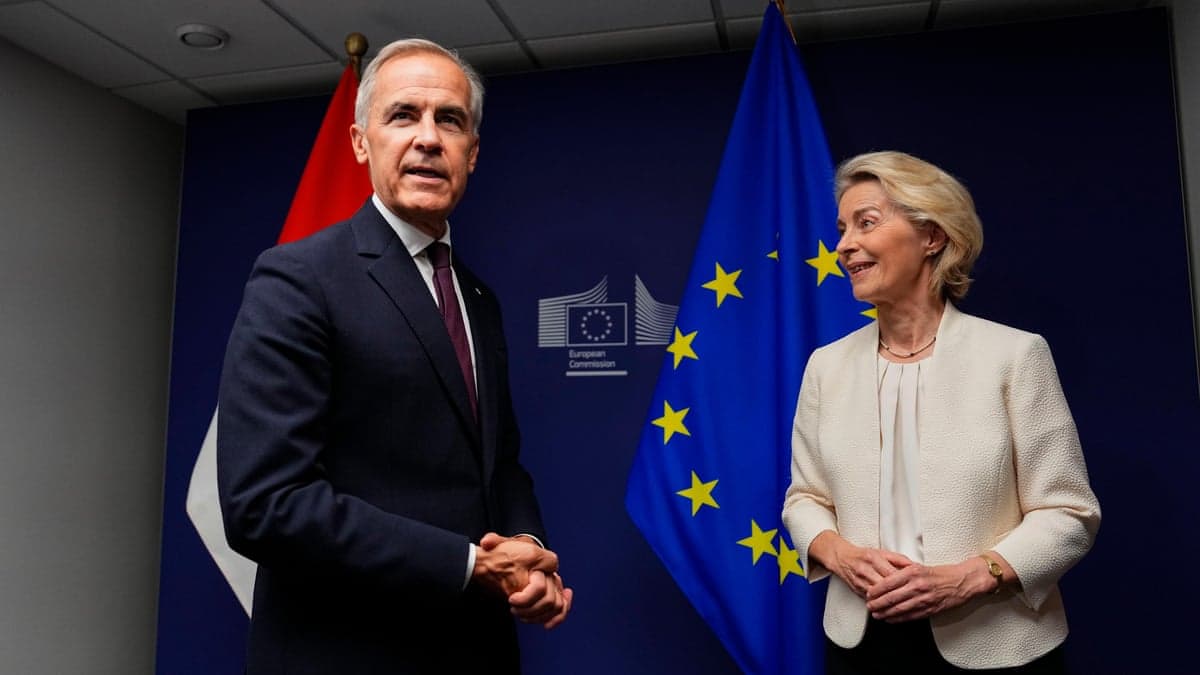
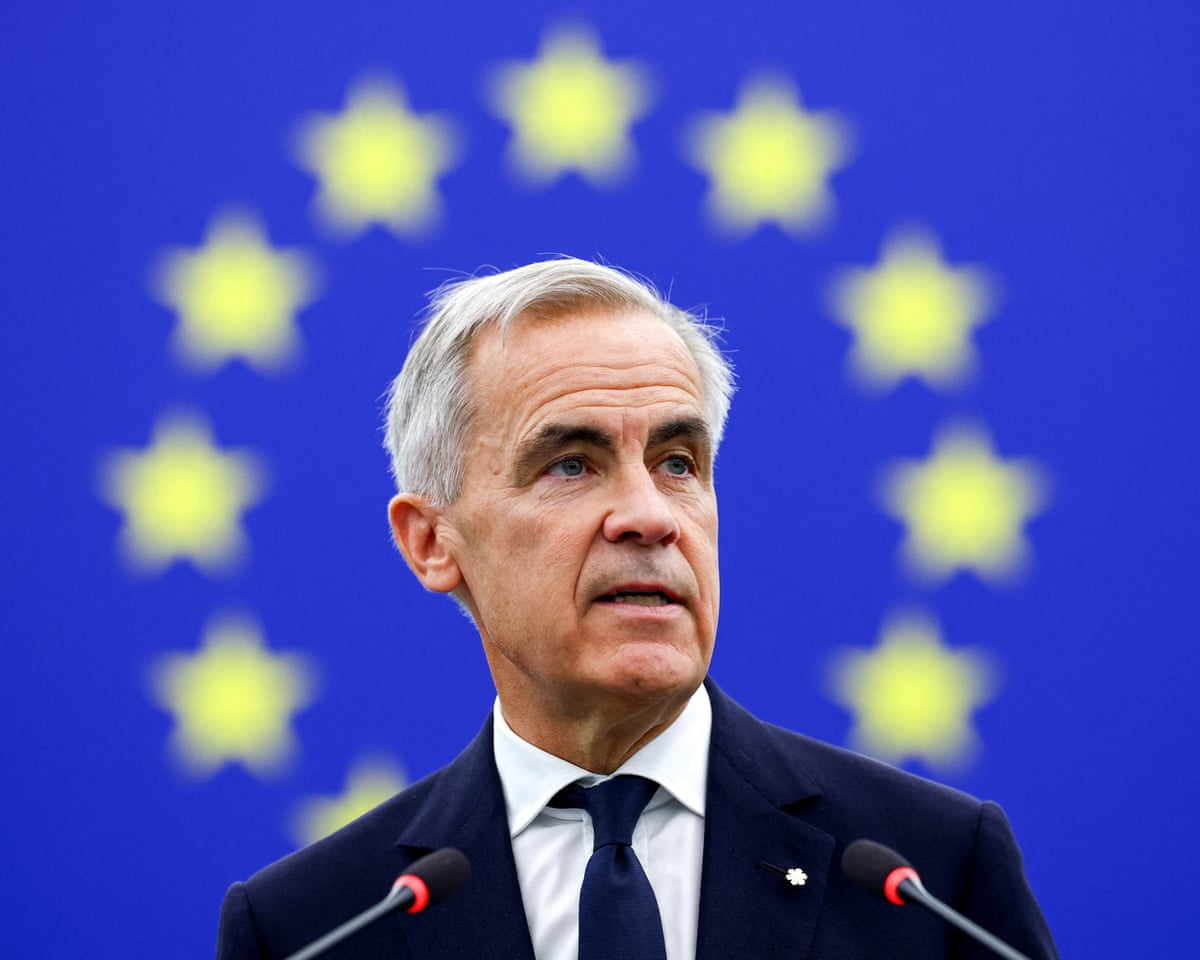
Canadian Prime Minister Mark Carney addressed the European Parliament to advance a proposal for closer ties between Canada and the European Union, including the possibility of Canada becoming the bloc's first associate member. The initiative comes as U.S. President Donald Trump has threatened tariffs against the EU or a halt to trade if the arrangement proceeds, characterizing it as potentially a hostile act.
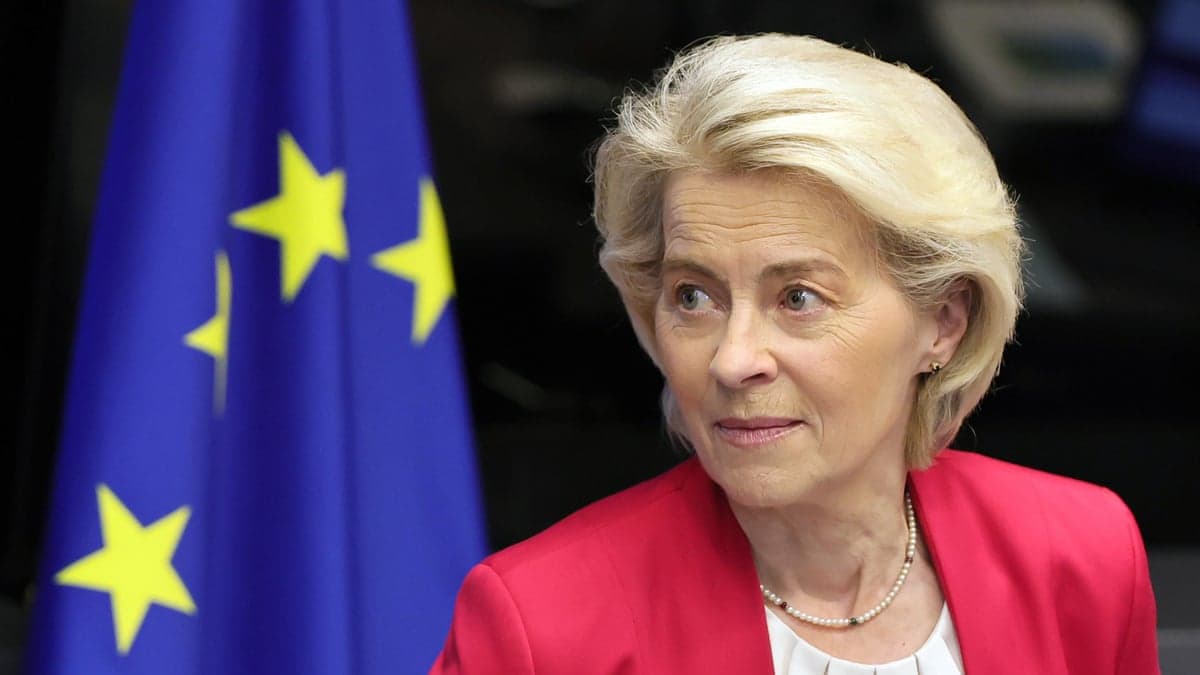
European Commission President Ursula von der Leyen formally proposed the associate member concept for Canada, marking an official political signal rather than speculation. The proposal has generated significant interest but also international tension, with von der Leyen publicly stating she wants to open the door for Canada to assume this new status.
What does 'associate member' actually mean?
The associate member concept currently has no legal foundation in existing EU treaties. Any such arrangement would require member states to ratify a new status from scratch, making this an unprecedented proposal. According to analysis, the idea has no current legal basis in the EU treaties, which explains why it is being described as an unprecedented concept. Carney has clarified that Canada is not seeking full EU membership but rather a distinctive partnership tailored to both parties' strengths and needs.
What strategic benefits does Carney see in closer ties?
Carney framed the partnership as essential for both regions to maintain sovereignty and resilience in an increasingly unstable world. He argued that
Canada and the EU can anchor our ground to hold our values while forming a protective canopy under which our citizens can thrive.
He emphasized that modern sovereignty extends beyond traditional defence and food security to encompass access to artificial intelligence, semiconductors, critical minerals, payment systems, clean energy technologies, vaccines and space-based communications. Carney stressed that
Sovereignty today goes beyond being able to feed, fuel and defend ourselves. It now requires secure access to AI, semiconductors, critical minerals, payment systems, clean energy technologies, vaccines, space based communications and we all have important gaps in these strategic capabilities.
He outlined specific areas where the two regions could complement each other. Canada ranks among the top producers of ten essential materials for the energy transition and could supply liquefied natural gas and hydrogen at scale to support European energy security. Carney proposed developing new port infrastructure in Canada's High North and East Coast to facilitate this energy partnership.
What concrete proposals did Carney advance?
Carney called for deep cooperation across multiple domains, including critical minerals, defence, industrial capacity, artificial intelligence, compute capacity, energy security, space and payment systems. He advocated for seamless digital trade in non-agricultural goods and services between the two regions.
On people-to-people connections, Carney proposed allowing Canadian and European youth to work, study and live across borders more freely. He specifically suggested that Canada join the Erasmus+ student exchange scheme and the Horizon research programme, both flagship EU initiatives for academic and scientific collaboration.
Carney also called for closer integration in financial services and what he termed
pooling sovereigntyon compute capacity and artificial intelligence governance, emphasizing the need for transparency in these critical technologies.

How does Carney justify this partnership model?
Carney rejected the notion that countries must choose between complete independence and vulnerability to exploitation. He argued that
diversity confers advantage. The objective is not self-sufficiency, it's collective resilience.He contended that the economics are clear: the leverage of powerful nations and exploitative relationships collapse before complete independence is achieved.
He used ecological metaphors to illustrate his vision, stating that
A single tree will come down in it. A forest will not. And that's because beneath the forest floor, the roots of an oak intertwine with those of its neighbours, exchanging nutrients, adding strength to strength, creating a resilient, self-sustaining ecosystem.
Carney emphasized that Europe brings market power, research depth, advanced manufacturing, the ability to set global standards, and a rapidly rebuilding defence industrial base. Canada, he argued, brings energy resources in every form required for the energy transition, one of the world's largest endowments of critical minerals, deep capabilities in space, artificial intelligence and quantum computing, among the world's strongest banking systems, expert pension capital, unique Arctic geography and privileged access to both Atlantic and Pacific networks.
What historical context does Carney invoke?
Carney opened his address by recalling deep historical ties between Europe and Canada spanning centuries. He referenced a story of Canadian Lieutenant Leslie Miller, who gathered acorns from the devastated European landscape during the First World War in 1917, carried them to Ontario where they grew into a majestic forest, with some later repatriated to France and replanted in their original location.
He invoked a Goethe quotation, stating that
freedom and life must be earned every single day. Not once in 1945, or 1956, or 1989. Every day, including this one.Carney stressed that
We are not fairweather allies. We do not pursue zero sum deals. Our commitment to the rule of law and our unyielding defence of human dignity, individual freedom and democracy share the same deep roots, the same unwavering dedication.
He noted that
seeds, values, ideas, trade, people and progress carried back and forth across the Atlantic for centuries.Carney also highlighted the success of the Comprehensive Economic and Trade Agreement (CETA) between Canada and the EU, though he acknowledged that ten EU countries have yet to ratify it.
How has the EU responded to Trump's threats?
European Parliament President Roberta Metsola defended the proposal, insisting the emerging partnership was not a response to Trump's trade positions but rather a genuine friendship. She stated that
We are not talking about this as against anyone or any country in particular, but when friends come to us and say, let's do more, then we will be the first open to open the door.
Metsola also suggested that the associate member concept could potentially open doors for closer relations with other countries such as Australia or New Zealand, framing it as a flexible new category rather than an exclusive arrangement. She insisted there was no reason for retaliation from the United States, though Trump has already signalled his opposition to the plan.
What are the next steps?
Any formal move toward an associate member status would require the EU and its member states to decide whether to create a new legal category from scratch. Since no existing treaty-based associate-member category currently exists, this would necessitate a political and legal process before implementation could occur. The proposal represents an unprecedented expansion of the EU's external partnership framework and would require consensus among all member states to proceed.
Carney has previously instructed a special envoy to explore options with Europe that fall short of full EU membership or participation in the common market, signalling that Canada is pursuing a tailored arrangement designed to meet the specific needs and constraints of both parties.