A landmark redevelopment intended to transform Schuman Square, the traffic-choked roundabout at the centre of Brussels' EU quarter, into a shaded civic gathering space has instead produced what critics are calling "Europe's largest frying pan" — a bare expanse of concrete with almost no greenery or cover from the sun. The project's signature feature, a steel canopy topped with a green roof, was never built, despite years of planning and an international design competition.
The scheme was originally pitched as transformative. A former head of the Brussels government described the ambition as creating "an urban agora" and, in his words, a space that would serve as a symbol beating "at the heart… of the European project." Instead, only a remodelled surface of smart grey paving and a modest reduction in traffic have materialised, leaving the square largely empty even during peak hours.
Pascal Smet, the former Brussels mobility minister who set the project in motion in 2015, said he felt let down by how things turned out. Speaking from a cafe overlooking the square on a humid July day, he said Schuman Square ought to represent something greater than what now stands there.
"Schuman Square is the carte de visite [the calling card] of Brussels. It is the symbol of Europe. This should be a meeting place for people."
On the day of the visit, despite the heat, few people were seen using the vast paved area, underscoring the gap between the original vision and current reality.
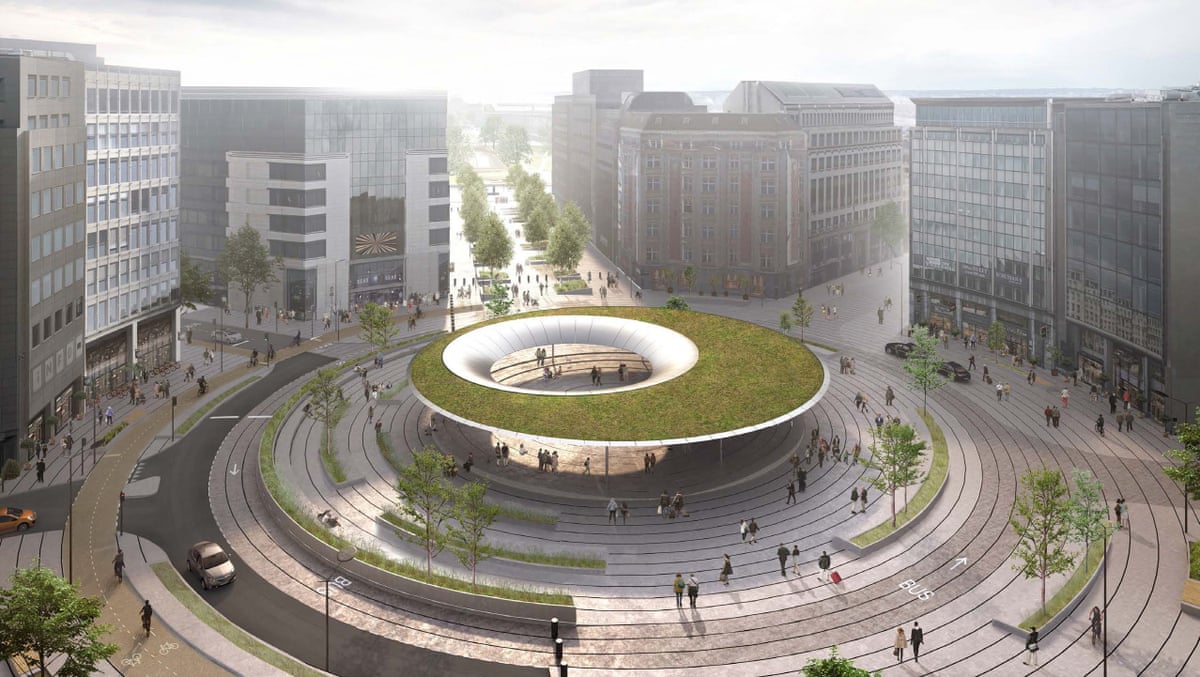
What was the original design supposed to look like?
A Belgian-Danish team of architects won an international competition to redesign the square, promising the "urban agora" concept that officials had championed. The roundabout takes its name from a former French foreign minister regarded as one of the founding figures of what later became the European Union.
The centrepiece of the design was to be a canopy shaped after the semi-circular chamber of the European parliament, known as the hemicycle, topped with a green roof. Planners had hoped it would draw European officials and residents to eat lunch and socialise beneath its shelter, while its mirrored surface was expected to attract tourists seeking photo opportunities. The greenery was meant to provide relief from both scorching summers — including the record-breaking heatwave that struck the city in June — and the roughly 200 days of rain Brussels typically experiences each year.
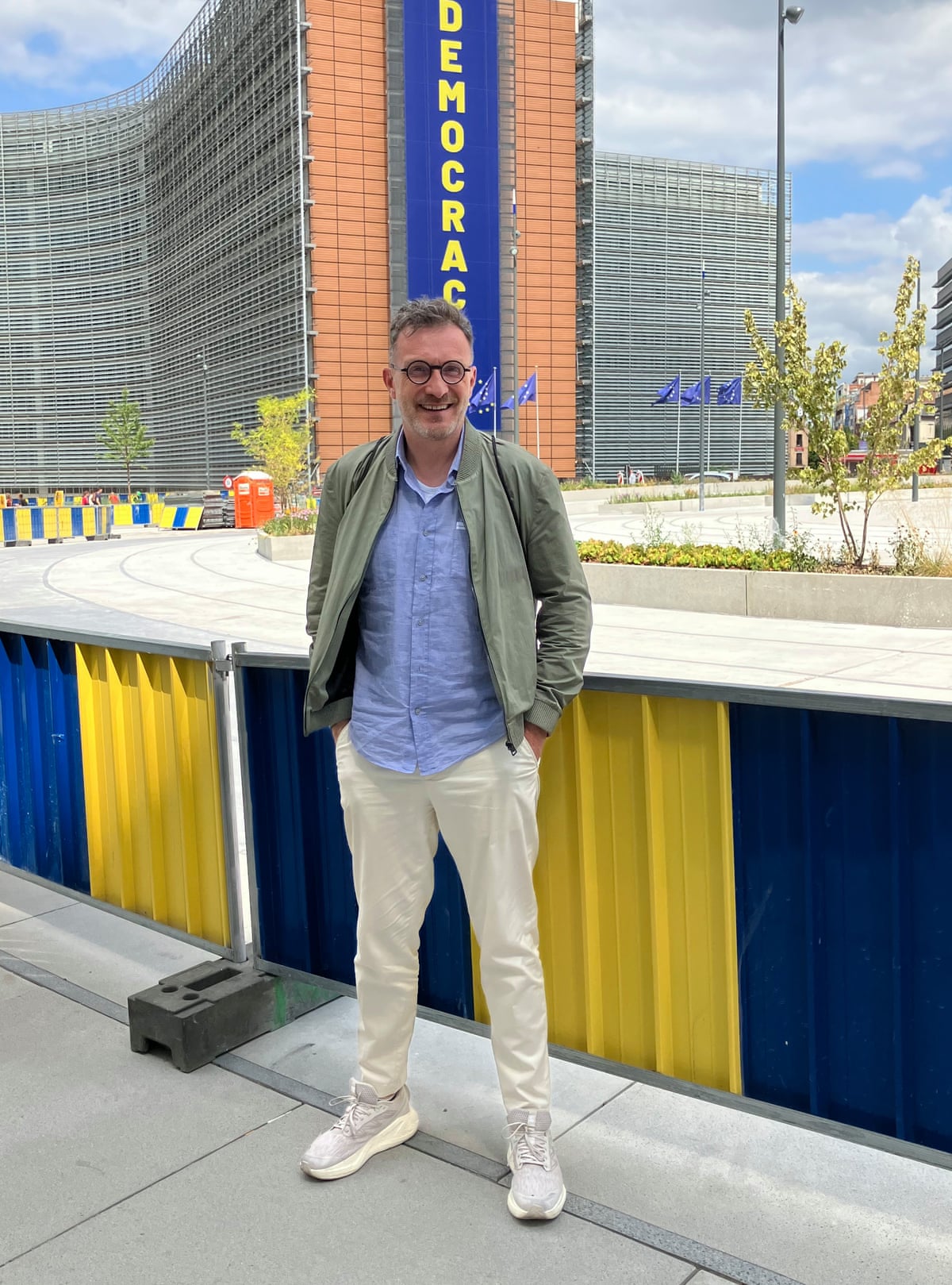
Francis De Wolf, the engineer-architect behind the design, told the Belgian newspaper Le Soir that the project remains incomplete and that he struggles to make sense of the political manoeuvring that derailed it.
"The project is not finished. It is very difficult for me to understand what has happened behind the scenes in politics."
Why did the canopy never get built?
Engineering constraints made the project difficult from the outset, since the square sits above an underground road tunnel, a railway line, a metro station and a dense network of gas and water pipes, ruling out large mature trees. Designers also had to accommodate the security requirements of nearby EU institutions and the square's frequent use as a protest site, given its location within the security perimeter of the European Council building, where EU leaders regularly hold summits.
Construction did not begin until 2023, six years after the winning design had already been selected, by which point inflation driven by the Covid-19 pandemic and the war in Ukraine had pushed costs sharply higher, according to city officials. At that stage the budget stood at €25m (£21m), with €17.4m coming from EU Covid recovery funding.

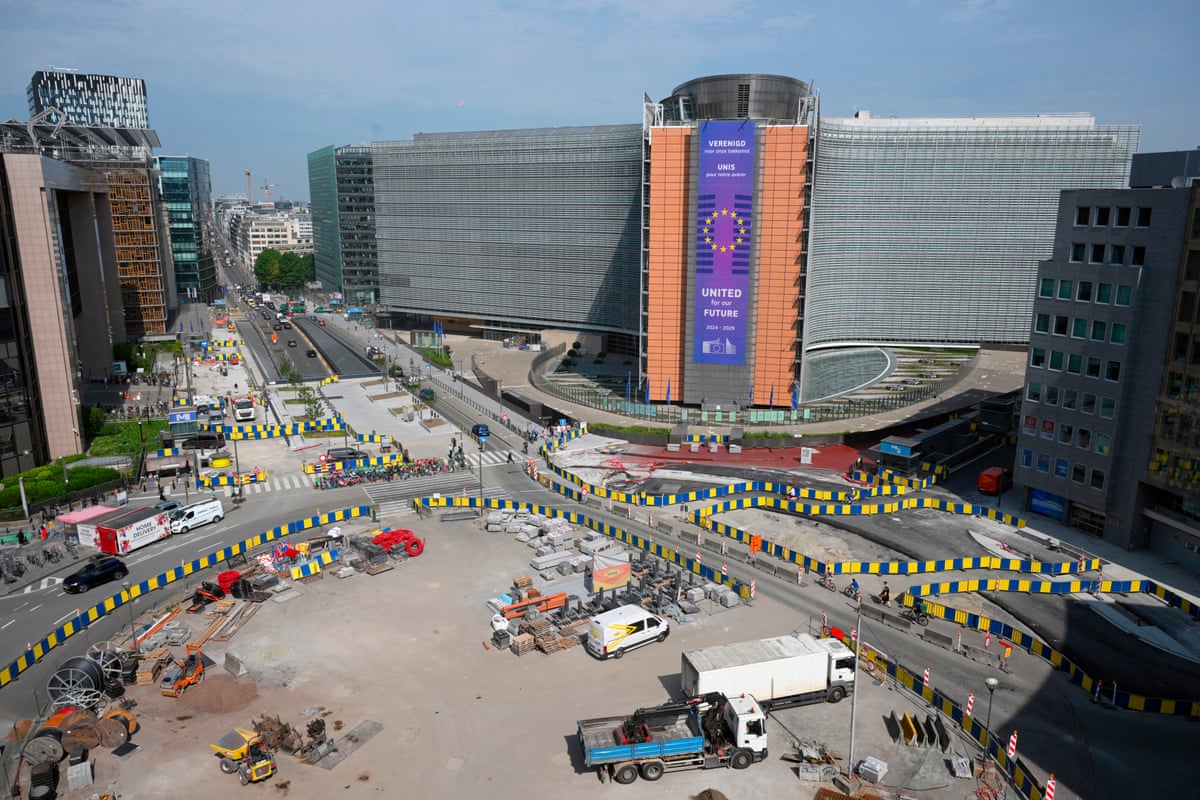
Political paralysis in Brussels compounded the financial pressures. Governance in the Belgian capital is highly fragmented, with regional authorities holding substantial control over public works, transport and urban planning, and the city's own parliament made up of 14 parties across 89 seats. Following inconclusive regional elections in June 2024, Brussels was left without a functioning government, forcing a freeze on major construction spending. It took a record 613 days of negotiations before a coalition, led by a Francophone liberal minister-president, was finally formed this year.
During that impasse, the caretaker administration lacked the authority to approve additional funding to cover the canopy's rising costs, even as a deadline loomed to finish the work or risk forfeiting EU recovery funds. François Deschamps, a spokesperson for Brussels' minister for mobility and public works, Elke Van den Brandt — in office since 2019 — described the situation.
"So we were in quite a conundrum, because we did not have the right to put the money into the canopy."
According to the Brussels Times, the remaining EU recovery-fund works carried a hard deadline of 30 June 2026, and missing it threatened the loss of the European funding altogether. Separately, Brussels Signal reported that the federal works agency Beliris decided in August 2025 not to cover the canopy's costs, which by then had risen by an estimated €13 million.
How did the funding dispute escalate politically?
In June 2025, the caretaker Brussels government asked the EU for additional funding to bridge the gap. Belgium's prime minister, Bart De Wever, publicly rejected the request, branding Brussels "a failed state." A fiscal conservative focused on tightening Belgium's federal finances, De Wever argued that appealing to multiple European institutions for financial rescue amounted to a national humiliation. Brussels Signal reported that De Wever had urged EU leaders to disregard the city's funding request outright.
When the newly formed Brussels government took office in February 2026, it scrapped the canopy plan entirely. Deschamps said the canopy's projected cost had climbed from €5m to €13m, making it unaffordable under the circumstances. He explained the reasoning behind the decision.
"We could do something greener, something cheaper, and something that still fulfils the goal, which is to bring shade and refreshment."
City officials say Brussels is now in discussions with architects on an alternative design that would maximise greenery within the square's structural limitations, potentially incorporating water features. Officials hope the work will be completed by the summer of 2028, with a fuller outline of the new plans expected before the end of the year.
How has the public reacted?
The bare, sun-baked square has become something of a lightning rod on social media over the summer, with residents circulating the "frying pan" nickname amid the region's extreme heat, according to Brussels Signal. Smet has continued to campaign for the canopy's construction and has launched an online petition calling for it to be reinstated, according to El País. Separately, more than 2,100 people have signed a petition organised by the Brussels branch of Smet's Flemish socialist party demanding the canopy be built as originally designed.
Even so, Smet has indicated he is not wedded to the original design if a workable alternative emerges.
"If you can imagine something better, that allows demonstrations, [deals with] security issues, is green, is iconic, is symbolic for European unity … if the alternative is better, I will not say no."
The controversy over Schuman Square comes amid broader discussions about the UK-EU relationship, though on a separate track: earlier this year, Trade Minister Chris Bryant called for a more ambitious reset of ties between London and Brussels, highlighting sectoral alignment as talks on issues like youth mobility remained stalled. While unrelated to the square's redevelopment troubles, it reflects the wider scrutiny European institutions and their host city currently face.
What happens next?
According to El País, Brussels authorities plan to review new canopy-related proposals in the autumn following mounting public pressure over the unfinished square. City officials say more detailed plans for the redesigned space, including any greenery or water features, will be presented before the end of the year, with a target completion date of summer 2028.
Key Facts
- The redevelopment's budget rose from an initial estimate of around €30 million, including €17.4 million in EU Covid recovery funds, to €25 million officially announced in 2023.
- The canopy alone was projected to cost between €5 million and €13 million more than originally budgeted, according to city spokesperson François Deschamps.
- Brussels endured 613 days without a regional government following inconclusive elections in June 2024, delaying decisions on the project's funding.
- Federal agency Beliris declined in August 2025 to cover the canopy's cost overruns, according to Brussels Signal.
- More than 2,100 people have signed a petition from Pascal Smet's Flemish socialist party calling for the canopy to be built.