UK-EU Relationship Reset: Calls for a Broader Vision
During a recent meeting in Brussels, the two key figures responsible for renegotiating the United Kingdom’s relationship with the European Union displayed cordiality and optimism. Maroš Šefčovič, the European Commissioner for Trade, and Nick Thomas-Symonds, the UK Minister for EU Relations, appeared united on stage within the European Parliament building, signaling a positive tone after years marked by tension.
Despite the outward display of cooperation, there remains significant frustration regarding the slow progress in resetting the UK-EU relationship. Šefčovič addressed Members of Parliament and Members of the European Parliament at the EU-UK Parliamentary Partnership Assembly (PPA), emphasizing the need for increased ambition in upcoming negotiations. He reminded the British delegation that a comprehensive Swiss-style agreement, previously proposed to former Prime Minister Boris Johnson, remains a viable option.
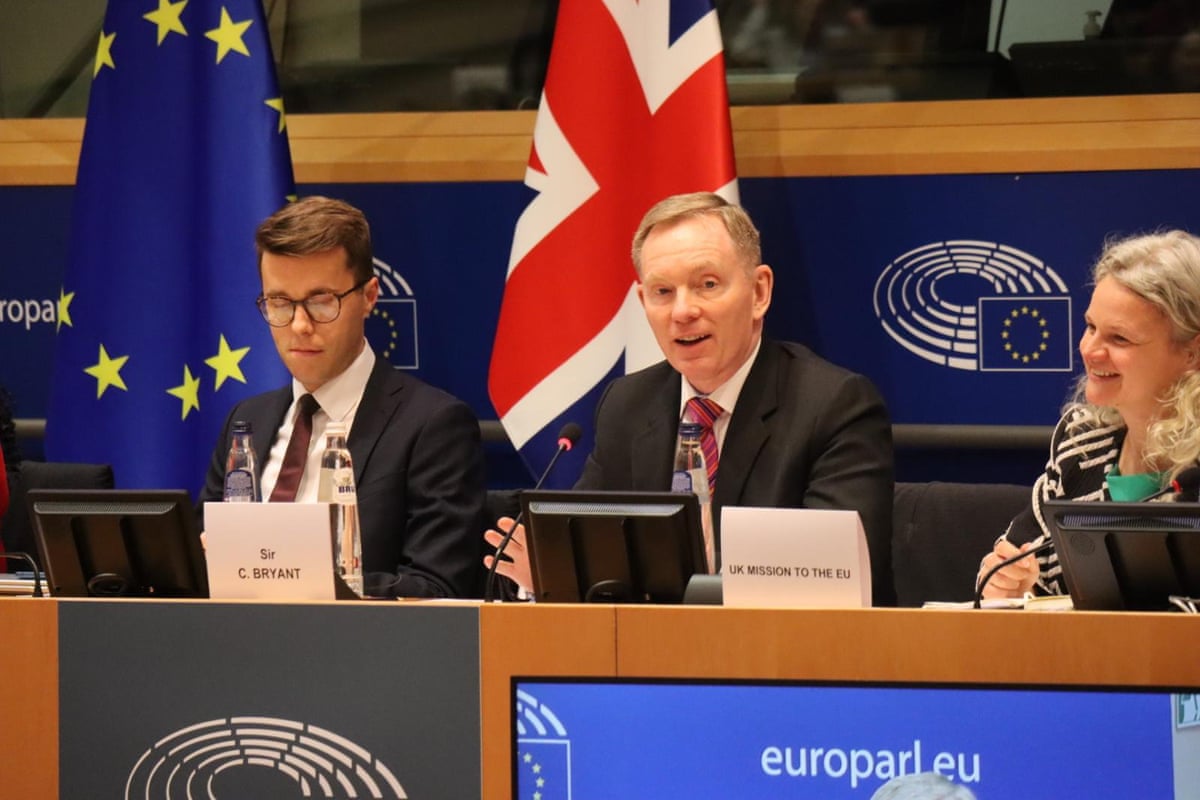
The following day, Chris Bryant, the UK Trade Minister, expressed his own concerns during a visit to Paris. He criticized the fragmented approach he inherited upon his appointment in September and advocated for a more ambitious strategy from both parties.
"I think we need to lift our eyes to the distant horizon and think in a much bigger, more ambitious way about what is possible,"
Bryant emphasized the importance of sectoral regulatory alignment, which could significantly enhance exports in sectors ranging from medical devices to chemicals.
"This is the line that I’ve been telling everybody in the department since I got into post – the [relationship] with the EU is not a series of policy decisions, it is one great big decision, which is about how much do you want to align. And how do we achieve that?"
Later the same day in London, UK Chancellor Rachel Reeves echoed similar sentiments, highlighting the need for a stronger partnership between the UK and the EU. In a related development, London Mayor Sadiq Khan called on the Labour Party to adopt a more integrated approach with the EU ahead of the next general election.
Challenges in Reset Talks and Specific Issues
Despite the positive rhetoric, reset negotiations risk stagnation over the incremental agreements reached last year. These agreements included cooperation on youth mobility, agricultural trade, energy, and defense. A significant sticking point remains the EU’s demand that EU citizens attending UK universities pay home fees, which has stalled progress on youth mobility.
"There is a strong political will for a deal from the EU member states, but this issue has become very thorny,"
said a source familiar with the discussions. Another insider noted,
"We are still talking regularly but progress has slowed a lot because of this issue."
Negotiations on a sanitary and phytosanitary (SPS) agreement, which would facilitate trade in agricultural and food products, have also been slow. Bryant addressed Members of the European Parliament in Brussels on Tuesday and spoke to French businesses the following day at the British residence in Paris. He acknowledged delays on both sides, noting that although talks on SPS began in May of the previous year, the EU did not receive a mandate from member states until November.
"If we can get from one in 10 British businesses exporting, to two in 10 or three in 10, like the French or the Germans, it would radically transform our economic opportunities in the UK. That’s precisely the job I’m fixated on from the beginning,"
Bryant stated.
He advocates for a more focused approach rather than the current piecemeal method.
"Rather than this piecemeal, oh let’s do [a deal on] SPS, let’s do tuition fees, let’s do [the student exchange programme] Erasmus. And then it takes forever, it gets bogged down and nobody remembers what we’ve done,"
he explained.
"We are doing all these bits and pieces, policy by policy … we need to be much more focused."
Bryant is among those pushing for mutual recognition of professional qualifications, a compromise for touring artists, and agreements on conformity in sectors impacting public health. Other areas under consideration include artificial intelligence regulation and tuition fees for British students whose parents relocated to the EU before 2021, as the current home fees arrangement expires in 2028.
Prospects for a Broader Integration
One proposed solution involves deeper integration with the EU, as suggested by Chancellor Reeves. In Brussels, Šefčovič reiterated that a Swiss-style overarching agreement remains a long-term possibility. Switzerland’s model replaces a patchwork of over 100 bilateral treaties with a comprehensive framework covering health, food, space, and electricity, alongside privileged single market access.
"Switzerland, of course, it’s possible, but it takes time,"
Šefčovič told the PPA audience. He highlighted that such an overarching deal would enable a "dynamic alignment approach" to regulation, facilitating faster and earlier agreements.
When questioned in Paris about the UK’s openness to this model, Bryant responded cautiously.
"I suspect that any model that works for one country won’t necessarily work for another,"
he said, adding,
"I am in favour of one overarching something with the EU."
Bryant also expressed interest in a shared defense procurement strategy.
"We need to take that seriously; we’ve done really well on cooperation, on sanctions in relation to the Russian shadow fleet, but we still haven’t got to the point where we will need to go to: defence procurement across the whole of the EU."
Upcoming Deadlines and Political Pressure
The immediate priority for the UK and EU is to finalize agreements on youth mobility, SPS, and other elements of the common understanding by July, coinciding with the second post-Brexit EU-UK summit.
However, questions remain about the scope of future cooperation beyond this deadline. UK Prime Minister Keir Starmer faces increasing pressure from Labour MPs to pursue broader integration with the EU. A recent Fabian Society pamphlet advocated for expanded cooperation, including support for the Swiss model. Contributors included London MP Stella Creasy and Liam Byrne, chair of the business select committee, who called for collaboration on critical minerals and energy.
The next phase of reset talks may also explore the possibility of a customs union, a proposal favored by several members of Starmer’s cabinet. Starmer has thus far rejected this option, citing concerns that it would invalidate trade agreements with the United States and India. EU officials, however, have indicated willingness to negotiate terms that could compensate the UK for any trade losses incurred.
Looking Ahead
Post-Brexit trade relations have proven complex, as evidenced by the challenges faced during the first year of reset negotiations. Bryant urged a shift in perspective.
"I sometimes worry we have got ourselves into a funk, ‘oh it’s all difficult; how are we going to survive’,"
he said, referencing the Belgian rapper Stromae’s song Mauvaise Journée, which describes someone who insists on their right to be depressed in the comfort of their own sofa.
"I think we’re a bit like the tightrope walker, we’re a bit obsessed with walking foot by foot [instead of focusing on the end of the rope]. And that doesn’t work. That’s when you fall off."