Victoria is experiencing a significant property crime surge, with insurance data revealing the state recorded more claims for stolen and broken-into vehicles than all other Australian capital cities combined during the last financial year.
Analysis by the Insurance Council of Australia (ICA) of Insurance Statistics Australia data showed Victoria lodged more than 12,300 claims for motor vehicle theft and burglary, costing insurers $244 million. The ICA's chief executive, Andrew Hall, noted that across Victoria, a car was stolen or broken into every 43 minutes while a home was broken into every two hours. In the same period, every other state and territory recorded a decline in such claims.
The situation is worsening rather than improving. According to insurance industry data, Victoria's motor vehicle theft claims rose 25 percent year-on-year while incurred costs increased 37 percent. Metropolitan Victoria bore the heaviest burden, with 10,400 claims totalling $205 million, demonstrating that the crisis is concentrated in urban areas.
The insurance data shows Victoria has a crime problem, and it is being felt directly by households, businesses and communities.
Before the November state election, the ICA called on the next state government to address the crisis through a statewide crime reduction strategy and improved intelligence sharing between agencies. The council also urged better disaster recovery arrangements through centrally coordinated clean-up systems and measures to ease cost-of-living pressures by abolishing stamp duty on business, home and contents insurance products. Additionally, the ICA advocated for modernising civil liability laws to improve insurance affordability for healthcare professionals, community organisations and live music venues.
Why is Australia not joining the UK's West Bank trade ban?
Australia has declined to adopt a blanket import ban on goods from Israeli settlements in the West Bank, instead pursuing what Foreign Affairs Minister Penny Wong described as targeted measures. The decision comes as the UK, Canada, France and nine other countries have moved to restrict trade with Israeli settlements, creating diplomatic pressure on Australia to align with this approach.
Wong expressed concern that a blanket ban could produce unintended consequences for Australian businesses, Palestinians and Israelis alike. According to official statements, Australian officials warned that distinguishing Palestinian from settler enterprises would be difficult to implement, and a broad restriction could cause collateral economic harm to both Palestinian and Israeli economies.
Emily Thornberry, chair of the UK's foreign affairs select committee, told the ABC's 7.30 program that while there had been hope Australia would join the UK's decision, she respected that each country must make its own determination.

I think it was hoped that they might but, you know, all countries have their own decisions to make. We all want the same thing and nobody says this is easy.
Thornberry expressed confidence in Wong's judgment, saying:
I don't know the basis upon which she's made a decision not to be involved with us, but I'm sure that you know she believes that what she's doing is in the interests of Palestinians and in the interests of justice.
She added:
I'm always happy to talk to my Australian friends and maybe even persuade them.
Wong reiterated that Australia remains committed to protecting the prospect of a two-state solution. The broader context, according to Australian officials, is that Israeli settlement expansion and settler violence are being framed as threats to the viability of a two-state solution, which underpins Australia's approach to the conflict.
What is Australia's alternative approach?
Rather than joining the blanket trade restrictions already being rolled out by twelve countries including the UK, Canada and France, Australia is developing a package of targeted measures focused on settler violence and illegal settlements. No specific announcement date has been provided for when these measures will be finalised, though the government is expected to continue developing the framework in coming days as diplomatic calls for alignment intensify.
What did Kevin Rudd say about multilateral diplomacy?
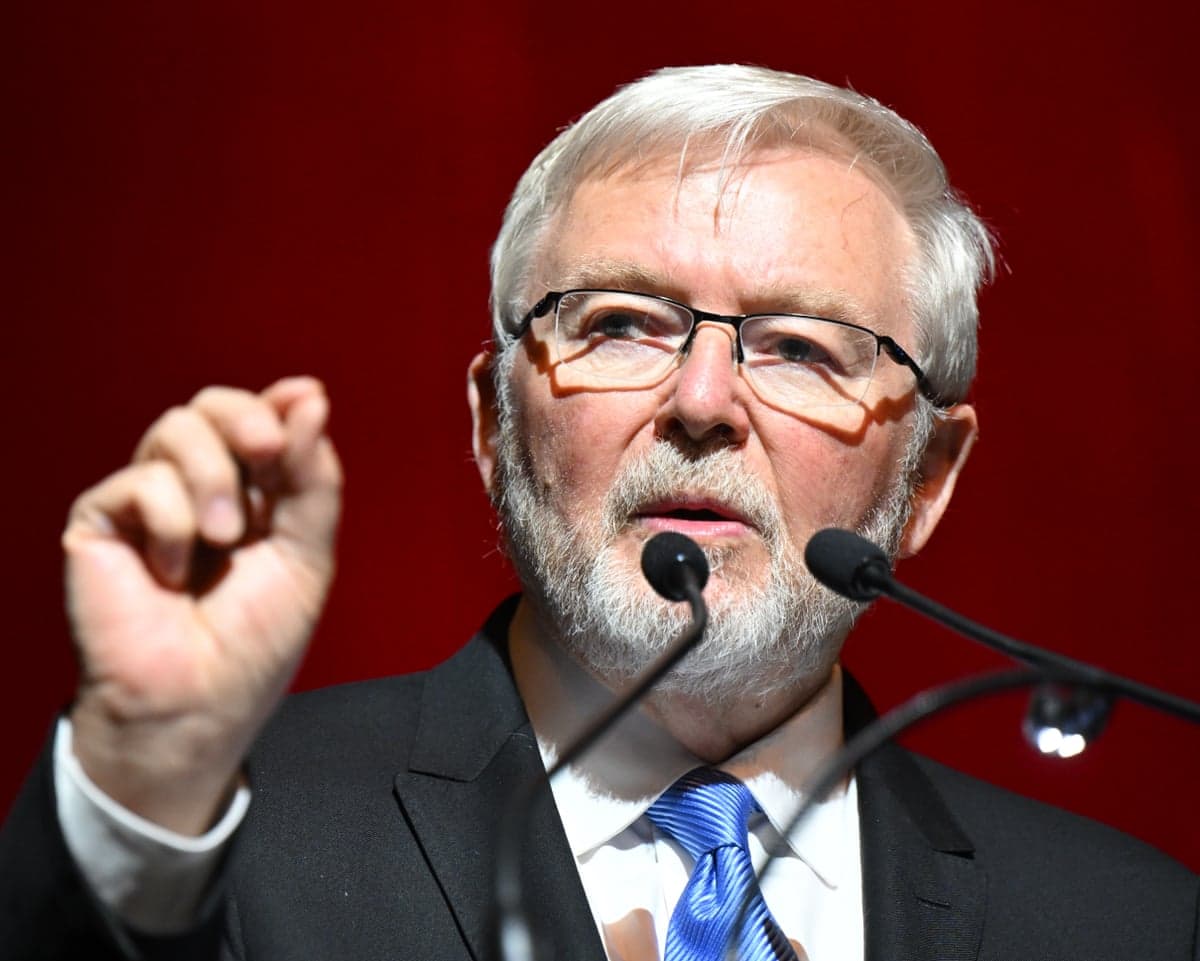
Former Prime Minister Kevin Rudd, who recently returned to Australia after serving as ambassador to Washington DC, delivered remarks at the Australian Institute of International Affairs on Wednesday night emphasising the importance of sustained multilateral engagement. Rudd argued that as the United States withdraws from various global institutions under the Trump administration, middle powers like Australia must intensify their commitment to the multilateral rules-based system.
There remains an opportunity for Australia, in partnership with other middle powers around the world, to put our shoulders to the wheel in supporting those UN multilateral institutions which now find themselves under financial and institutional pressure as a result of the US withdrawing.
Rudd noted that Australia maintains active participation in the United Nations, the International Monetary Fund, the World Bank, the Group of Twenty and the Asia-Pacific Economic Cooperation forum. The country also remains engaged in major regional institutions including the Pacific Islands Forum, where Rudd said the government has achieved significant foreign policy outcomes.
He suggested that serious multilateral engagement would strengthen the framework outlined by Canadian Prime Minister Mark Carney at Davos earlier this year.
And it would mark a deeply practical contribution to sustaining the multilateral rules-based system as America resolves its internal domestic debate on its future posture within it.
Rudd is scheduled to speak at the National Press Club on Thursday as part of his current visit to Canberra.