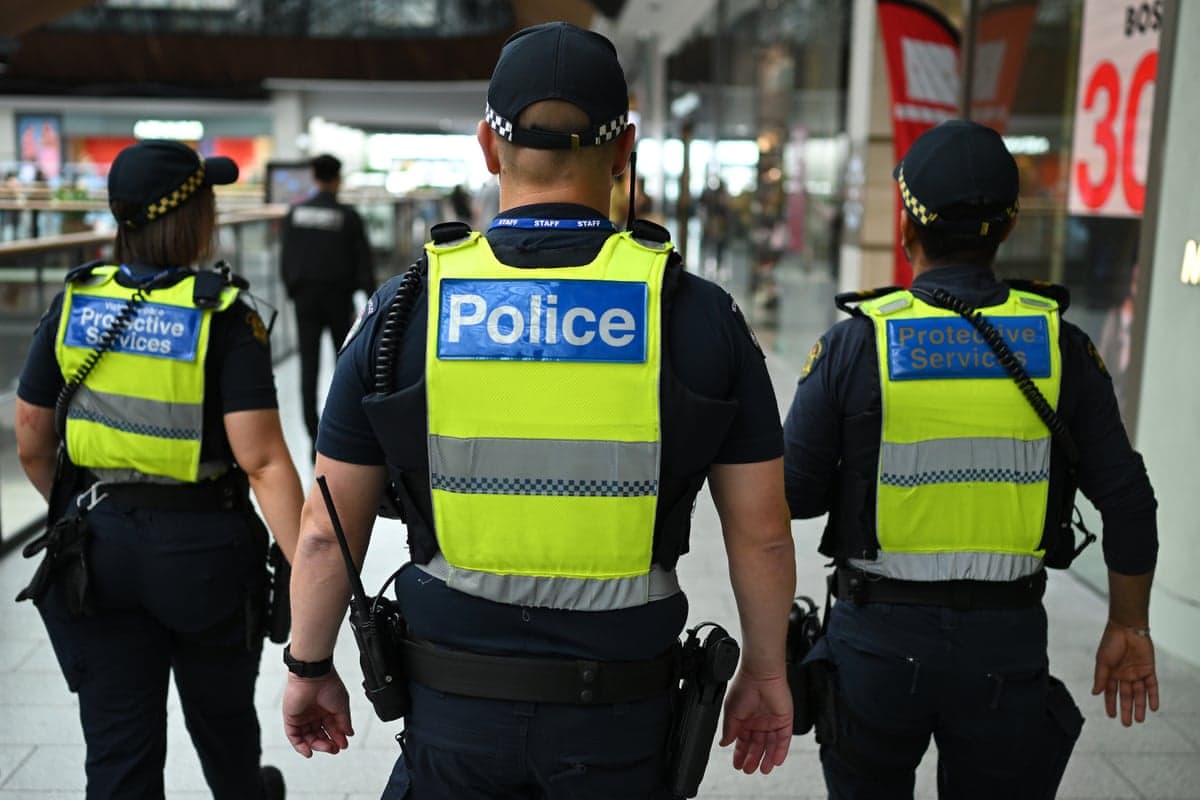
Premier Ben Carroll has announced that a re-elected Labor government would grant police and protective services officers the authority to conduct random stop-and-search operations for knives using handheld metal detectors across Victoria, reversing the government's earlier resistance to such measures. The commitment, made on Wednesday, mirrors a proposal put forward by the Coalition opposition and adopts Queensland's Jack's Law framework, named after 17-year-old Jack Beasley, who died from a stabbing in Surfers Paradise in 2019. The policy shift comes despite criminologists and human rights experts cautioning that evidence does not support the effectiveness of such powers in reducing violent crime.
Under Labor's pledge, police and PSOs would receive 1,200 additional handheld metal-detecting devices to deploy on any individual in public spaces from early next year, with Police Minister Paul Edbrooke characterising the scope of the new authority as: "Anywhere, anytime." According to reporting on the announcement, the implementation would follow a Labor election victory in November 2026, with the powers expected to commence in early 2027.
The bipartisan backing for expanded search capabilities stands in sharp contrast to expert warnings about their utility. Sarah Schwartz, legal director of the Human Rights Law Centre, condemned Carroll's decision as "ignoring the evidence and caving into pressure in a race to the bottom to suppress democratic freedoms and human rights". She further stated:
We know from other states that these powers only serve to give police unchecked powers to harass and target people, particularly marginalised groups, while doing nothing to actually keep communities safe.
What does the evidence say about knife-search powers?
Research into the effectiveness of such measures reveals limited success in reducing violence. A Griffith University study examining a 12-month trial of Jack's Law on the Gold Coast during 2021–22 found no reduction in violent incidents resulting from the searches and identified risks to human rights protections. Janet Ransley of Griffith University previously emphasised that
there's no evidence that it's in any way effective in actually reducing knife-related violence, which is the whole premise of the law.
Swinburne University criminologist Joel McGregor cautioned that "tough-on-crime policies" would have minimal impact on the underlying drivers of criminal behaviour, particularly among young people.
Police might find a knife or a weapon and they remove that weapon from the street. That's a great outcome, but it doesn't address the underlying behaviours as to why that person is carrying the knife or the weapon in the first place,he explained.
How do Victoria's current search powers work?
Presently, Victoria's police are restricted to conducting warrantless pat-down searches only within "designated areas" that have been formally declared for this purpose. A six-month CBD designation was later ruled invalid by the Federal Court, creating legal uncertainty around the existing framework. Carroll stated the government would collaborate with legal specialists to ensure Jack's Law would be "watertight" in its implementation.

The premier told reporters:
Victorians are sick of knife crime, and so am I.This announcement represents a significant reversal from Labor's previous position under former leader Jacinta Allan, who had resisted expanding search authorities. After meeting with Beasley's parents in September 2025, then-Police Minister Anthony Carbines had declared that Victoria's existing search powers were adequate, stating:
It might not be called Jack's Law, but what we have in place in Victoria is a safe and effective mechanism that Victoria police asked for.
When questioned repeatedly about the policy reversal, Carroll offered a straightforward explanation: "I'm the new premier."
How has Jack's Law been used in other states?
Jack's Law has been adopted across multiple Australian jurisdictions following advocacy by Jack Beasley's parents. Queensland introduced the legislation in 2023, Tasmania and Western Australia have implemented versions, and the Northern Territory has also adopted the framework. In New South Wales, warrantless search powers remain confined to declared designated areas rather than being applied statewide.
Queensland police data provides insight into how the powers have been exercised. According to Queensland police statistics, officers stopped and scanned 160,997 people between 18 July 2025 and 30 June 2026. More than 77% of those scanned were male, and 22.6% of people with a known ethnic origin were Indigenous, despite Aboriginal and Torres Strait Islander people representing only 4.6% of Queensland's population. This disparity has raised concerns among civil liberties advocates about the potential for discriminatory application.
What do Victoria's existing search statistics reveal?
Data obtained by Liberty Victoria covering two years of searches conducted in designated areas showed that just over 1% of operations resulted in the discovery of illicit items, including weapons. This low yield has been cited by critics as evidence that the powers are ineffective at their stated purpose while creating significant risks of harassment and rights violations.
What has the response been to Labor's announcement?
The policy shift has drawn criticism from the Victorian Greens. Justice spokesperson Katherine Copsey accused Labor of having "completely lost its way on community safety" and of "just copying whatever the Liberals announce". However, the announcement was welcomed by Jack Beasley's father, Brett Beasley, who told ABC Radio Melbourne:
I've been pushing for Jack's Law to be introduced down there for some time now, so it's great news. Put the politics aside and let's focus on the community safety and that's what Jack's Law is all about.
What happens next?
The implementation of statewide knife-search powers is contingent on Labor's success in the Victorian state election scheduled for November 2026. If the government is re-elected, the expanded powers are slated to commence in early 2027, with the 1,200 handheld metal detectors to be distributed to police and PSOs across the state. The political test will determine whether this election commitment translates into law or remains an unfulfilled campaign promise.