In the pre-dawn darkness of a wet June morning, a US B-2 Spirit stealth bomber descended from the sky and touched down on the outskirts of Brisbane, refuelling with engines still running at one of the US Air Force's key allied installations before departing again before sunrise. RAAF Base Amberley, situated approximately 50 kilometres south-west of Brisbane, serves as a critical staging point for American military operations throughout the region—but it represents only one node in an expanding network.
Researchers have documented that American military and defence interests now control or maintain access to more than 100 facilities across the Australian continent, constituting well over half of all military installations in the country. This expansion has prompted analysts to warn of a "saturation" of the continent by US military assets and raised concerns that Australia's most important security ally could inadvertently draw the nation into armed conflict.
How extensive is the US military presence in Australia?
The US military directly controls 17 facilities on mainland Australia and has access to 75 additional Australian-run military installations, while US defence corporations maintain access to a further 18 facilities. According to data compiled by the Nautilus Institute and analysed by researchers, this represents an unprecedented level of American military integration on Australian soil.
In the red earth of Katherine in the Northern Territory, the runway at RAAF Base Tindal is undergoing expansion to accommodate massive American B-52 Stratofortress bombers, which are capable of carrying nuclear weapons. The US government does not disclose whether nuclear warheads are present, and the Australian government has not sought this information. According to military reports, B-52H bombers landed at RAAF Base Tindal on 1 September 2026 as part of a new bomber rotation to northern Australia, with up to six aircraft expected to be forward-based there by the end of the year.
On the remote Western Australian coast, a cluster of sophisticated technological systems—including deep space radar, space surveillance telescopes, and the Harold Holt naval communication station—furnish critical intelligence enabling US submarine and space warfare operations. The naval communication station, designed to reach submerged submarines, broadcasts on very low frequency radio through its antenna array.
Pine Gap, located in the centre of the country near Alice Springs, is regarded by some analysts as the US military's most valuable intelligence installation outside the continental United States. The satellite tracking and signals intelligence base detects missile launches, intercepts military communications, and provides targeting information for US forces globally. Established in 1966, the facility operates as a ground-control station for signals intelligence satellites, a relay ground station for early-warning missile launch systems, and a site for intercepting foreign satellite communications. Though formally designated a "joint defence facility," it is always commanded by an American officer.
Prof Richard Tanter, author of the Nautilus Institute database and a senior research associate at the independent public policy thinktank, characterises the US military's presence not as "penetration" of Australian defence policy but as "saturation."
"Over half of the defence facilities that we have looked at have some level of American access: that means American personnel, it means American corporations, some of the biggest armaments companies in the world."
What are these facilities used for?
The US military controls or has access to 92 defence facilities on Australian soil serving multiple functions: gathering intelligence and accessing satellite data for targeting information and communications intercepts; conducting training operations including for special forces in the Northern Territory; pre-positioning warfighting assets such as Osprey aircraft; and maintaining logistics hubs holding weapons, munitions, and fuel in preparation for potential conflict in the Pacific.
Some bases, including Pine Gap, play critical roles in identifying targets for US military strikes overseas. Others are massive but little known—the Bradshaw field training area in the Northern Territory covers an area equivalent to the size of Cyprus.
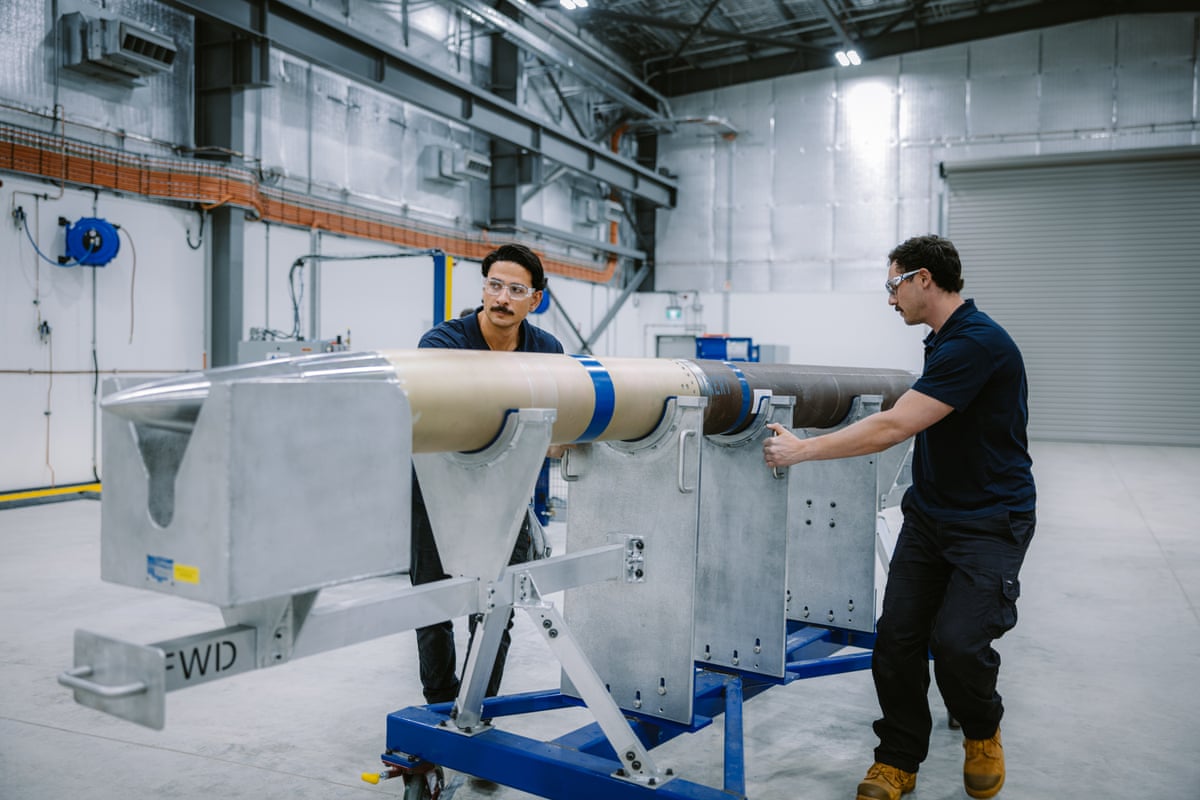
Beyond direct military operations, at least 42 defence facilities are accessed by US defence contractors—among the world's largest weapons manufacturers—which utilise Australian sites for manufacturing, testing, and training of weapons systems deployed by militaries globally. Lockheed Martin operates a facility in Port Wakefield, South Australia. Northrop Grumman signed a multimillion-dollar contract in 2026 to construct a munitions production facility at Mulwala in New South Wales. According to the Australian Defence Force, collaboration with US manufacturers will "enhance Australia's sovereign munitions capability and provide a second source of supply for critical munitions."
What is driving this expansion?
For the US military, Australia represents, in the words of one retired general, "location, location, location." The nation's geographic position in the Indo-Pacific region makes it strategically invaluable for American military operations and deterrence efforts.
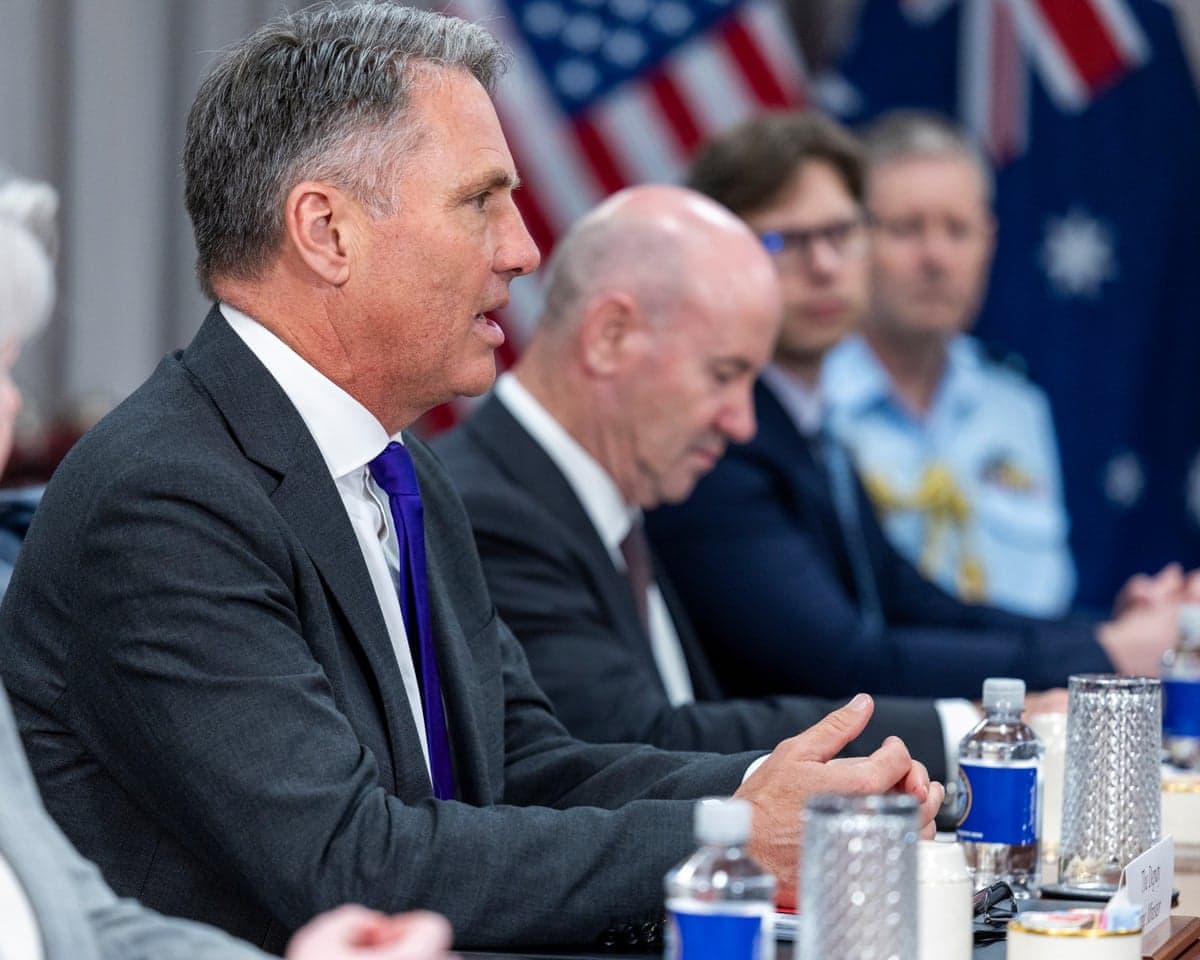
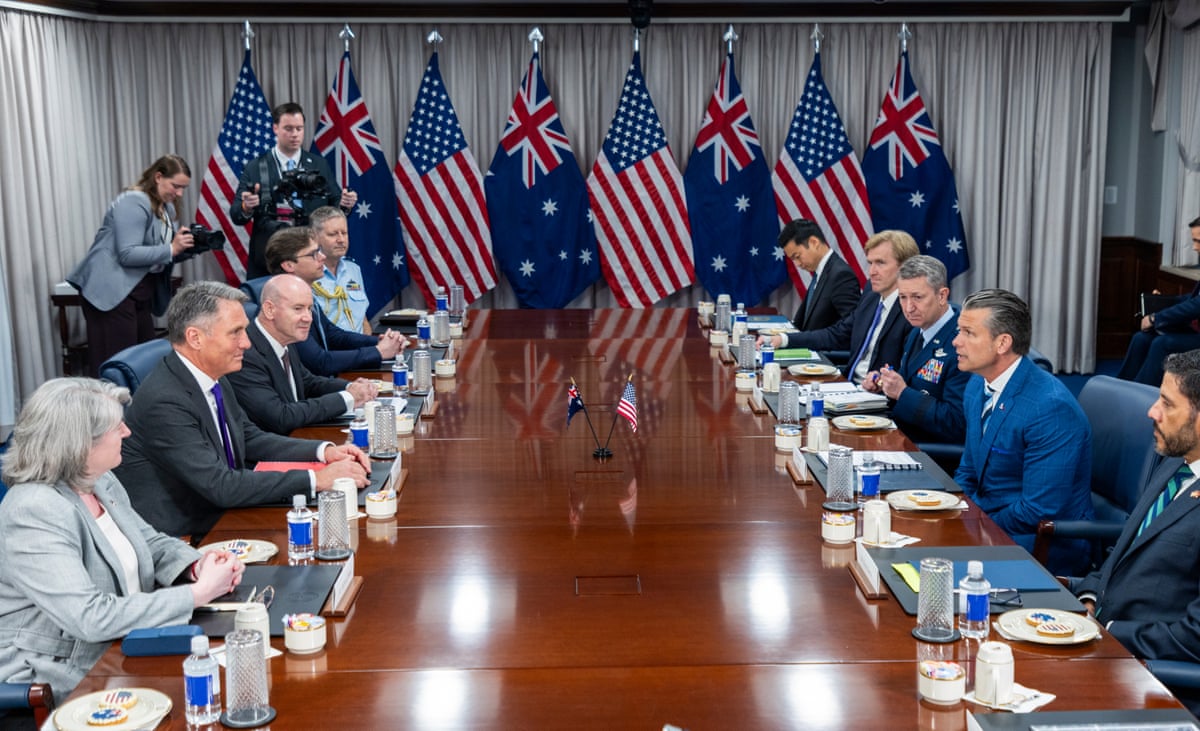
Defence Minister Richard Marles has publicly endorsed the expanding US presence.
"We are seeing a growing US footprint in Australia that is important in terms of building our own military capability but also it's very important for Australia's national security,"Marles stated while announcing a $30 million US logistics base in Wodonga, Victoria. He characterised the "hugely significant American presence" in the region as essential to balance China's "very significant military buildup."
According to recent announcements, the US has committed to accelerating its military presence in Australia, building on existing Marine rotations in Darwin and the newly established Submarine Rotational Force—West at HMAS Stirling near Perth. About 1,000 US Navy personnel are scheduled to be based at HMAS Stirling from next year to support American Virginia-class submarines, with up to 2,300 Americans—including sailors, civilian employees, contractors, and family members—expected in Western Australia by 2030 to support the AUKUS mission.
The government maintains that the arrangement at HMAS Stirling will not technically constitute a US military base, though the practical distinction remains contested. Former Defence Minister Peter Dutton told a public inquiry that the multibillion-dollar AUKUS nuclear submarine agreement represented far more than submarine procurement.
"From a strategic point of view, it's not something that's ever really discussed in the public, but it's one of the most important aspects of it: this is also a new United States submarine base in the Indian Ocean. For the Americans, being able to have a submarine base in the Indian Ocean is a massive strategic advantage."
The US-Australia Status of Forces Agreement—stated to operate "with full respect for Australian sovereignty"—grants US forces and contractors "unimpeded access to and use of" agreed Australian facilities, including for deploying forces and materiel, bunkering vessels, and refuelling aircraft.

Could this arrangement drag Australia into unwanted conflict?
Tanter argues that the US military's expanding presence serves American strategic interests rather than those of its junior alliance partner.
"Over more than a decade, the United States has been preparing the capacity for high-tempo warfighting operations with China, springboarding from Australia. And that means we are aligning ourselves completely with American strategic planning. From a Chinese perspective, Australia is not so much hosting US bases on its territory, it's a US base in its own right … Australia is a serious piece of real estate in the US warfighting machine."
Dr Albert Palazzo, an adjunct professor at the University of New South Wales Canberra and formerly director of war studies for the Australian Army, warns that the US military's accelerating buildup carries significant danger for Australian security.
"The Australian government seems to be waltzing its way into a war between the United States and China, by allowing this country to become an outpost or bastion of the US military, and as a platform from which they will launch military force against China,"he tells researchers.
Dr Emma Shortis, director of international and security affairs at the Australia Institute, points to historical precedent. She cites the 2022 sinking of the Iranian frigate Jamaran by the US, which killed more than 100 people. Three Australian naval personnel were aboard as part of the submarine's crew, yet the US did not forewarn Australia of the attack.
"Australia might maintain the pretence of sovereign decision-making power, but that's not the reality."
Shortis argues that Australia's increasing integration with the US military has resulted in
"an accelerating erosion of Australia's independent, sovereign, decision-making power. Instead of having the option of saying 'no' to involvement in United States wars, involvement becomes the default position."
Dr Vince Scappatura, author of The US Lobby and Australian Defence Policy, describes US base access across Australia as a form of
"second wave of colonisation."
"Today we are shaping up to be the 'tip of the spear' for US power projection into the region – that's what the sprawling US base access represents. Each one of those dots on the map represents a point of leverage Washington has over Canberra when it comes to matters of defence and foreign policy."He notes that the concept of "soft hegemony" was originally applied to US dominance over Western Europe but applies equally to Australia, which he describes as practising "voluntary subordination."
What do Australians think about this arrangement?
Public confidence in the US alliance has deteriorated markedly. A recent poll showed that Australians' "trust in the United States to act responsibly in the world" has fallen to 31%, the lowest level in polling history. Only 21% of Australians have confidence in "Donald Trump to do the right thing in world affairs," the lowest level of confidence in any US president recorded.
Support for allowing the US to base military forces in Australia has declined to just over half (55%), down eight points from 2022 (63%). More than half of Australian voters (52%) now believe Trump represents a greater threat to global security than Vladimir Putin (17%) or Xi Jinping (16%). More than twice as many Australians (59%) believe Australia's interests are best served by a more independent foreign policy rather than a closer alliance with the US (23%), and only 13% of Australians regard the US as a "very reliable" security ally.
Shortis characterises this shift as a
"seismic shift"in Australia's perception of its once-unquestioned alliance.
"After following the US into nearly every war since World War II, Australians have had enough. They see tangible risks in being so close to President Trump's bleak and violent version of America."
Shortis warns that Trump has repeatedly demonstrated willingness to abandon security commitments to allies.
"Trump has demonstrated that it's all contingent, it's all insecure. And what he has also highlighted – particularly with his illegal war in Iran – is the way those US bases themselves become targets. It doesn't matter what you do, it doesn't matter how much you give him, you can do everything right, and it's not enough, he will not defend those bases."
What is the government's response?
When questioned about the implications of an "increasing American military footprint" across Australia, a spokesperson for the Defence Department reiterated that Australia maintains a fundamental principle of "having no foreign bases on Australian sovereign territory" and that the Australian government retains sole control over deployment of the Australian Defence Force and use of Australian territory.
However, the spokesperson also stated that Australia's alliance with the United States remains fundamental to national security and the ADF's capacity to generate, sustain, and project credible military capability. The alliance, they argued, allows Australia to "pursue our national security interests far beyond what we could achieve alone."
Government ministers frequently invoke the reassuring line that the Australia-US relationship is stronger than the ANZUS treaty itself, though this claim faces increasing scrutiny as public support erodes.
What happens next?
The US military presence in Australia will continue to expand significantly. A rotating force of US-commanded submarines is scheduled to arrive in Western Australia next year, with approximately 1,000 US Navy personnel based at HMAS Stirling from 2027 onwards. According to Defence Department statements, the Submarine Rotational Force—West at HMAS Stirling is intended to be an "enduring feature" of America's force posture in Australia.
The US military has previously sought proposals for jet-fuel depots capable of storing 190 million litres at RAAF Curtin, RAAF Learmonth, and RAAF Amberley, signalling further infrastructure expansion. Up to six US B-52 bombers are expected to be forward-based at RAAF Tindal by the end of 2026 under the Enhanced Air Cooperation Initiative.
Tanter argues that the acceptance of the US military presence has become so embedded within Australian government and defence structures that reversing the nation's integration within the world's most powerful military apparatus has become increasingly difficult.
"This is a massive institutional failure in Australia, a kind of learned incapacity at a political, parliamentary and bureaucratic level. We've learned how not to ask those questions."
Key Facts
- The US military and defence corporations control or have access to 110 facilities on Australian territory—more than half of all military installations in the country.
- About 1,000 US Navy personnel are scheduled to be based at HMAS Stirling near Perth from next year, with up to 2,300 Americans expected in Western Australia by 2030.
- Australian public support for US military presence has declined to 55%, down from 63% in 2022, while only 13% regard the US as a "very reliable" security ally.
- Pine Gap, established in 1966 near Alice Springs, functions as a critical signals intelligence and satellite-tracking facility that identifies targets for US military strikes worldwide.
- The US military has been preparing infrastructure for high-tempo warfighting operations with China, with Australia serving as a key staging point and logistics hub for potential Pacific conflict.