

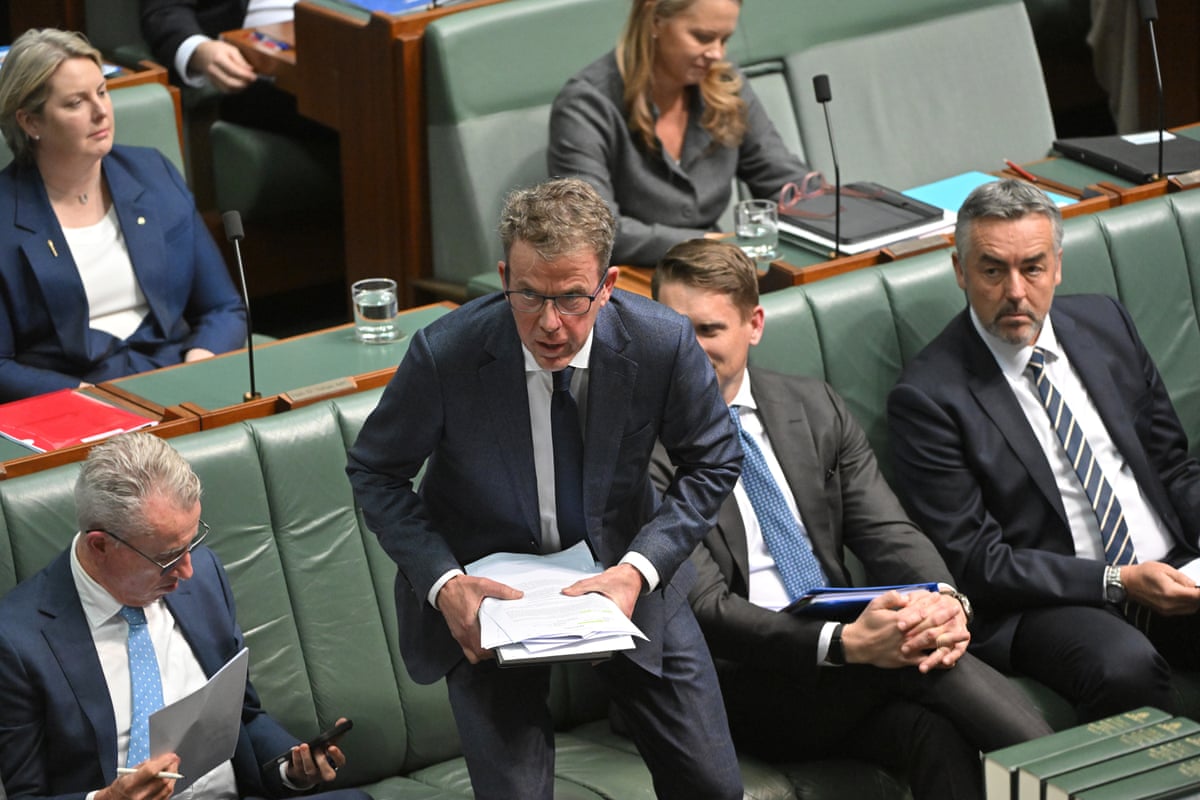
Liberal MP Dan Tehan was ordered out of the House of Representatives chamber on 17 August 2026 after directing an unparliamentary remark at climate change and energy minister Chris Bowen during question time. Speaker Milton Dick ruled that Tehan's language was "beneath the dignity" of the House and expelled him after he refused to withdraw the comment, which came amid a broader Coalition push for details on the cost of Labor's Capacity Investment Scheme.
As manager of opposition business, Tehan had pressed Bowen directly, asking him to disclose how much taxpayer money the scheme was costing.
Would you just cut the crap and tell Australians how much your Capacity Investment Scheme is costing taxpayers?
Independent MP Zali Steggall immediately called for Tehan to be removed from the chamber. Dick instead gave him a second chance, warning him to moderate his language. Tehan disregarded the warning and repeated the sentiment in blunter terms.
My question is to the minister for climate change and energy: Will the minister just cut the faecal matter and tell Australians how much Labor's Capacity Investment Scheme is costing taxpayers?
The remark drew groans and shouting from government MPs. Dick told Tehan he had shown complete disrespect to the chair and ordered him out, skipping the question altogether rather than allowing Bowen to respond.
Why is the Capacity Investment Scheme under such scrutiny?
The Coalition has made the scheme's cost a recurring line of attack in recent sitting weeks, following earlier question time exchanges in which Tehan sidestepped questions of his own about opposition leader Angus Taylor before turning his focus to Labor's energy policy. Nationals MP Llew O'Brien later asked Bowen how much had been given to foreign investors under the scheme, which underwrites major renewables projects, citing a report in The Australian newspaper that private companies held about $40bn in "social licence" commitments under the arrangement.
Bowen thanked the opposition pointedly for what he called advance notice of the attack.
I particularly appreciate the notice the opposition gave on the front page of The Australian today, which says "The Coalition on Monday will launch a parliamentary attack under the … scheme." I thought it was Christmas, but there you go. You learn something new every day.
I guess, given it's the first time the opposition's asked me a question since April, it's a big deal. You have to flag it on the front page of the national broadsheet.
He declined to answer the substance of the question, arguing that revealing individual deal outcomes would weaken the government's negotiating position in what is effectively an auction process.
When you are operating an auction, what you are doing is calling on people to put forward bids. And if you reveal the outcome of those bids, you are undermining the position of the taxpayer.
Liberal MP Garth Hamilton then took up the same line of questioning in more measured language, asking Bowen to reveal how much Labor's "secret" Capacity Investment Scheme was costing taxpayers. Bowen again withheld a figure, instead comparing the scheme's budget treatment to that of earlier government energy programs.
The capacity investment scheme was treated in the budget in a very similar way – in fact, identical way – to previous government programs of a similar nature. Including programs that were administered by the then–minister for energy, including underwriting new internally generation investments, including Snowy Hydro 2.0.
The opposition attempted a point of order on relevance, but Bowen had already sat down, ending his answer.
According to RenewEconomy, the scheme is still targeting 23 gigawatts of new wind and solar capacity plus 9,000 megawatts of battery storage as part of the government's goal of reaching 82% renewable electricity by 2030, and Bowen has said the program has already delivered six new large-scale battery projects in Victoria and South Australia under its first tender round. The same outlet notes the scheme has already been restructured once, moving from a two-stage tender process to a single-stage model designed to cut the waiting time for outcomes from nine months to six, according to PV Tech.
Separately, Bowen has recently been pressing Queensland and the Northern Territory over a "causer pays" model intended to make major AI data centre operators shoulder more of the cost of new grid connections – a push Tehan attacked as evidence the renewables rollout was failing, according to PerthNow.
What comes next for the scheme?
According to a separate live political update from 17 August 2026, Labor has indicated that any practical changes to access under the Capacity Investment Scheme would not take effect until 2028, a timeline the government says is intended to avoid leaving affected participants without support in the interim, as reported by a separate live political briefing.
What is happening in the Alan Jones indecent assault trial?
In the Sydney trial of former broadcaster Alan Jones, defence barrister Gabrielle Bashir SC began cross-examining a complainant referred to as C, a young man who had worked as Jones's driver, focusing her questions on his relationship with fellow 2GB broadcaster Ray Hadley. C confirmed that Hadley had helped him secure a role at 2GB when he was 18 and had personally paid his salary for three months before he moved into driving duties for Jones.
Bashir also questioned C about a nickname, "Donkey", that had been used for him.
Bashir asked in court: It was you who first suggested the name Donkey?
You understood Donkey was a way to describe a man with a large penis?
And that name and discussion of donkey became banter? It was locker room chat?
The trial, presided over by judge Glenn Walsh, is continuing. Jones has pleaded not guilty to 22 charges of indecent assault and sexual touching. The proceedings follow earlier evidence from a separate complainant, J, whose testimony resumed on day two of the case covering allegations involving financial support and a trip to Canberra, as detailed in earlier coverage of the trial's second day. J later denied under cross-examination that he had fabricated his allegations, after the defence challenged his finances, timing and credibility, according to a report on that stage of proceedings.
Why did Nationals and One Nation figures attend an anti-abortion rally?
Nationals leader Matt Canavan welcomed the introduction of a contested "born alive" bill into federal parliament, marking the third time such legislation has been put forward. LNP MP Llew O'Brien introduced the bill on the morning of 17 August 2026, and debate on it was subsequently adjourned. According to a Facebook post from FamilyVoice Australia, O'Brien introduced the measure under the title Human Rights (Children Born Alive Protection) Bill 2026.

The bill was first introduced by then-LNP MP George Christensen in 2021 and was reintroduced in 2022 by Canavan and Liberal senator Alex Antic. Abortion policy has repeatedly caused friction within the Coalition, and former opposition leader Peter Dutton had attempted to remove it as a live issue ahead of the 2025 federal election.
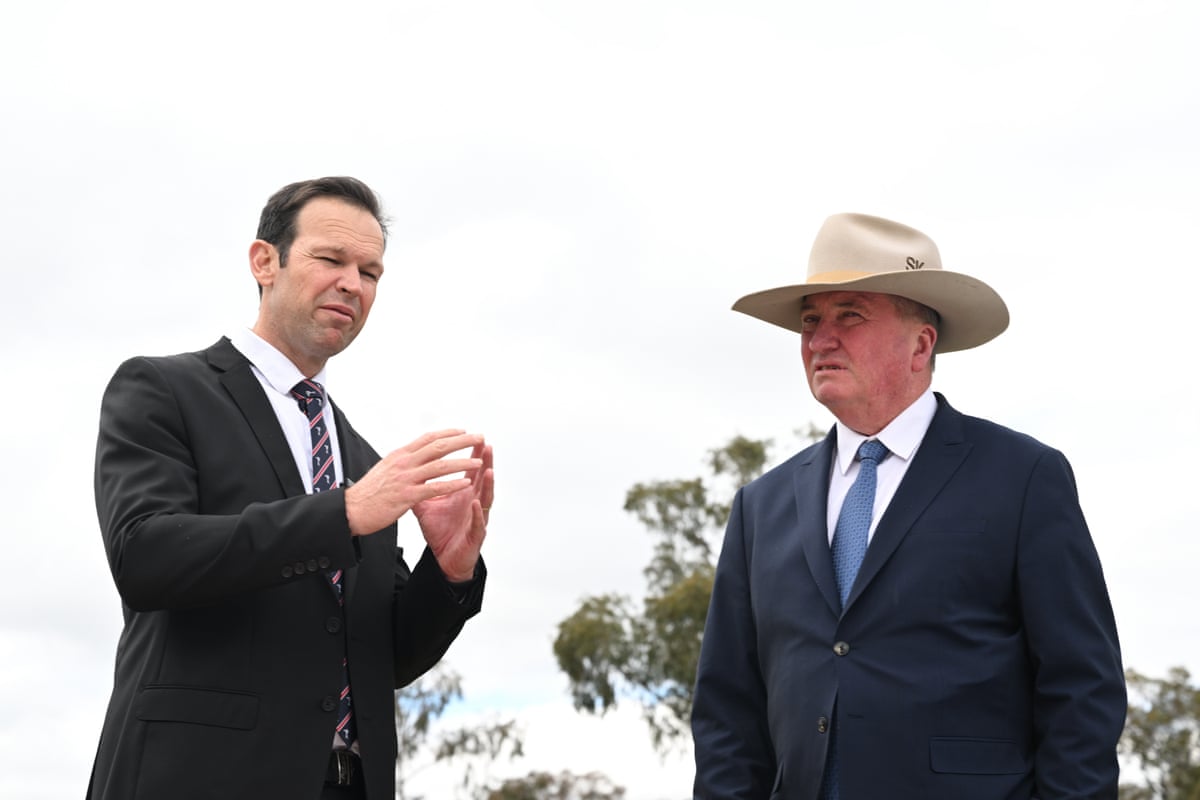
Canavan appeared alongside O'Brien, Antic, and One Nation's Barnaby Joyce and Malcolm Roberts at a rally outside Parliament House organised in support of the bill. Canavan told Australia that some people believed it acceptable for babies to be "born alive" after an abortion procedure.
I welcome debate on this because it is a matter of life and death. I am proudly pro-life.
The issue had already been contested in the Senate during 2026, where a committee process reported back on the bill earlier in the year before it returned to that chamber for further consideration, according to the Australian Christian Lobby, which had previously welcomed a Senate decision to keep the legislation alive, as noted in a separate statement from the lobby group.
What else came up during question time?
The Coalition devoted much of its questioning to housing affordability, pressing the government on the number of first home buyers now in negative equity and demanding more transparency about the government's 5% deposit scheme. Liberal frontbencher Aaron Violi opened proceedings by asking housing minister Clare O'Neil how many users of the scheme were in negative equity in her own Melbourne electorate of Hotham.
O'Neil did not directly answer, instead noting it was "fascinating" the opposition had chosen to raise the question with young students from the youth parliament program, roughly 150 of them, watching from the gallery. When the opposition objected that she was not being relevant, Speaker Dick agreed and told her to stop referencing the opposition. O'Neil continued discussing falling homeownership rates among young people without directly answering the question, prompting Dick to intervene again.
The minister will conclude her answer. She's not being relevant to the question. We'll move to the next question. Ministers also have to follow the standing orders.
Shadow treasurer Tim Wilson later asked why the number of first home buyers had dropped 6% this calendar year, citing Australian Bureau of Statistics figures showing new owner-occupier first home buyer loan commitments fell 2.9% in the most recent quarter. O'Neil responded that first home buyer numbers under the current government had exceeded those of any previous government in Australian history.
There have been more first home buyers each and every year under our government than there have ever been under any other government in Australian history.
She then attempted a comparison with the Coalition's record, which the opposition tried to shut down as irrelevant to the specific question asked. Dick ruled she could make a limited comparison provided it remained tied to the original question. O'Neil chose to avoid directly criticising the opposition and instead pointed to what she described as a shift in the housing market.
We all read the newspapers on the Sunday morning. For the first time in my life, they are peppered with article after article about first home buyers around the country who are going to auctions and winning.
It's not rocket science. It's a very simple reason that they're winning auctions, Speaker, for the first time in 25 years – first home buyers are standing on a level playing field.
What did the government announce on gambling advertising?
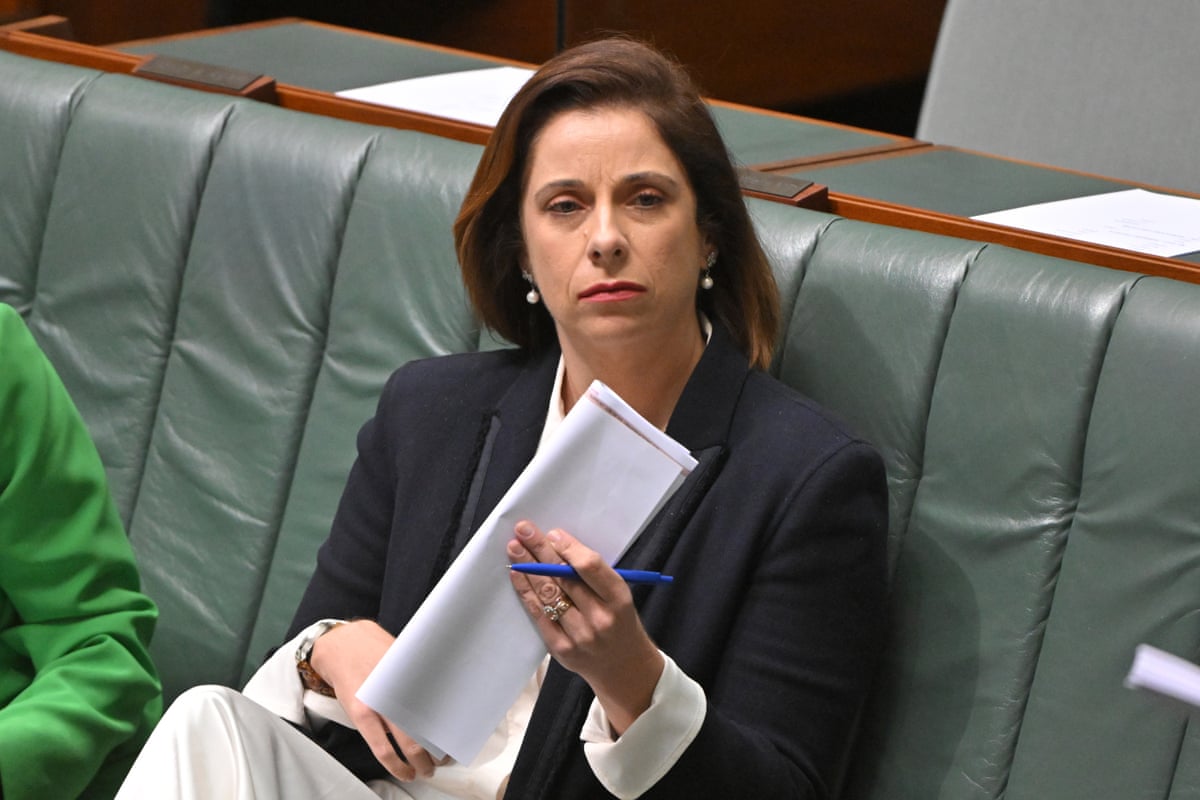
Communications minister Anika Wells used question time to announce a new single-service "opt-out register" for gambling advertisements, modelled on the existing Do Not Call register used to block spam calls. The announcement came as part of a third gambling-related bill introduced into parliament, setting out government amendments to its own wagering advertising plan, with existing legislation on the issue due to progress the following day.
Wells confirmed the government would also restrict inducements and inducement-based advertising, along with limiting certain commission arrangements for gambling industry employees. The bill's explanatory memorandum outlines plans to restrict the use of inducements by licensed interactive wagering service providers, prohibit inducement-based direct marketing and social media advertising to certain customers, restrict attempts to obtain consent for such marketing, and prohibit certain commission-based referral arrangements.
Wells said the new Wagering Advertising Opt-out Register would give consumers a single mechanism to stop receiving wagering advertisements from online content service providers, describing it as a "one-stop shop" for Australians wanting to avoid such promotions.
The Australian Communications and Media Authority will be responsible for implementing and enforcing these reforms, including monitoring compliance with the new restrictions and establishing and administering the Opt-out Register.
This Bill enables the ACMA to recover the costs of those activities through a levy imposed on licensed interactive wagering service providers. It is appropriate that the wagering industry, rather than taxpayers, bears the costs of regulating these activities.
What other questions were raised in the chamber?
Independent MP Zali Steggall asked treasurer Jim Chalmers what modelling his department had produced on the potential economic damage of cutting skilled migration and working holidaymaker numbers, and which sectors might face worker shortages as a result. Chalmers began by emphasising the "essential contribution" migrants have made to the country, before pointing to analysis from Treasury, the Productivity Commission, the OECD and the Reserve Bank, which he said had found migrants were more likely than not to make a substantial economic contribution over time, often driving dynamism and innovation.
He then turned his answer into a broader attack on the opposition's approach to migration policy.
We have unfortunately heard, in recent times in particular, that there are some in our community, and especially in our politics sitting over there, whose primary purpose when it comes to thinking about dealing with migration in this country is to try and divide the community. And we reject that irresponsible approach. The approach that they take in talking down our economy and dividing our community is bad for our economy and it is bad for our society as well.
Nationals MP Michael McCormack asked veterans' affairs minister Matt Keogh why he had declined to meet a group of veterans who had travelled to Canberra with concerns about a $5,000 cap on allied health services, some of whom were watching from the gallery. Keogh said the government had committed $177m to increase fees paid to allied health providers treating veterans and had removed the requirement for veterans to obtain a new referral every 12 sessions. When McCormack raised a point of order noting Keogh had not explained his refusal to meet the group, Dick directed Keogh to answer the specific question, prompting opposition MPs to repeatedly call "shame" as Keogh continued.
We're in the process of putting together a discussion paper that will be released for broad consultation with the veteran community … As they were informed last week by my office, I was unable to meet with them today but, as I have continually said and engaged with many ex–service organisations, we wish to engage with them and the practitioners in allied health services.
McCormack then sought to table a letter he said showed Keogh's refusal to meet the group, but leave was not granted, meaning the government blocked the request.
Independent MP Sophie Scamps asked health minister Mark Butler how the government would guarantee that no NDIS participant would be removed from the scheme until adequate foundational supports were fully funded and operating. Butler said state and territory governments were working towards putting supports in place through the Thriving Kids program for children under nine, as well as broader foundational supports, and that he was satisfied with progress on the former while acknowledging considerable work remained on the latter. He pledged that no one would be left "between two stools" without proper support.
Thriving Kids is well under way. I've seen implementation plans, I think, by all state governments with the exception of Queensland. We're very satisfied with progress being made there. They will start to ramp up from 1 October, with the expectation that they will be fully rolled out from 1 January 2028,
Foundational support systems will have to be built for them as well. Kids over the age of nine and adults who might not end up being on the NDIS as a result of that new test being introduced. And there's a lot of work for state governments and the commonwealth to do there. We're committed to doing that work.
Question time concluded after a final scripted question to prime minister Anthony Albanese from a government backbencher.


