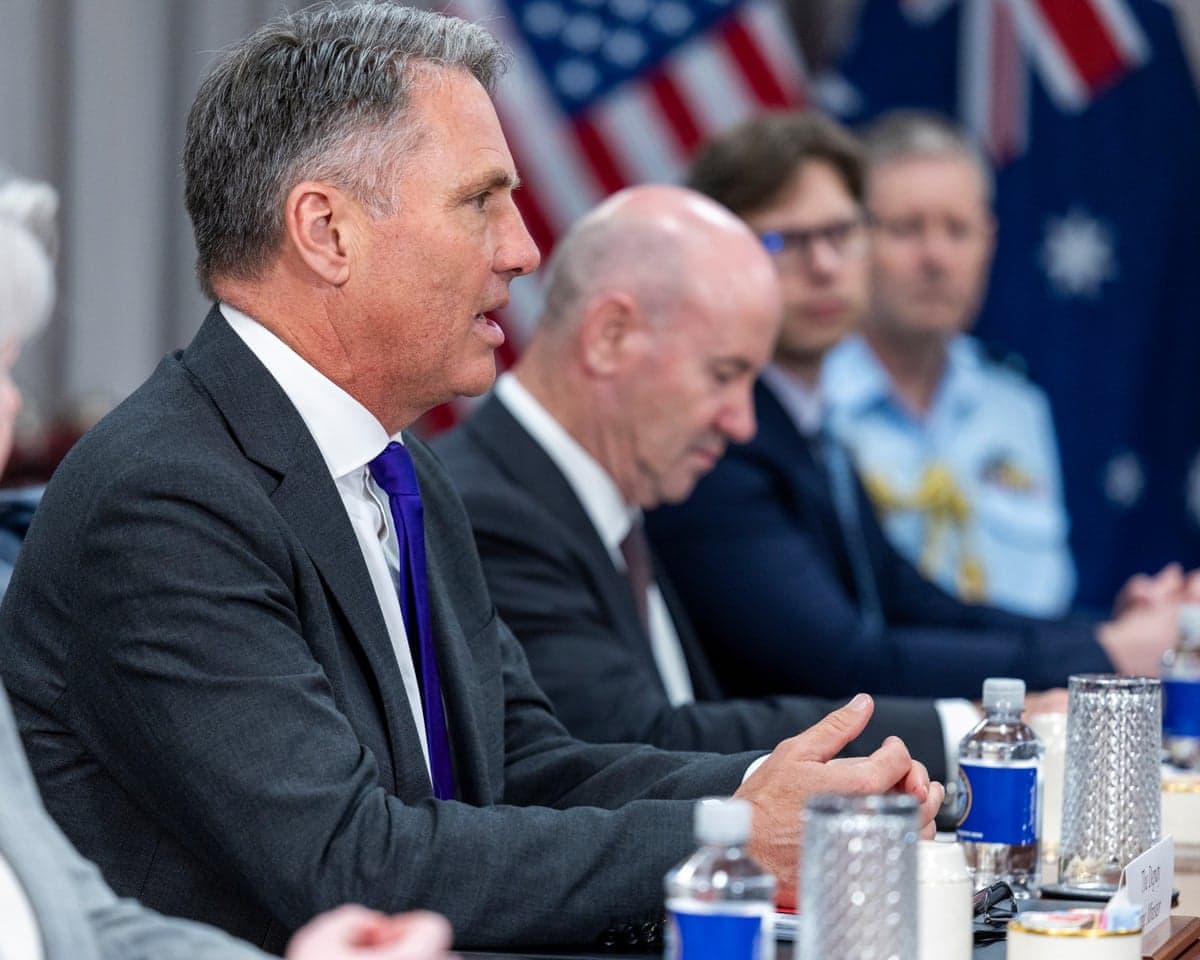
Opposition leader Angus Taylor has announced plans to introduce legislation that would criminalise the burning of the Australian flag, with penalties of up to 10 years imprisonment. The proposed laws would also enshrine 26 January as Australia Day in legislation, reigniting debate over the date's significance to Indigenous Australians.
Speaking on the proposals, Taylor emphasised his commitment to protecting national symbols.
Our flag represents the country we love. Our war memorials honour Australians who put their lives on the line. Australia Day is our national day that unites us all. These things belong to the Australian people and they should not be torn down, smashed, desecrated, or quietly stripped of their significance.
How would flag protection laws work?
The opposition's proposed legislation would make it illegal to burn or otherwise desecrate the national flag. Taylor framed the initiative as defending national pride and symbols that represent shared Australian values.
We will not be shy in standing up for the national pride that we should all feel for our great country.
Queensland has already enacted similar protections, with legislation covering public flag burning in circumstances likely to provoke public disorder, intimidate someone, or cause significant offence, carrying a maximum penalty of six months' imprisonment. The federal opposition's proposal would substantially increase the maximum penalty to a decade in prison.
What is the significance of the Australia Day proposal?
Enshrining 26 January as Australia Day in federal law would prevent any future government from changing the date. The proposal is expected to intensify longstanding discussions about whether the date—which marks the arrival of the First Fleet at Port Jackson in 1788—appropriately represents all Australians, particularly Indigenous peoples who view it as marking the beginning of colonisation.
Victoria commits $550 million to Western Freeway upgrade
The Victorian government has announced an additional $550 million investment in the Western Freeway, directing funds toward interchange upgrades and new lanes across Melbourne's western suburbs. This commitment builds on existing federal contributions to the project.

According to reporting on the Victorian government announcement, the Commonwealth's western freeway commitment is part of a larger $1.1 billion upgrade package, taking the total federal investment in the corridor to $2.1 billion. The Victorian government was expected to release the paperwork needed for Commonwealth funding to flow.
Victorian Premier Ben Carroll said the investment reflected community priorities.
We have listened to the community. Better local roads in growing areas are my priority. I want to help working people in the west spend less time on the road and more time where they need to be.
The federal government had already set aside $50 million for preconstruction works on the Western Freeway between Melton and Caroline Springs as part of its broader upgrade plan, with the project listed as a live preconstruction initiative in Victoria's infrastructure budget.
Sydney faces extreme fire danger amid spring heat spike
Sydney experienced unseasonably hot conditions on 5 September 2026, with authorities declaring a total fire ban across the city as temperatures soared and bushfire risk reached extreme levels. According to reports on the spring weather event, Sydney Airport had already reached 28.6 degrees Celsius by 11:30 a.m., more than seven degrees above the September mean maximum temperature, with forecasts predicting the city would reach 33 degrees.
The NSW Rural Fire Service implemented the total fire ban, meaning no fires could be lit in the open and all fire permits were suspended. Meteorologist Tom Saunders warned that temperatures across the region this weekend could reach 13 degrees above average.
Temperatures this spring will average as much as three degrees above the baseline from recent decades, potentially the hottest spring on record.
The extreme conditions created a stark contrast within New South Wales, with snow reported in the state's southern regions even as Sydney sweltered. According to emergency service reports, crews were conducting hazard reduction burns in Sydney's north ahead of the approaching summer season, though the total fire ban restricted such operations during the peak heat period.
Key Facts
- Opposition leader Angus Taylor proposes criminalising flag burning with up to 10 years imprisonment and legislating 26 January as permanent Australia Day
- Victoria commits $550 million to Western Freeway upgrades, with total federal and state investment reaching $2.1 billion
- Sydney declared total fire ban on 5 September 2026 as temperatures reached 33 degrees and fire risk reached extreme level
- Spring temperatures forecast to average three degrees above historical baseline, potentially the hottest on record