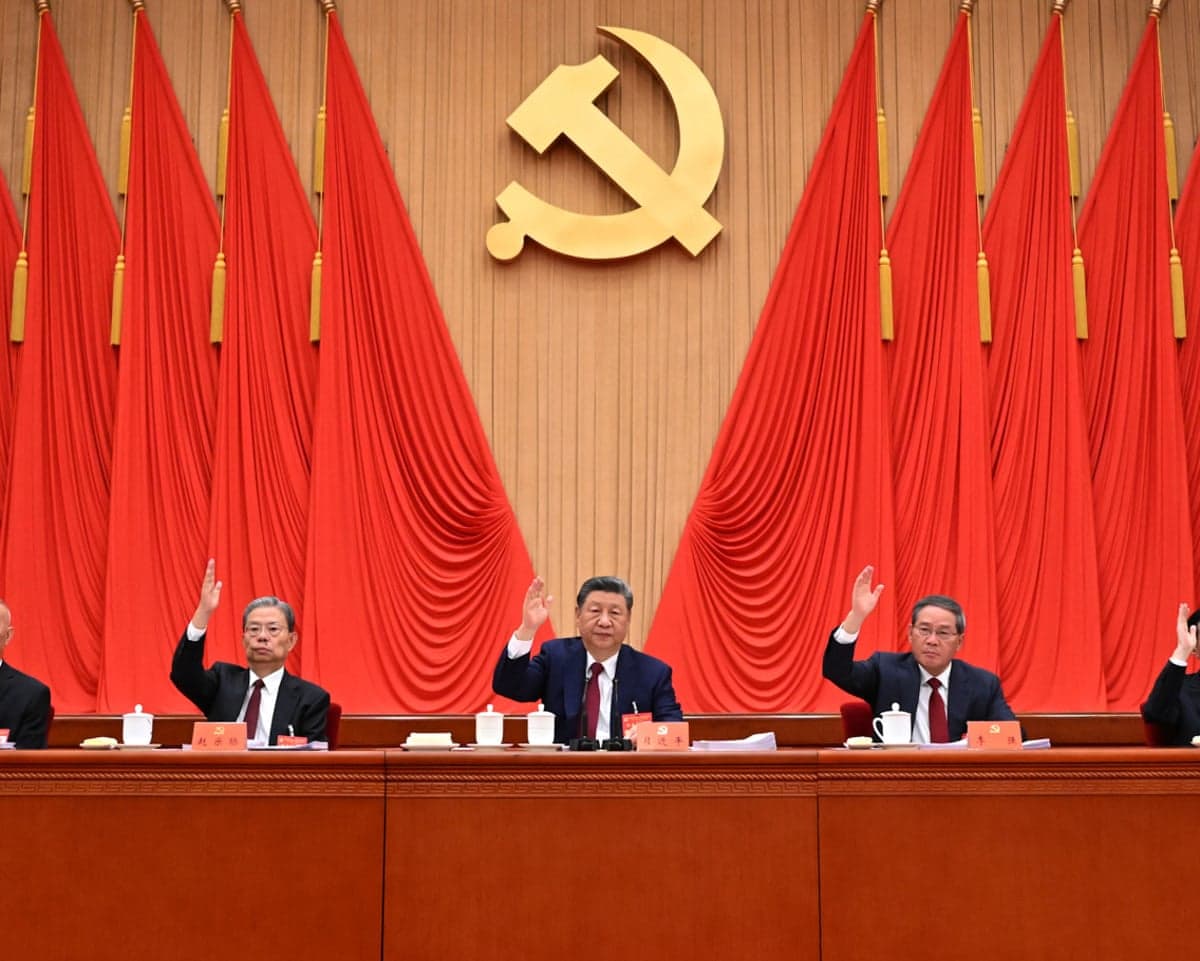
China has expelled a record 33 members from the Communist Party during its fifth plenum this week, underscoring the scale of purges under President Xi Jinping. The gathering of top officials, which convenes roughly annually, displayed an unprecedented number of vacant seats—a visible marker of the disciplinary campaign reshaping the party's leadership ranks. According to The Guardian, just 279 of the full and alternate members of the Central Committee attended the gathering, compared with 376 originally named in 2022, meaning more than 25% of the original cohort were absent.
The expulsions represent the highest number of empty chairs at a plenum in modern Chinese history. Among those confirmed expelled were Zhang Youxia, the former second-in-command in China's military hierarchy, and Ma Xingrui, the former party secretary for Xinjiang. Reuters also identified former Politburo members Liu Jianchao, a former senior diplomat, and Jin Zhuanglong, a former industry minister, among the 33 expelled officials. Other absences remained unexplained.
Neil Thomas, a senior fellow at the Asia Society thinktank, characterised the visible absences as evidence of Xi's priorities. "More empty seats underscores the plenum's focus on Xi's vision of strict internal discipline," Thomas wrote on social media.
How extensive are the purges across military leadership?
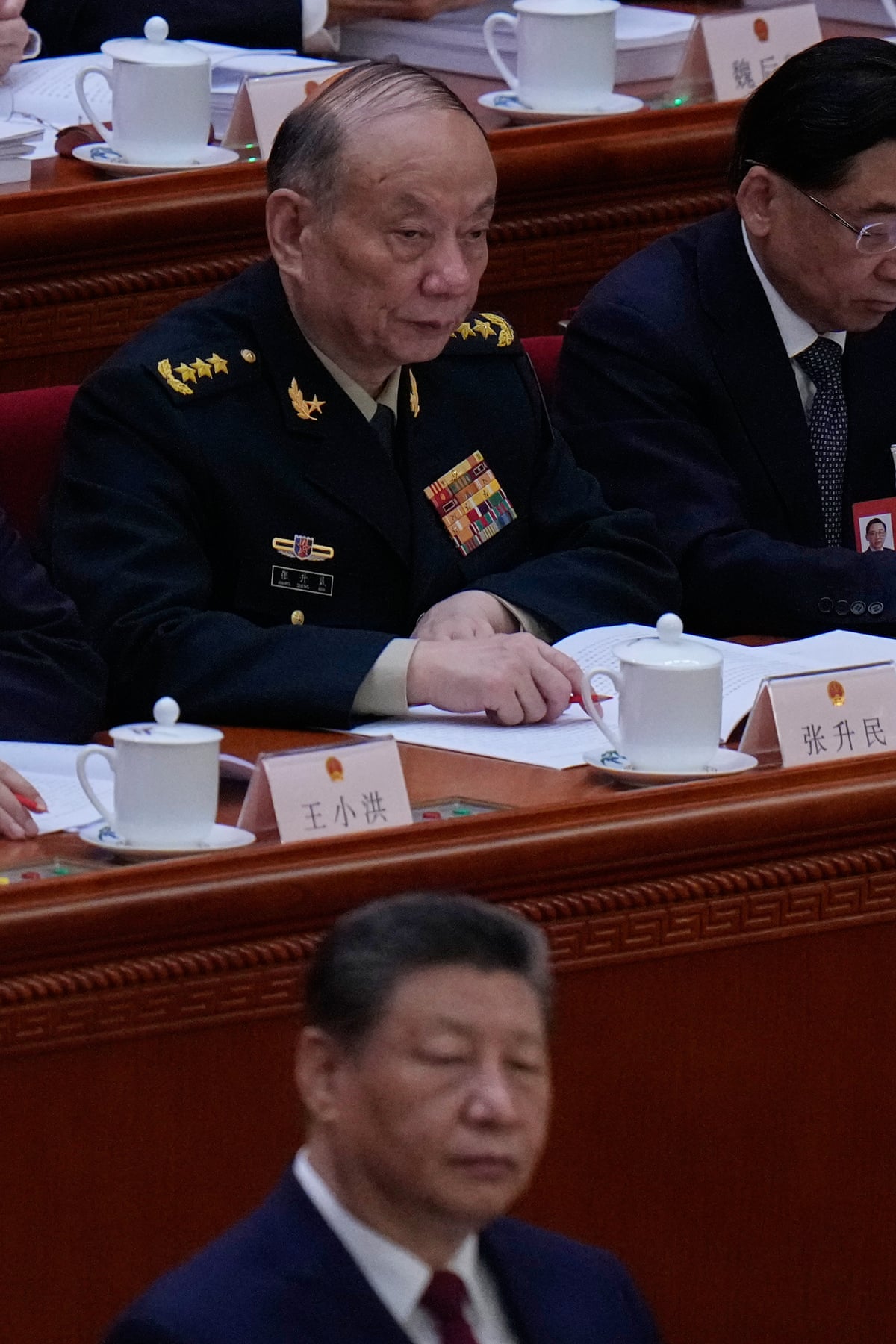
The purges have substantially reshaped China's military command structure. A series of disciplinary actions has gutted the seven-member Central Military Commission, the governing body of China's People's Liberation Army. Only two members now remain: Xi himself and Zhang Shengmin, the military's anti-graft official. Reuters reported that five of the original seven Central Military Commission members have been removed during Xi's tenure.
In a significant development during the plenum, Zhang Shengmin was unexpectedly elevated to the Politburo, the party's highest ruling body. This promotion makes him the sole military representative in the senior leadership circle, a striking concentration of military authority in the hands of Xi's anti-corruption enforcer. The elevation signals Xi's confidence in Zhang's loyalty and his continued emphasis on rooting out what the leadership views as indiscipline within military ranks.
The military purges form part of a broader pattern affecting civilian leadership as well. Reuters documented that three of the 24 Politburo members elected in 2022 had been removed by the fifth plenum—the most from a sitting Politburo in one term since 1980.
What is driving Xi's intensified campaign against party officials?
Since assuming power in 2012, Xi has prioritised eliminating corruption within the party structure. However, the campaign has evolved in recent years, targeting officials at the highest echelons of both party and military hierarchies. This expansion has prompted analysts to question whether the anti-corruption effort simultaneously serves as a mechanism for removing political rivals or punishing perceived disloyalty.
Xi has grown increasingly vocal about his frustrations with what he perceives as insufficient discipline within party ranks. Earlier in 2026, he declared that the party must uproot "sick trees" and characterised the fight against corruption as a "never-ending journey." The fifth plenum's theme—party governance—reflects this continued focus on internal discipline and organisational control.
The campaign's scope has raised concerns among analysts about the availability of qualified successors. Many observers believe the purges have been so comprehensive that few suitable candidates remain to be promoted into vacated positions, potentially constraining the party's ability to refresh its leadership at upcoming congresses.
What happens next for China's leadership?
The fifth plenum has laid groundwork for the 21st Party Congress, which convenes every five years and is scheduled for the second half of 2027 in Beijing. At that gathering, the next generation of leadership will be selected, and the ranks of the Central Committee and Politburo will be refreshed.
Xi is widely expected to secure a fourth term as party leader at the 2027 congress, a development that would make him the longest-serving ruler of Communist China since Mao Zedong. The consolidation of power through the current purge cycle appears designed to ensure his continued dominance and to reshape the party apparatus according to his vision of discipline and loyalty before that succession moment arrives.
The scale of recent expulsions suggests that the 2027 congress will oversee a substantially transformed leadership structure, with many positions filled by officials who have demonstrated allegiance to Xi's governance model and anti-corruption agenda.