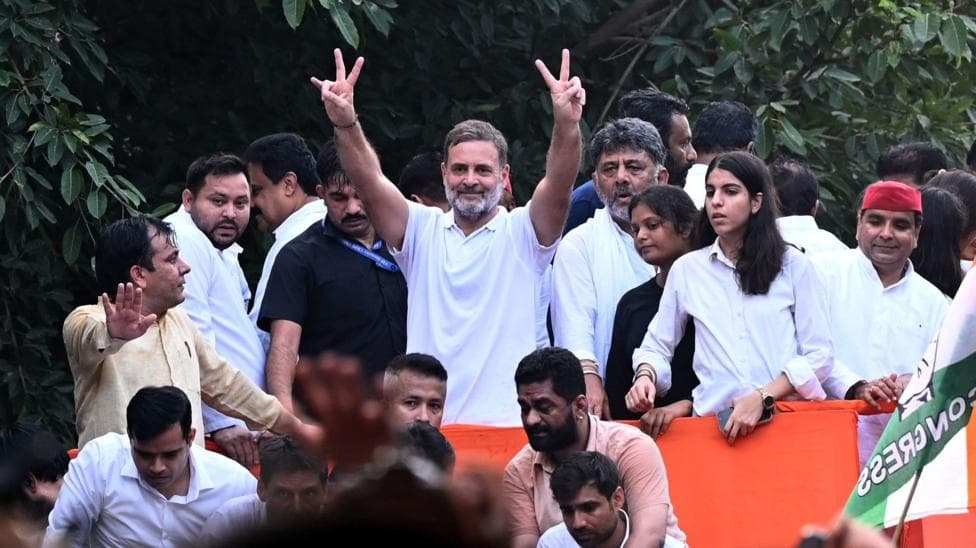
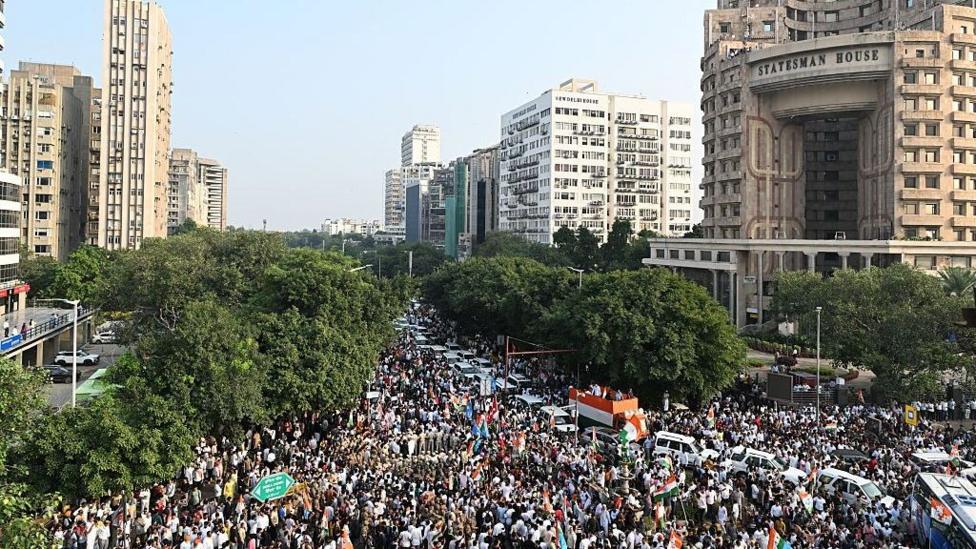
Tens of thousands of people gathered in India's capital on November 1 for a major opposition demonstration calling for the resignation of the chief election commissioner and sweeping electoral reforms. According to BBC News, the rally at Ramlila Maidan grounds drew crowds protesting against what opposition leaders characterised as systematic removal of eligible voters from electoral rolls.
The Congress-led INDIA alliance organised the event, branded "Save the Vote, Save the Country," with opposition figures claiming they expected up to one million attendees. However, India Today reported that Delhi Police deployed more than 4,000 personnel and estimated the venue could accommodate only 45,000 to 50,000 people. The influential Gen Z-led pressure group Cockroach Janta Party (CJP) pledged its support for the demonstration.
The rally emerged from mounting controversy surrounding a voter-list revision exercise that has eliminated 130 million names from draft electoral rolls nationwide. The Election Commission of India (ECI) maintains the process, known as the Special Intensive Revision (SIR), aims to purge records of deceased individuals and those who have relocated from their registered addresses. Yet Reuters reported the 130 million removed names comprised 28 million people who had died, 63 million who had relocated and 30 million who could not be traced.
Opposition parties contend the revision could advantage Prime Minister Narendra Modi's Bharatiya Janata Party (BJP) by striking legitimate voters from the rolls. They have accused Chief Election Commissioner Gyanesh Kumar and the BJP of orchestrating "vote chori" (vote theft). Both the BJP and the ECI have rejected these allegations.
What triggered the controversy?
The dispute intensified in September when The Indian Express newspaper reported that Chief Election Commissioner Kumar made critical decisions regarding the revision exercise without securing agreement from the two other election commissioners, who had raised objections on more than a dozen occasions. The ECI responded that differences of opinion were routine within any institution and did not compromise its functioning.
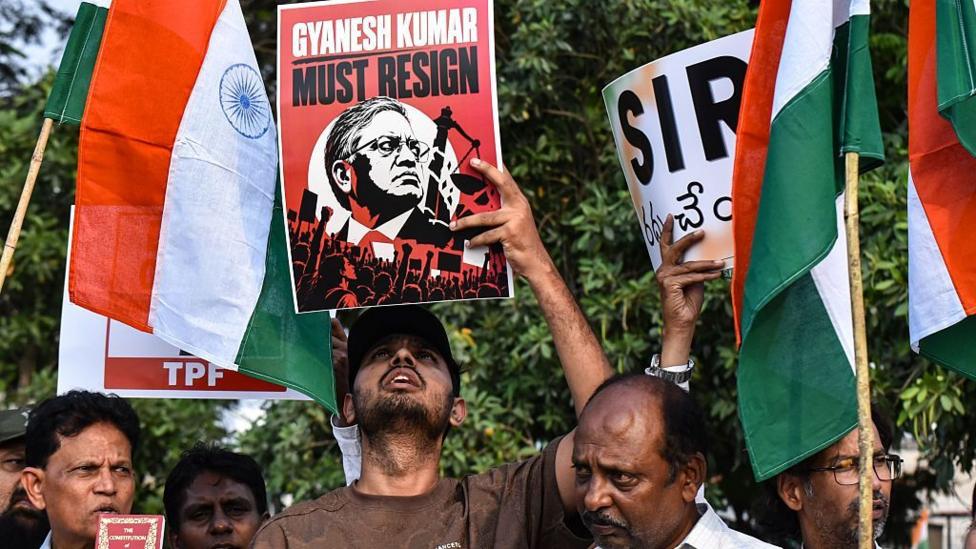
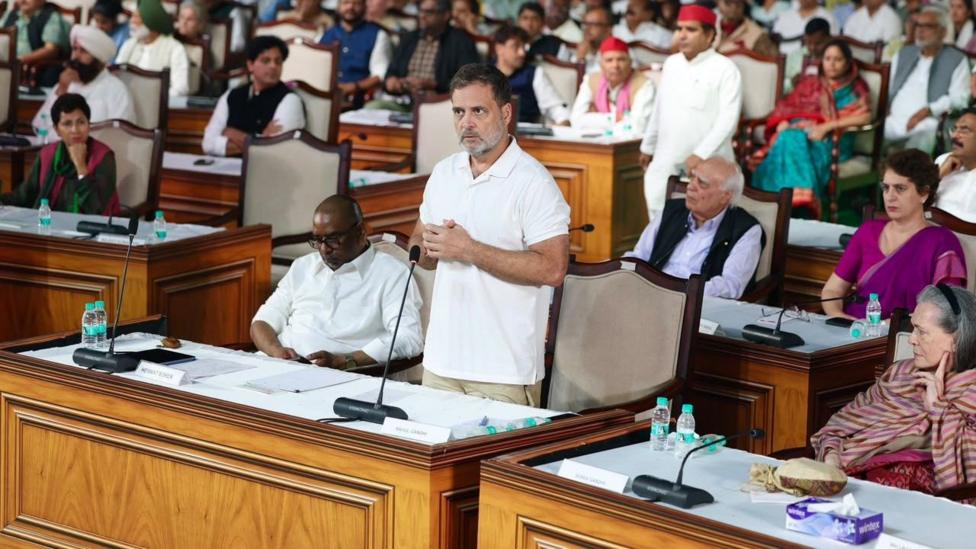
Concerns about the revision process have persisted, with opposition parties, the CJP and student organisations staging numerous protests across Delhi and other Indian cities. On Saturday, opposition leaders conducted a symbolic impeachment of Kumar at Congress president Mallikarjun Kharge's residence in Delhi. The mock parliamentary session, chaired by former Lok Sabha Speaker Meira Kumar, featured leaders accusing the election chief of "conspiring to steal elections" and deliberately purging 130 million voters from electoral rolls.
Kharge, who serves as leader of the opposition in parliament's upper house, introduced a symbolic motion seeking Kumar's removal, alleging he had undermined the electoral process and committed an act of "treason against the nation and the Constitution of India". Several individuals whose names had been struck from electoral rolls during the revision exercise participated in the proceedings. The session held no legal authority; under Indian law, the chief election commissioner can only be removed through formal parliamentary procedures.
How has the government responded?
Prime Minister Modi has refrained from directly addressing the mock impeachment. However, at a public rally on Friday, he claimed that "some people" sought to generate chaos across the country to damage his reputation. Later on Saturday, while addressing a separate gathering, he charged opposition parties with "abandoning their duty" and "tearing apart the dignity and boundaries of the constitution".
What previous demonstrations have occurred?
In October, Congress MP and opposition leader Rahul Gandhi spearheaded tens of thousands of protesters in a march from Connaught Place in central Delhi to the Supreme Court, demanding the CEC's resignation. A party official told the BBC that "Sunday's rally will be several times bigger than that", characterising the earlier march as merely "the trailer". The Hindu Business Line noted that the CJP's earlier campaign over exam irregularities had drawn tens of thousands of protesters and was followed by the resignation of a senior minister.
Ahead of the November 1 rally, Gandhi articulated the opposition's position:
The march was just the trailer. Sunday's rally will be several times bigger than that.He characterised their protest as directed against "the demolition of Indian democracy", stating that "all the opposition parties and everybody who wants to come, political or non-political, is welcome".
Gandhi emphasised the stakes involved, declaring:
There is huge anger, huge emotional pain because millions are being disenfranchised. We are all standing together because we are defending the Constitution. We are defending the idea of India. We are defending the vote, which is the expression of all Indians.
What restrictions have authorities imposed?
Delhi police authorised the November 1 rally but attached multiple conditions. Media reports indicated the demonstration had to conclude by 5 p.m., CCTV cameras required installation at the venue, and marches outside the designated protest site were prohibited. The planned march stretched approximately 1.5 kilometres from central Delhi to Ramlila Maidan, with traffic diversions announced in advance.
The mega rally has fractured opinion among merchants in Chandni Chowk, one of Delhi's oldest and most congested markets, situated less than a kilometre from Ramlila Maidan. Earlier in the week, one group of traders expressed concern that the protest could damage business during the festive season, arriving just a week before Diwali. However, a competing group of traders voiced support for Gandhi's rally and criticised the BJP for conducting a march through the market on Thursday, contending that disruption harmed the festive season more severely.
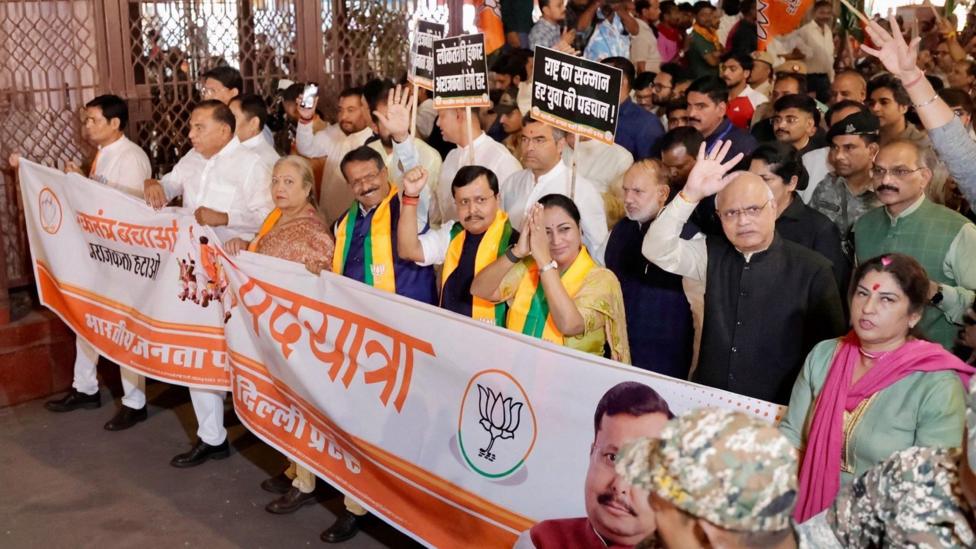
Authorities positioned thousands of police and paramilitary forces throughout the city, including roads approaching Ramlila Grounds. The opposition, which had been organising the rally for days, accused the government of attempting to prevent people from travelling to Delhi to participate in the demonstration.
What concerns exist about police conduct?
Gandhi appealed to participants to attend in substantial numbers, writing on X:
Don't worry about the police, don't worry about lathis [batons] - the BJP will not have the guts to try any of their antics.His remarks reflected escalating apprehension regarding the policing of recent protests in the capital.
On 10 October, thousands of security personnel were deployed and large sections of the city were sealed off to prevent protests organised by the CJP against Chief Election Commissioner Kumar. All senior CJP leaders were detained and numerous demonstrators were beaten and dragged through streets to disperse their protests. BBC reporters documenting the demonstrations witnessed police dragging away protesters and deploying batons against some of them.
The CJP has publicly endorsed the INDIA bloc rally, though it remains uncertain whether its senior leaders will attend given the earlier detentions and police action.
What happens next?
The rally was scheduled to run from 10 a.m. to 5 p.m. on November 1, preceded by a noon march from the Minto Road–Connaught Place junction. The demonstration represents the latest escalation in opposition efforts to challenge what they characterise as electoral irregularities, following weeks of sustained protests and the symbolic impeachment proceedings.
Key Facts
- The voter-list revision began the previous year, with reported deletions exceeding Japan's population in scale.
- Opposition leaders claim the removal of 130 million names disproportionately affects eligible voters and benefits the ruling BJP.
- The CJP, which emerged from a Gen Z movement, has become a significant force in Indian protest politics alongside traditional opposition parties.
- Delhi Police estimated the venue capacity at 45,000–50,000 people, substantially below the organisers' one million target.
- The rally was branded "Save the Vote, Save the Country" and represented a unified effort by multiple opposition parties and civil society groups.