The United States has announced visa restrictions targeting individuals it accuses of discriminating against South Africa's white minority, marking a fresh escalation in deteriorating relations between the two nations.
The Trump administration has levelled criticism at South Africa over multiple fronts, including policies designed to address historical racial inequality that Washington contends unfairly disadvantage Afrikaners—descendants primarily of Dutch and French settlers. South Africa has consistently rejected these allegations.
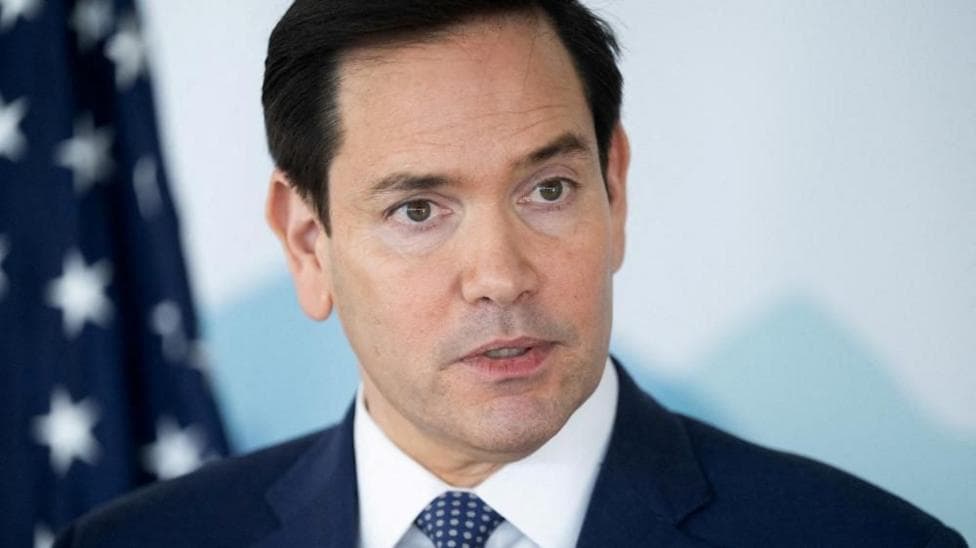
On Tuesday, US Secretary of State Marco Rubio unveiled the restrictions, stating:
The South African government has not adequately addressed the previously laid out concerns.According to reporting on the policy details, the measures target foreign nationals deemed "responsible for, or complicit in" laws or policies enabling uncompensated land seizures, race-based discrimination, or incitement of imminent violence against minority ethnic or racial groups. The policy may also affect immediate family members of those targeted.
Rubio did not immediately identify any specific individuals subject to the restrictions. In a separate social media post, he accused South Africa's government of pursuing
racial grievance against the Afrikaner minorityand stated that those responsible for what he characterised as injustices
have no place in the United States.
South Africa's Foreign Minister Ronald Lamola responded with concern to the announcement. The international relations and co-operation ministry issued a statement saying:
The announcement once again, [sic] aligns with the mischaracterisation of South Africa's domestic policies by fringe groups who wrongly portray themselves as representatives of 'minorities' and Afrikaners in general.On Wednesday, the government reiterated that
it is our sovereign right to put in place laws that address the nation's concern over centuries of racial injustice.
The restrictions are being imposed under Section 212(a)(3)(C) of the Immigration and Nationality Act, a provision allowing the secretary of state to bar foreign nationals whose entry is deemed potentially damaging to US foreign policy interests. The measures build on Executive Order 14204, titled Addressing Egregious Actions of the Republic of South Africa, which links the policy to Washington's broader dispute with Pretoria over land expropriation and race policy.
How did US-South African tensions reach this point?
Relations between the two countries have deteriorated sharply since President Donald Trump returned to office in early 2025. The administration has cut aid, expelled the South African ambassador, and offered what it termed "refuge" to white South Africans fleeing what it described as "persecution." Since October 2025, the US has resettled 4,499 refugees, nearly all South African Afrikaners, reflecting a significant policy shift.
The South African government has repeatedly rejected allegations of persecution or land confiscation targeting white people. It has stated that claims of a white genocide lack reliable evidence and have been widely discredited. South Africa's latest crime statistics do not indicate that white people face greater risk of violent crime than other racial groups.
The tensions intensified after South African President Cyril Ramaphosa signed legislation allowing the government to seize land without compensation in limited circumstances. Trump subsequently offered refugee status to Afrikaners, framing the law as evidence of persecution. The legislation permits the state to expropriate property in the public interest and provides for circumstances in which compensation may be set at zero. However, it also requires authorities in most cases to first attempt reaching agreement with property owners, and disputes can be taken to court.

Land ownership remains deeply contentious in South Africa more than three decades after apartheid's end, when the black majority was dispossessed of land and denied fundamental rights. Most private farmland is owned by white South Africans, who comprise just over 7% of the population. The government maintains that land reform is essential to address these historical inequalities and insists the new law does not permit arbitrary seizures.
In May 2025, Ramaphosa travelled to the White House with a substantial delegation that included white members of his coalition government and prominent white South African golfers in an attempt to ease tensions. However, Trump used the Oval Office meeting to make claims that white South African farmers were being killed and "persecuted," producing unsubstantiated evidence that has been widely discredited. Further South African efforts to repair the relationship have failed, with Africa's largest economy hit in August 2025 with 30% tariffs on goods exported to the US—the highest rate in sub-Saharan Africa.
What do the visa restrictions target?
Rubio stated that the visa restrictions would target those who promote
race-based discrimination, incite violence, or enable land confiscation without compensation in South Africa.The US embassy in Pretoria declared that Washington believed dialogue with South Africa had run its course and accused the African country of failing to demonstrate commitment to strong bilateral relations.
The embassy warned that the new visa restrictions represented only an initial phase of escalation. According to reporting on the announcement, the restrictions are "only the first step in a series of escalatory measures" that will demonstrate "America's firm resolve in this matter."
Rubio asserted that the actions targeted by the policy undermined
peace, economic stability and the rule of law.He added:
The United States will not allow such behaviour to go unchecked.
What is the broader context of US policy toward South Africa?
The visa restrictions follow earlier US policy shifts affecting South Africa. In June 2026, the US announced it would end funding for South Africa's HIV programmes, citing failure to protect the Afrikaner minority—a decision South Africa disputed while emphasising its efforts toward self-reliance amid strained bilateral relations.
Additionally, South Africa has deployed heavy security ahead of anti-migrant protests, with authorities urging peaceful demonstrations amid ongoing repatriations and rising xenophobic tensions. These domestic pressures compound the strain from international relations challenges.
US visa services in South Africa were already being consolidated through regional hubs beginning 1 August 2026, indicating broader changes to US consular operations in the region.
What happens next?
The US has signalled that the visa restrictions represent an opening move, with further escalation likely to follow. However, no specific date or timeline for additional measures has been announced. The embassy's warning of "a series of escalatory measures" suggests the Trump administration intends to maintain pressure on South Africa over its land and race policies, though the precise nature and timing of future actions remain unclear.
South Africa's government has shown no indication of altering its domestic policies in response to US pressure, instead asserting its sovereign right to address historical injustices through legislation and reform programmes.