Uganda has initiated a phased withdrawal of its military forces from Somalia after nearly two decades of deployment, marking the end of one of Africa's longest-running military interventions in the Horn of Africa nation. According to BBC News, Uganda's acting army spokesperson Chris Magezi announced on Monday that the first contingent of troops deployed through bilateral arrangements had already returned home, with additional forces expected to follow within days.
The withdrawal represents a significant shift in regional security dynamics. Uganda's army chief, Gen Muhoozi Kainerugaba, declared that all Ugandan forces—both those serving under the African Union mission and those deployed bilaterally—would exit by the end of 2027. The initial group of 109 Uganda People's Defence Forces (UPDF) troops departed the capital, Mogadishu, on Friday following the army chief's announcement of the pullout.
How did Uganda become involved in Somalia?
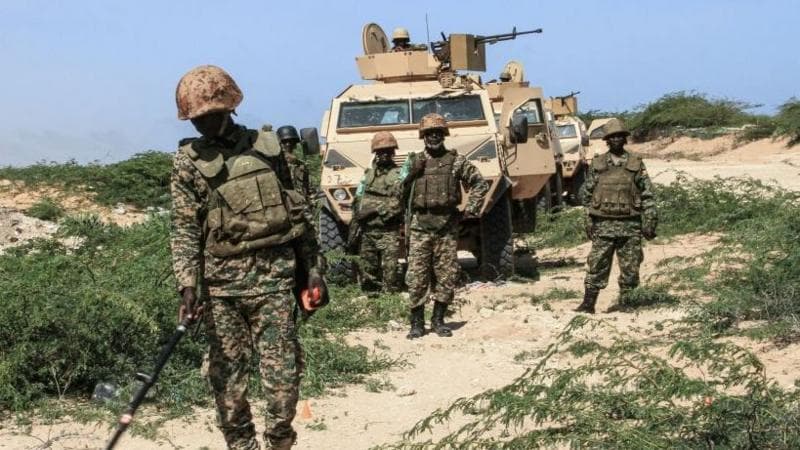
Uganda was the first African nation to deploy troops to Somalia under the African Union Mission in Somalia (Amisom), established in 2007 to protect the country's transitional government from attacks by Islamist militants. The initial deployment of Ugandan forces in 2007 proved instrumental in the subsequent years, with troops playing a key role in driving al-Shabab, an al-Qaeda-linked militant group, out of Mogadishu and other major urban centres. Ugandan soldiers fought alongside the Somali National Army to recapture strategic territory and secure critical government installations during the early phases of the conflict.
Over the following years, Uganda maintained its military commitment through successive African Union missions. The force structure evolved when the African Union Transition Mission in Somalia (Atmis) took over, designed with the explicit goal of gradually transferring security responsibilities to Somali forces. This mission was replaced in 2025 by the African Union Support and Stabilisation Mission in Somalia (Aussom), which focuses on strengthening Somali security institutions and preparing Somali forces to assume full responsibility for national security.

What prompted the withdrawal decision?
The withdrawal announcement came after Somalia's President Sheikh Mohamud visited Kampala last week to meet with Uganda's President Yoweri Museveni. The meeting was intended to address Somalia's security situation alongside trade and economic cooperation between the two nations. Reports indicate that the Somali president sought to persuade Uganda to extend its military presence in the country, though the outcome of these discussions was not disclosed publicly. During the visit, Museveni urged Somali leaders and citizens to unite in their fight against the al-Shabab insurgency.
Gen Muhoozi had announced on 28 August 2026 that all Ugandan troops would depart Somalia by 1 August 2027, providing a more specific timeline than the later stated "end of 2027" target. Uganda's Defence Ministry confirmed that the bilateral-deployment drawdown would be completed within days, though the statement did not specify the exact number of soldiers involved in that contingent.
How many troops are involved in the withdrawal?
Currently, an estimated 4,500 troops serve in Somalia under the African Union mission, with approximately 2,000 additional personnel deployed through bilateral arrangements. The withdrawal will affect both groups, though the phased approach means the process will extend over several months. Ugandan forces are positioned in Lower Shabelle, including towns and river crossings considered strategically important to Mogadishu's security. The handover of forward operating bases to Somali forces was scheduled to continue through 4 November 2026.
What challenges lie ahead for Somalia?
Somalia has endured a prolonged and devastating insurgency led by al-Shabab for more than two decades. The withdrawal of experienced Ugandan forces raises questions about Somalia's capacity to maintain security gains already achieved. Aussom now faces uncertainty regarding its future funding, as plans proceed to wind down United States and United Nations financial support. A 12-month transition plan is due to commence in January, providing Somalia and the African Union time to identify alternative funding sources to sustain the mission and support Somalia's security institutions during the critical handover period.
What happens next?
The handover of forward operating bases is scheduled to continue until 4 November 2026, with Uganda's full withdrawal, including all troops serving under Aussom, planned by the end of 2027. During this period, Somalia is expected to assume full responsibility for its own security. The transition will test whether Somali security forces, supported by the African Union, can maintain stability and continue degrading al-Shabab's operational capacity without the sustained presence of Ugandan military personnel.
"As we promised, we have started withdrawing UPDF from Somalia. After 20 years of a lot of blood and sacrifice, we are handing over security to our Somali brothers,"Gen Muhoozi stated on social media, underscoring Uganda's commitment to the phased exit strategy.