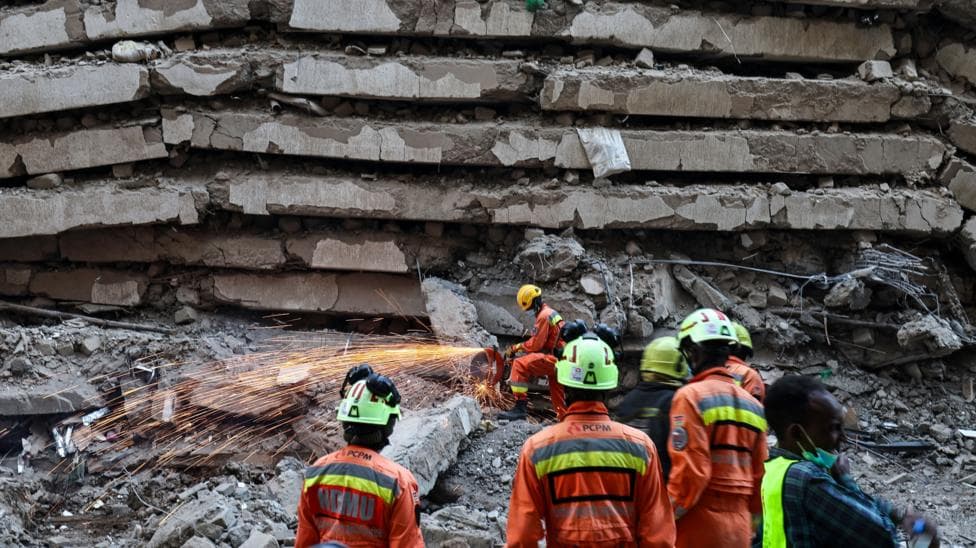
Two people have been pulled alive from the rubble of a collapsed building in Kenya's capital, Nairobi, on Friday, with five still missing as rescue operations continue. According to BBC News, police launched a manhunt on Saturday for the building's owner and the contractor responsible for the site.
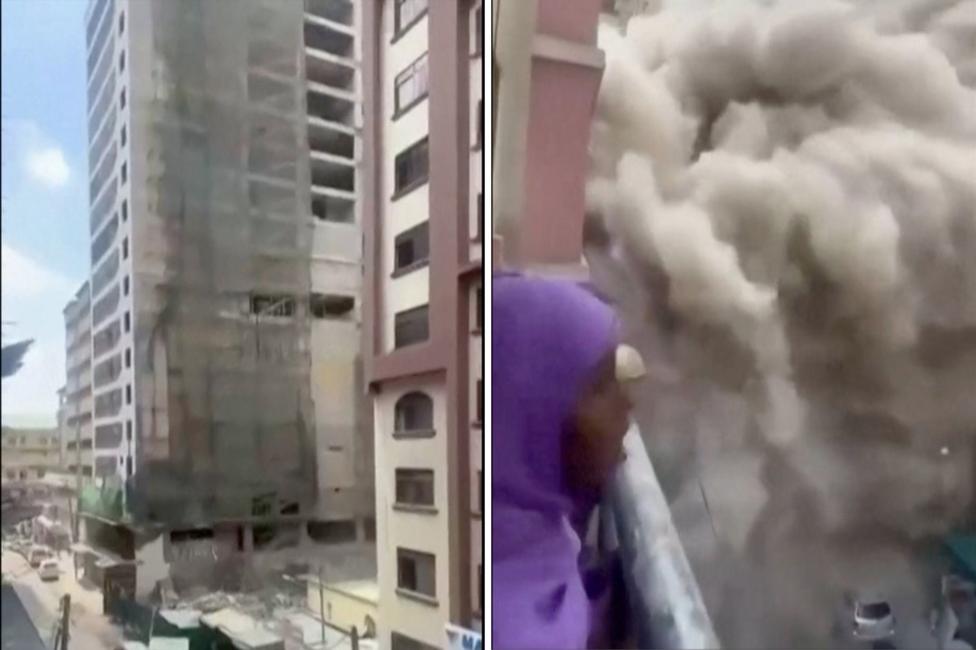
Dramatic footage captured the moment the bottom floor of the structure, believed to be between 16 and 18 storeys tall, gave way before the entire building collapsed, sending a plume of dust across the surrounding streets in Nairobi's Eastleigh area. Dozens of construction workers were on the upper floors when the collapse occurred but managed to escape largely unharmed. Those unaccounted for were believed to be in shops located at the base of the building.
The Kenya Red Cross reported receiving 31 missing-person reports, though the organisation noted that reports were still being verified and two people had already been reunited with their families. Nairobi Governor Sakaja Johnson indicated that rescue teams were working toward the basement level, but contact with individuals previously reached by rescue workers had been lost.
How many workers were in the building?
Interior ministry official Kipchumba Murkomen stated that 66 of the 67 construction workers present in the building at the time of the collapse managed to exit safely, while the remaining worker sustained injuries that were not life-threatening. The block was under construction when it collapsed on Friday afternoon, with scaffolding still wrapped around the exterior. Officials confirmed that 11 shops had already begun operating on the bottom floors despite the building remaining incomplete.
What caused the collapse?
Questions have emerged regarding why the building suddenly failed and whether it complied with planning regulations. Engineer John Ogallo reported that witnesses at the scene described seeing cracks before the collapse occurred. Kenya's National Construction Authority identified the company behind the development, the architect, and the structural engineer, but did not disclose whether the site had been inspected prior to Friday's incident.
The National Construction Authority's records named 9th Street Plaza Limited as the developer, Stromax Holdings E.A. Limited as the contractor, Emmanuel Mwangi Maina as the architect, and Joseph Muturi Mugu as the structural engineer. County records showed that an application for a building exceeding 15 floors with a basement had been submitted but never received approval, according to Governor Johnson.
What regulatory failures are being investigated?
The National Police Service launched an investigation to establish the cause of the collapse and determine whether criminal liability exists. In a statement, police warned that anyone found responsible for negligence or violating building regulations would face prosecution to the fullest extent of the law. Governor Johnson told local media that the building's owners did not possess the required paperwork for the structure to be occupied, and he urged the national government to grant local authorities greater enforcement powers against developers who disregard approved building plans and safety standards.
The incident has intensified concerns about construction standards and regulations in Kenya. Building collapses remain a recurring problem in Nairobi, with poor construction practices and inadequate planning frequently identified as contributing factors. The construction sector has experienced rapid expansion, with Nairobi's annual number of completed buildings rising from 20,025 in 2022 to 25,090 in 2025, raising questions about whether regulatory oversight has kept pace with development activity.
What happens next?
Police urged the public to remain clear of Yusuf Haji Avenue and 9th Street to allow excavators, canine units, and rescue teams to conduct their operations. The two survivors rescued on Saturday have been taken to hospital for treatment. Rescue efforts continue as authorities work to locate the remaining missing individuals and determine the full extent of the structural failure.