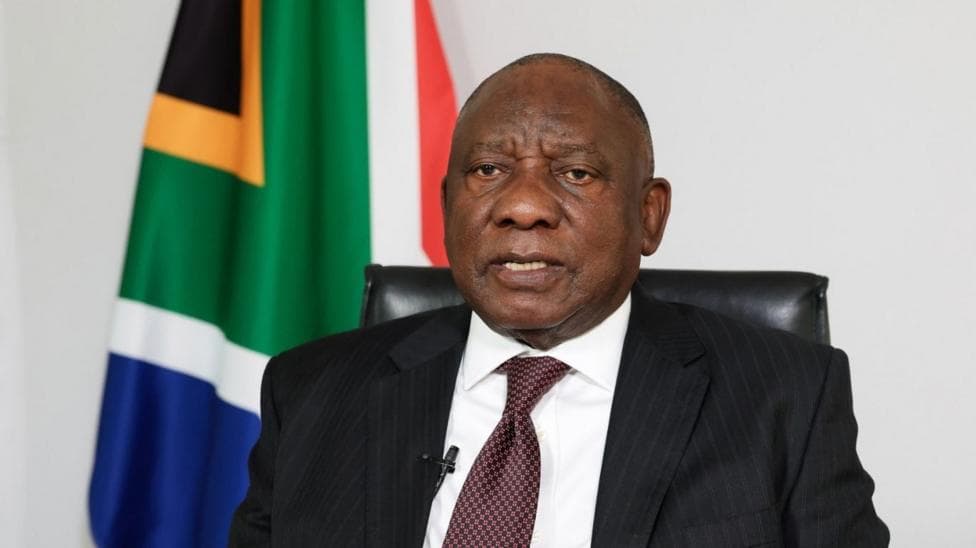
South African President Cyril Ramaphosa has ordered a comprehensive audit of unsafe streets and announced sweeping measures to combat gender-based violence following the discovery of 12 women's bodies within two months in areas east of Johannesburg. The killings have ignited national alarm about the prevalence of violence against women in a country with one of the world's highest rates of gender-based violence.
During a televised address to the nation on 29 September 2026, Ramaphosa acknowledged that the government had "not done enough" to shield women and girls from harm. He stated that gender-based violence cannot "be accepted as a normal part of life" and outlined a multifaceted response encompassing street safety improvements, alcohol-related violence reduction, and a review of unresolved cases.

What triggered this response?
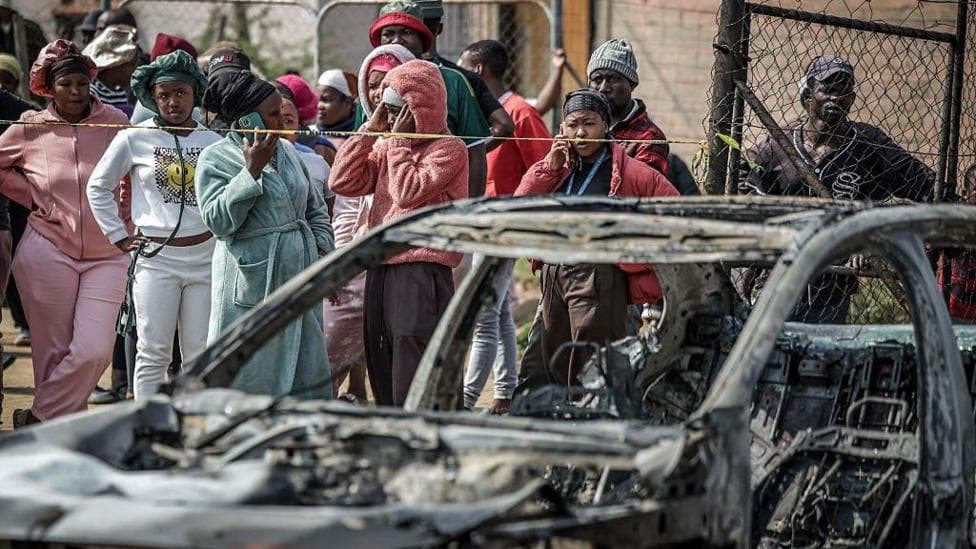
The recent deaths have sparked widespread concern about potential serial killings. The first victim, Busisiwe Mahlangu, was discovered in Kempton Park on 15 July 2026; a suspect believed to be her partner was arrested two days later but has not been linked to the other deaths. In the case of Jabulile Ntimba, two women were charged with premeditated murder and defeating the ends of justice, while a man initially arrested was released without charge. Four arrests have been made in connection with the killings so far.
Ramaphosa addressed speculation about a single perpetrator directly:
"There has understandably been widespread fear that the discovery of these women in close proximity could indicate the work of a single perpetrator. At present, the police have not found evidence establishing that these killings were committed by a single perpetrator."Police have offered a 400,000-rand reward for information that could lead to arrests in the killings.
What street safety measures will be implemented?
Every municipality must conduct a women's safety audit without delay to identify and address high-risk areas. According to reporting on the government directive, municipalities have 60 days to identify hazards, with the most urgent conditions to be addressed within 90 days of the audit or included in a funded plan with clear deadlines. Audit findings and progress are to be made public.
Ramaphosa specified the types of environmental factors that must be examined:
"These audits must identify broken streetlights, overgrown public spaces, abandoned buildings, unsafe transport routes and facilities, poorly secured parks, and other conditions that place women at risk."
How will alcohol-related violence be tackled?
The government will develop an enforcement package to reduce violence linked to alcohol consumption. According to official announcements on the government response, the Trade, Industry and Competition minister, working with the health, social development, police and cooperative governance ministers, must submit this package to Cabinet within 60 days. Additionally, provincial and municipal authorities have been directed to step up enforcement against unlicensed liquor outlets and businesses trading outside permitted hours.
Ramaphosa emphasised that alcohol does not excuse violence:
"Alcohol does not cause gender-based violence and it can never excuse it. Responsibility always lies with the perpetrator. But harmful alcohol use is a significant aggravating factor in interpersonal violence, and it must be addressed as part of our wider prevention effort."
What broader cultural change is needed?
The president stressed that preventing violence against women requires transformation beyond policing and legislation. He argued that the roots of gender-based violence lie in deeply ingrained attitudes and beliefs about women's status and autonomy.
"It begins in attitudes that regard women as inferior… with the belief that a man has the right to control a woman. It begins when jealousy is mistaken for love, when control is mistaken for protection and coercion is mistaken for affection. It begins when a man refuses to accept the word no."
Ramaphosa called on men and boys to lead efforts to end gender-based violence, arguing that responsibility for change must shift away from women themselves.
"We have placed the burden of male violence on women. That must change. The solution to violence against women cannot be to make women less free."
What is the scale of violence against women in South Africa?
The country faces a severe crisis of violence. While South African police statistics do not differentiate victims by gender, the South African Human Rights Commission reported that 569 women were killed and 1,052 others survived attempted murder between April and June 2026 alone. South Africa also has one of the highest homicide rates globally, with 5,427 people murdered during that same three-month period.
What additional measures are being put in place?
Beyond the municipal audits and alcohol enforcement package, Ramaphosa's response includes a national review of unresolved murders, attempted murders, rapes and serious sexual offences involving women and children. According to the official presidential speech, this comprehensive case review will run parallel to the municipal safety audits as part of the broader emergency response.
What happens next?
The national review of unresolved cases is due within 90 days, with recovery plans for priority or stalled cases. A first consolidated public progress report is also expected within 90 days, followed by quarterly reports thereafter. The alcohol-related violence enforcement package must be submitted to Cabinet within 60 days. Municipal audit findings and implementation progress will be made public to ensure accountability and transparency.
Key Facts:
- Twelve women's bodies were discovered in two months in areas east of Johannesburg, triggering the government's emergency response
- Municipalities have 60 days to complete safety audits, with urgent hazards to be addressed within 90 days
- A 400,000-rand reward has been offered for information leading to arrests in the killings
- South Africa recorded 569 women killed and 1,052 attempted murder survivors between April and June 2026
- Four arrests have been made so far; police have found no evidence linking all killings to a single perpetrator