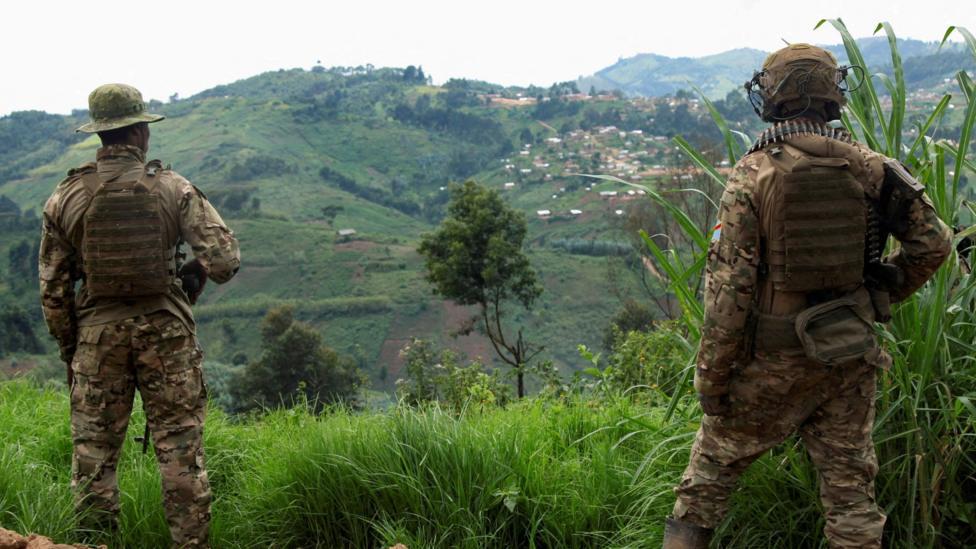
A military court in the Democratic Republic of Congo has handed down death sentences to at least 66 soldiers following their conviction on charges of cowardice, mutiny and refusing to obey orders. According to BBC News, the verdicts were delivered after a trial of 71 soldiers before the Goma Garrison Military Court sitting in Walikale, in North Kivu province, in the country's eastern region. Four soldiers were acquitted, while a sergeant received a 10-year prison sentence after the court identified mitigating circumstances in his case.
The soldiers, drawn from the army's 3415th Regiment, were arrested on 20 October in Walikale after they were accused of abandoning their defensive positions and retreating during combat with fighters from the Front for the Refoundation of the Nation (FRN), a rebel coalition that includes the M23 group. Rio Times reported that the verdict was delivered on Friday, 6 November 2026, following a 12-day trial, with prosecutors having sought death sentences for 70 of the defendants.
The military leadership framed the trial as part of a broader effort to strengthen discipline within the armed forces as they confront multiple armed groups across eastern DR Congo. The region has endured decades of conflict, with government forces engaged in ongoing battles against rebel movements that have destabilised the area and displaced hundreds of thousands of civilians.
Why are discipline cases becoming more frequent?
The Congolese army's campaign against armed groups has long been hampered by poor discipline and organisational weakness within its ranks. Soldiers have repeatedly complained of inadequate pay, insufficient equipment and lack of professional training, factors that military analysts say contribute to battlefield failures and desertion. The government has responded with increasingly severe measures: in September 2026, a military court in Walikale tried 10 soldiers from the same regiment over their commander's murder, resulting in two death sentences.
Last month, another 27 soldiers were sentenced to death on similar charges of cowardice after they allegedly withdrew from the frontline during clashes with rebel forces. The pattern of mass trials and capital convictions reflects the army's struggle to maintain cohesion and prevent soldiers from abandoning their positions under enemy pressure.
What role has the death penalty played in military justice?
In March 2024, DR Congo lifted a 20-year moratorium on capital punishment, with the government stating that executions would be used to eliminate what it termed "traitors" within the military. The government announced that capital punishment would also apply to individuals involved in armed groups, insurrection, treason and war crimes. Since the beginning of 2025, at least 507 soldiers have been convicted in military courts, including 381 who received death sentences, according to figures compiled by French broadcaster RFI.
The reinstatement of the death penalty drew widespread condemnation from international human rights organisations, which argued that the move violated international law and could be used to silence dissent. However, no formal executions have been carried out since the moratorium was lifted, leaving uncertainty about whether the sentences will be implemented or commuted.
Who is leading the rebel forces?
The conflict has taken a dramatic turn with the emergence of the FRN as a unified rebel coalition. In October 2025, former Congolese President Joseph Kabila was sentenced to death in absentia on charges including war crimes and treason. Kabila denied the accusations and did not appear in court to defend himself. He has since been named as the FRN's leader, marking his most direct public involvement in an armed challenge to the current government.
The government has repeatedly accused neighbouring Rwanda of providing military support to the M23 group, a major component of the FRN. Both Rwanda and the rebels have denied these allegations, though international investigations have documented evidence of Rwandan military involvement in the conflict.
What are the broader challenges facing the military?
Beyond discipline issues, the Congolese armed forces face persistent criticism over their lack of professionalism and organisational capacity. Soldiers operate with outdated equipment, receive irregular pay and often lack adequate training for the complex counterinsurgency operations required in eastern DR Congo. These structural deficiencies have made the army vulnerable to rebel tactics and have contributed to a cycle of military setbacks that the government has attempted to address through increasingly harsh disciplinary measures.
The mass trials and death sentences represent an attempt to impose order through fear rather than addressing the underlying causes of military failure. Whether this approach will improve battlefield performance or further demoralise troops remains unclear.