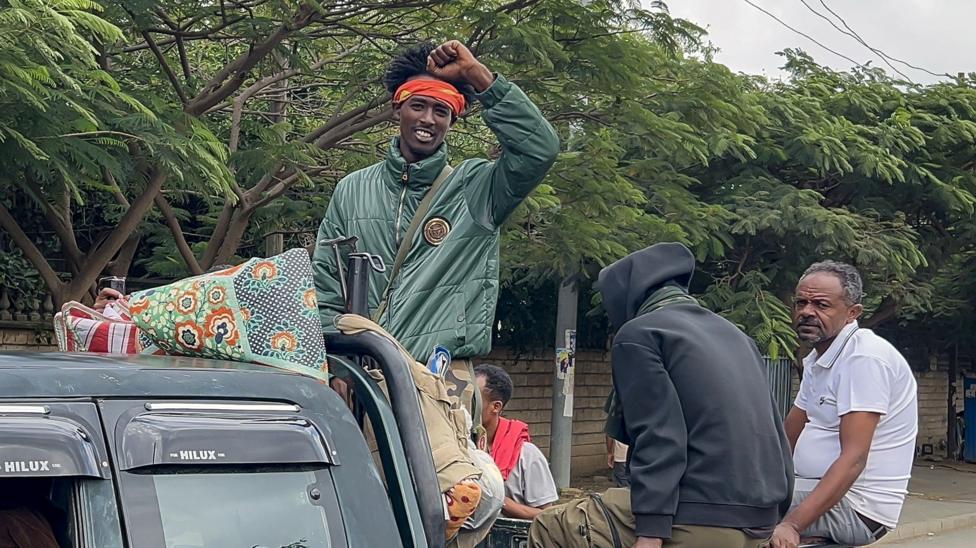
Fighting that erupted in late September between Ethiopia's federal military and the Tigray People's Liberation Front (TPLF) saw government forces march into the regional capital Mekelle within less than two weeks, yet the conflict remains far from truly over. According to BBC News, while Ethiopian government officials declare the war effectively finished, residents and analysts describe a complex situation marked by continued military operations, humanitarian devastation, and deep uncertainty about what comes next.
The rapid federal advance into Mekelle followed the TPLF's strategic withdrawal from the city and other major towns, with the rebel group describing the pullback as a deliberate tactical repositioning rather than a defeat. However, the speed of the government victory masks a more complicated reality on the ground, where fighting continues in multiple locations and the region faces severe economic and social collapse.
The September fighting marked a resumption of the devastating two-year civil war that officially ended in November 2022 through the Pretoria agreement, though that accord left major political and territorial disputes unresolved, particularly over Western Tigray and the return of displaced residents. The TPLF had joined a seven-group anti-government coalition in September 2026 seeking to remove Prime Minister Abiy Ahmed's government, with the coalition's offensive beginning on September 23.
What does the rapid federal victory actually mean?
Ethiopian government officials and military sources aligned with federal forces argue that the war is effectively over and that remaining operations focus on clearing TPLF elements from the region. Getachew Reda, a senior TPLF official who switched sides and now advises the prime minister, declared that the war in Tigray had ended and that stabilising the region should become the immediate priority.
Cameroon Hudson, an analyst and consultant on African peace and security, identifies multiple reasons for the TPLF's rapid defeat.
The TPLF has lost popular support at home. It is fragmented, it does not possess the advanced military technology necessary to match the ENDF [Ethiopian National Defence Forces]. It has lost many of its generals, strategic thinkers, finest diplomats and fighters, either through defections or arrests. The infighting within the TPLF leadership has caused significant damage.
Abraha Hailezgi, a scholar at Mekelle University, adds that the TPLF's military has become associated with coercion, forced recruitment and arbitrary actions, causing many residents to view it as an adversary rather than a protective force.
The army lacks a clear political vision. In recent years, it has become associated with coercion, abuses, forced recruitment and arbitrary actions. As a result, many people have come to view the TPLF army as an adversary rather than a force acting on their behalf.
Does the TPLF accept that it has lost?
Speaking by telephone from an undisclosed location, TPLF spokesperson Mikael Asgedom firmly rejects the notion of defeat.
This is not a defeat.He describes the withdrawal as a deliberate tactical and strategic retreat, arguing that the TPLF intentionally allowed federal forces to advance deeper into Tigray's heartland, where the terrain favours the rebels.
We chose not to fight on terms favourable to the enemy.
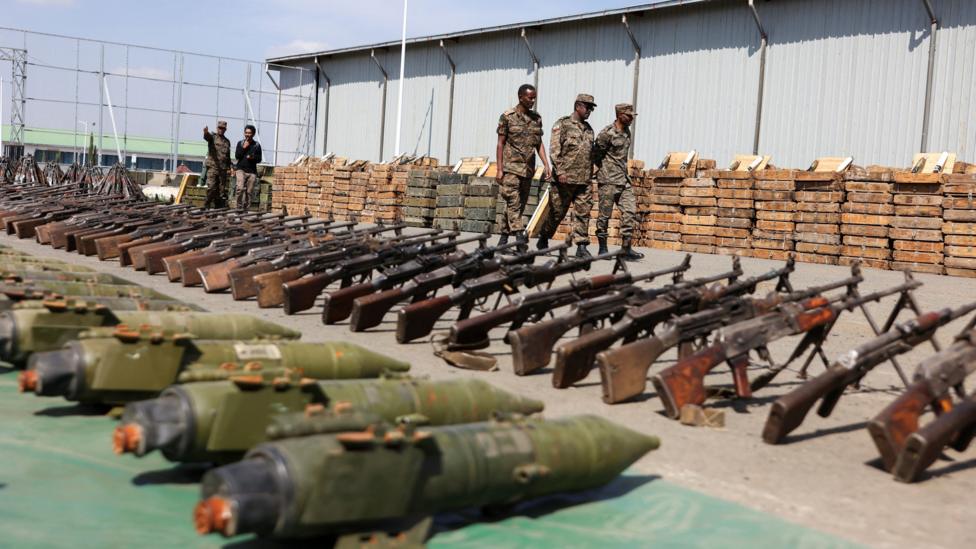
Asgedom claims the TPLF is preparing for a major counteroffensive and points to attacks launched against Ethiopian forces in several locations following the withdrawal from towns as evidence of continued military capability. The TPLF spokesman also states that the group obtains weapons and logistical supplies from the Ethiopian military.
We seize weapons from our enemy, and the weaponry that has entered Tigray will, sooner or later, become ours.
Is fighting actually continuing?
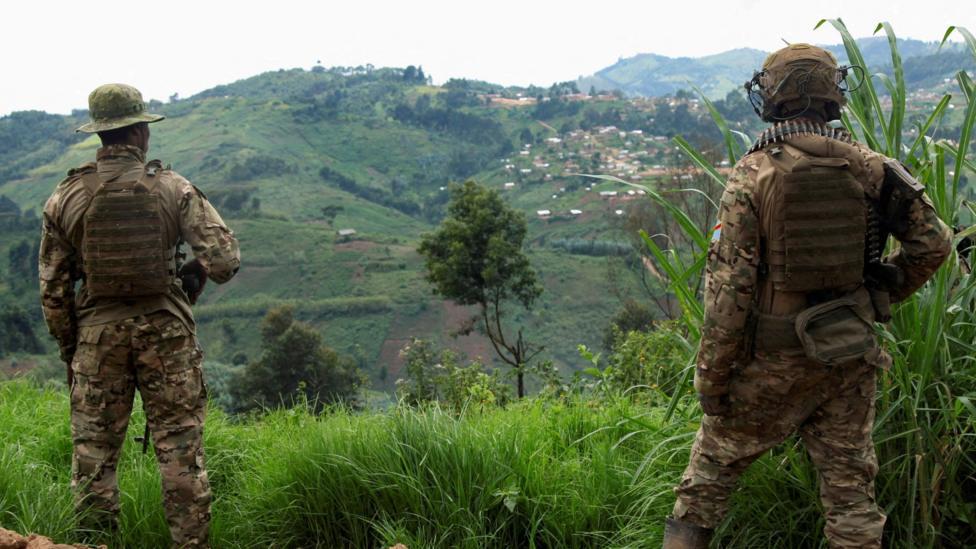
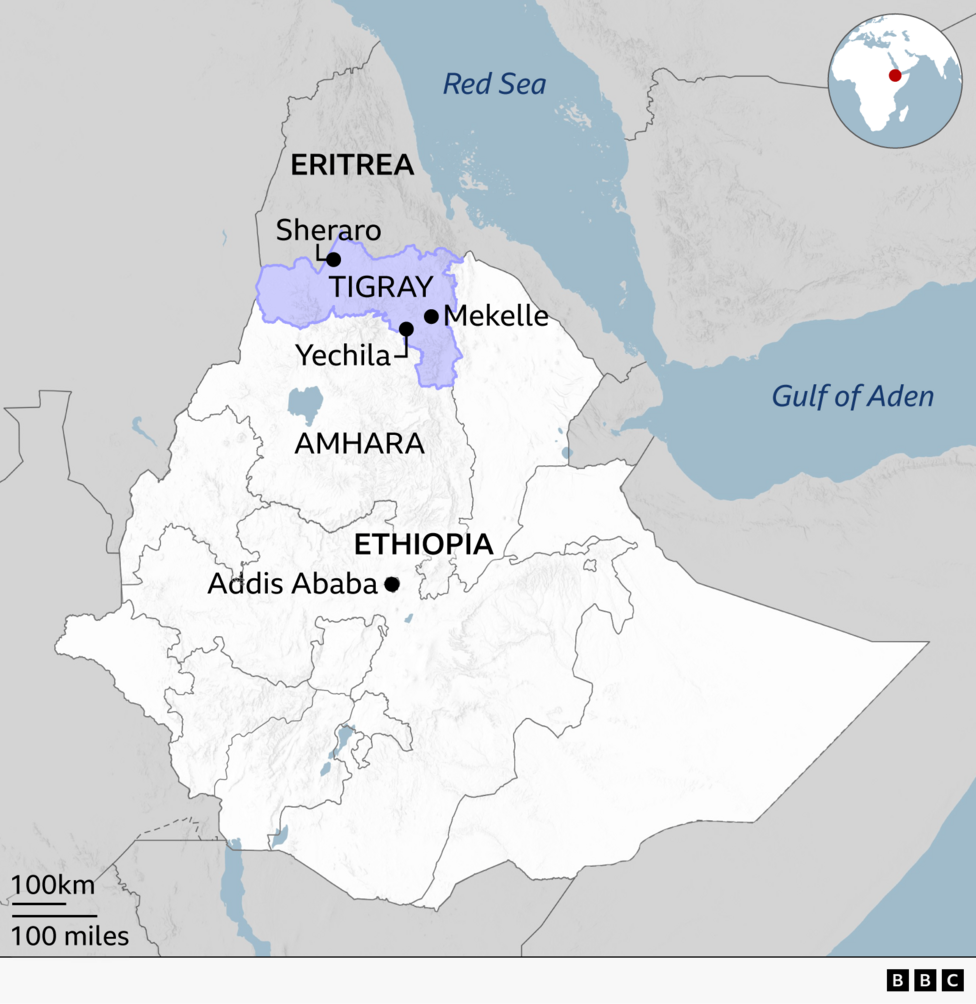
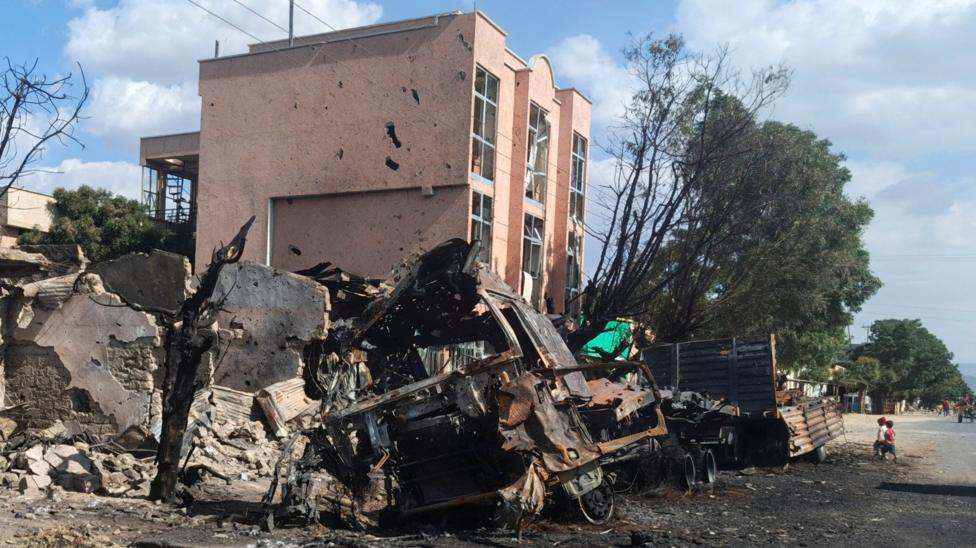
Despite the federal army's control of major towns, military operations continue across multiple parts of Tigray. Residents in different areas tell the BBC that fighting persists in central, northern and north-western regions, involving heavy artillery and drone strikes. Eyewitnesses around Sheraro, a town near the Eritrean border, report heavy fighting involving artillery and ground forces in recent days.
A businessman in the Sheraro area, speaking on condition of anonymity, describes the security situation as deeply concerning.
We could hear heavy artillery fire from the Sheraro direction. People are concerned because there is no sense of security.He reports that military convoys from both sides have moved towards Sheraro, while a motorcycle operator in the southern town of Yechila notes that military checkpoints remain active throughout the region.
More recent developments confirm this pattern of continued violence. ACLED reported clashes in northwestern Tigray on November 10 and heavy artillery fire near Badme on November 11, indicating that fighting has persisted well after the federal army's initial advance. Additionally, the interim administration imposed a nighttime curfew in Mekelle and ordered residents to surrender firearms on November 6, suggesting ongoing security concerns in the capital itself.
The human toll of the fighting has been severe. A Mekelle surgeon described seven to eight days of chaos as casualties from gunfire, drone strikes and mortar attacks overwhelmed the hospital emergency department. Healthcare workers have reported more than 100 maternal deaths in Tigray over the past year, linking them to shortages of medicine, staff and fuel that left ambulances non-functional. The conflict has also displaced thousands of families; renewed fighting has forced some residents who had returned to Tahtay Adiyabo to flee again, with the UN reporting thousands displaced in Shire and Debre Birhan.
Could this become a prolonged conflict?
Security analysts and observers disagree sharply on whether Tigray faces a prolonged war or a gradual return to stability. Yared Tibebu, a well-known Ethiopian commentator based in the US, believes the TPLF's history of waging protracted armed struggles suggests it is preparing for a lengthy conflict.
I see a situation in which there could be a prolonged war in Tigray.He argues that once the TPLF reorganises its military and political structures, it may attempt to resume offensive operations, though he acknowledges this will not happen for some time because of internal divisions.
Hudson takes a different view, rejecting the idea that Tigray is heading towards a prolonged war but agreeing that the region may not be truly peaceful for some time.
The TPLF may continue a low-level insurgency and guerrilla campaign, but that is not war. I do not think there will be a wider-scale conflict between the federal forces and the TPLF.He argues that the TPLF no longer possesses the size, strength or military capability required to effectively confront federal forces, which have significantly expanded and modernised in recent years.
Yared counters that the TPLF's history of overcoming setbacks demonstrates its potential to recover and sustain a prolonged struggle.
The TPLF has overcome many major challenges in the past. It is wrong to conclude that it has no public support. It is a political movement with a history stretching back more than 50 years.What Yared sees as a strength, Hudson characterises as a weakness, arguing the TPLF remains
trapped in the pastand continues to behave as a dominant party within Tigray despite changed circumstances.
Could regional alliances change the balance?
In September 2026, seven Ethiopian rebel groups led by the TPLF announced the formation of a coalition called the Alliance for Survival, aimed at removing Prime Minister Abiy Ahmed's government. Yared believes this alliance could give the TPLF the strength to sustain its fight.
Its members can combine their strengths. The TDF [the TPLF's military wing] has leadership experience and organisational capacity, while Fano [an ethnic Amhara militia] is believed to have between 70,000 and 80,000 fighters. If conditions emerge that allow the forces to co-ordinate effectively, the TPLF's current difficulties may not last long.
Hudson, however, rejects this argument, insisting that the alliance is unlikely to alter the balance of power.
I don't think the TPLF can be saved by this alliance. The ethnic militias have not demonstrated the capacity, either individually or collectively, to pose a serious threat to federal forces. We should not underestimate the strength of the federal army.
The role of Eritrea, which was accused of some of the worst atrocities in the previous 2020-2022 conflict, remains uncertain. In early October, eyewitnesses reported seeing Eritrean troops in Tigray amid reports they were backing the TPLF, but they appear to have returned home. Hudson suggests Eritrea would be wary of becoming further embroiled in the conflict, citing limited resources, the TPLF's diminished military effectiveness, and the risk of provoking Ethiopia. Sources in the Ethiopian army tell the BBC that senior TPLF political leaders were briefly based in Eritrea but were ordered to leave in early November, shortly after President Isaias Afwerki returned from Russia, driven by concerns that Ethiopia could use their presence as justification for invasion.
What is the humanitarian and economic situation?
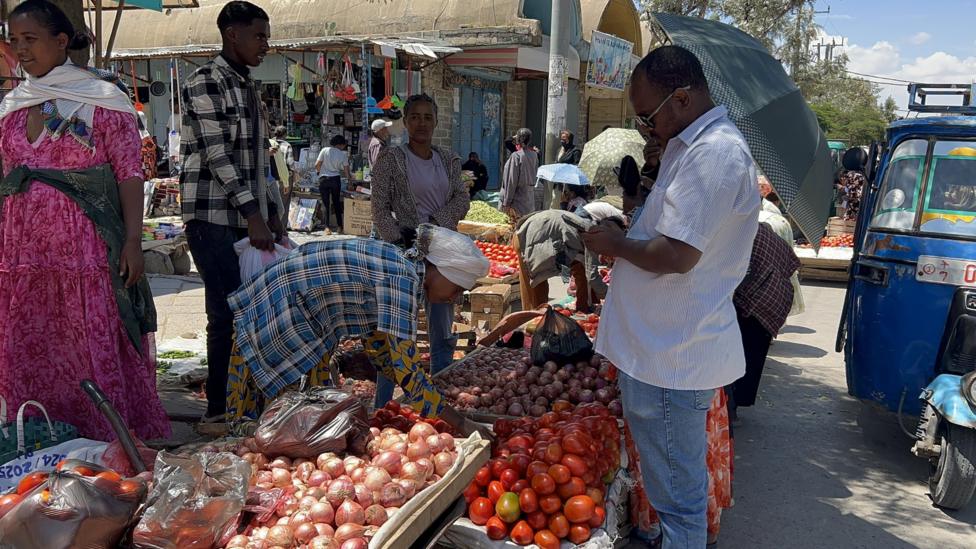
Life in Mekelle remains far from normal despite the federal army's control of the city. Firut Me'ar, who runs a hair salon in the capital, describes the profound economic collapse affecting residents.
People can't prioritise beauty over daily basic needs. For many residents, thinking about self-care is a luxury, at a time when they can't feed their kids.After the brief war, conditions have improved compared to the fighting itself, but remain dire.
Things are better than during the war, but people still have no money, no morale. Business is almost non-existent.
Firut, a single mother of a 10-year-old daughter, emphasises the pervasive uncertainty gripping the population.
There is uncertainty about what comes next.Most residents have money only for basic necessities, and many describe a profound sense of fear and anxiety as soldiers from Eritrea and Ethiopia have reappeared in Tigray's towns, reopening still-fresh wounds from the devastating 2020-2022 war that claimed hundreds of thousands of lives and saw widespread human rights abuses and allegations of ethnic cleansing in Western Tigray.
What would genuine peace require?
Abraha from Mekelle University argues that the conflict in Tigray will only truly be over if the federal government addresses the region's sense of marginalisation, both economically and politically under the current government. However, many Tigrayan elites and political observers remain wary of federal government intentions, questioning whether authorities in Addis Ababa are genuinely seeking to address Tigray's problems or taking advantage of the region's weakness to boost their influence.
Memories of the devastating 2020-2022 war remain raw for residents, and the return of soldiers associated with previous atrocities has intensified anxiety about the future. The conflict has left deep scars that extend beyond military defeat or victory, touching every aspect of civilian life and creating a population exhausted by years of instability.
What happens next?
International diplomatic efforts continue, though progress remains limited. China's special envoys have been meeting Ethiopian and Eritrean officials separately in efforts to promote dialogue and de-escalation, though no date for further meetings has been reported.
For ordinary residents of Tigray, the priority remains simple.
Peace seems slow in coming. Most people are tired of politics. Whatever happens, we only want peace and a chance to rebuild our lives.Firut's words from her beauty salon in Mekelle capture the sentiment of a population caught between competing military forces and uncertain about whether the conflict that officially ended in 2022 has truly concluded or merely entered a new, unpredictable phase.