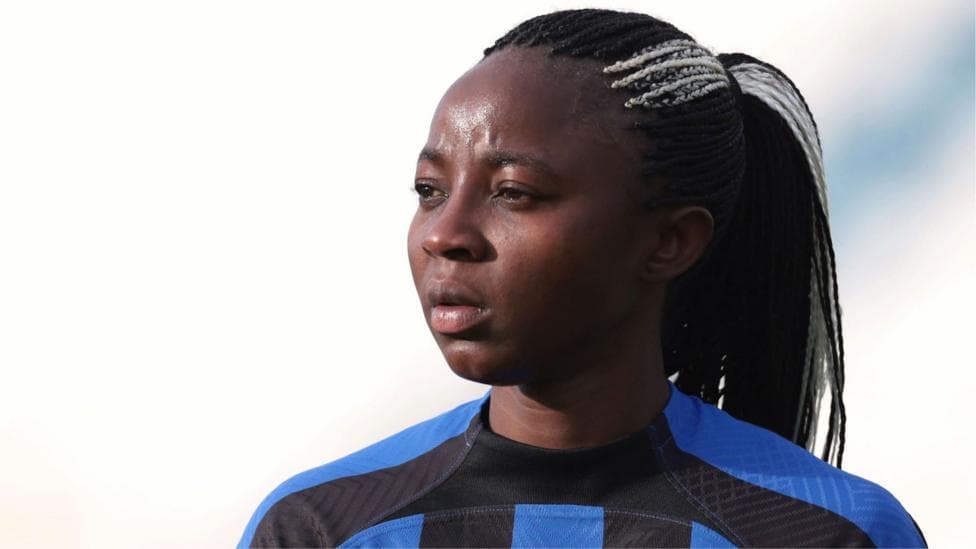
Nchout Njoya Ajara, 33, stands among Cameroon's most accomplished female footballers, having built an international career across Russia, Sweden, Norway, Spain, Italy and Saudi Arabia with clubs including Atlético Madrid and Inter Milan. She has now become a prominent voice demanding urgent government intervention as her country faces an escalating crisis of violence against women.
A devastating surge in killings has galvanised public outcry across Cameroon. According to state media reporting, seven femicides were recorded within a single seven-day period in late August 2026, marking a fresh intensification of the violence. The toll has grown sharply: official figures show at least 50 women were killed between January and April 2026, yet reporting from late August indicated the death toll had already surpassed 60 women for the year.
Ajara has emerged as a leading voice condemning the violence.
Being a woman in Cameroon should never be a risk,she declared, adding that
in the face of the tragic wave of femicides that has hit our country in recent days, silence is complicity.Her statement, made on 25 August 2026, reflected the mounting pressure on authorities to act decisively.

What triggered the latest outcry?
The immediate catalyst came on 25 August when a 44-year-old woman identified as Créscence Merline, a teacher, was killed in a hotel room in Yaoundé, the capital. According to multiple reports, she was stabbed to death by a 22-year-old man who was arrested at the scene. The suspect allegedly met the victim through an online platform before the fatal encounter. This killing, coming amid the broader wave of violence, reignited public demands for government action.
How widespread is the problem?
The femicides are concentrated in domestic violence cases, with incidents reported across different regions of the country. The pattern is not new: a March 2026 report documented 26 femicide cases in just the first two months of that year, indicating the crisis predates the late-August spike. The escalation has prompted both civil society and opposition politicians to challenge the government's response.

The opposition Cameroon Renaissance Movement party issued a statement expressing outrage at what it termed the
tragic recurrence of domestic femicides,accusing the government of passivity on the issue.
What is the government doing?
In a video statement released through state media, Marie-Thérèse Abena Ondoa, the minister for Women's Empowerment and the Family, condemned the
worryingrise in killings and pledged that the government was working to address the problem. She pointed to a draft bill designed to protect women against gender-based violence, which she said was under review by the prime minister's office.
However, the bill's progress has been glacial. The legislation has been in preparation since 2023 and remained under administrative review in early July 2026, with government officials at that time expressing hope for adoption
in the best possible delays.Civil society organisations and women's rights groups have publicly criticised what they view as the government's reluctance to move the bill through parliament into law.
When might the bill be passed?
Cameroon's National Assembly is scheduled to hold its final parliamentary session of the year in November 2026. This session represents the most likely opportunity for the gender-based violence bill to advance. Yet Viviane Tathi, who leads an organisation that documents femicide cases in the country, expressed scepticism about whether the bill would actually be debated.
We are worried because the November parliamentary session focuses on budgetary debates…So, we don't know by what magic this bill will be passed,she said.
Tathi has called for the creation of a specialised court dedicated to handling family disputes that escalate into domestic violence, arguing that such an institution could provide faster and more effective justice for victims and their families.
Key Facts
- At least 60 women have been killed in Cameroon in 2026 as of late August, compared to 77 for the entire previous year
- Most femicides are attributed to domestic violence and occur across multiple regions of the country
- A draft bill on gender-based violence protection has been under government review since at least 2023
- Footballer Ajara Nchout Njoya, who has played for major European clubs, has become a prominent advocate demanding stronger government protection for women
- The November 2026 parliamentary session is the final opportunity this year for lawmakers to debate and pass the protective legislation