Spanish prosecutors have documented 23 sexual assaults, including nine targeting children, in the autonomous city of Ceuta since a mass migration surge from Morocco at the end of July. Chief prosecutor Silvia Rojas characterised the frequency as approximately one incident per day, highlighting a severe protection crisis within the territory.
Between 72,000 and 49,000 migrants crossed from Morocco into Ceuta on 30 and 31 July 2026, though most have since returned. Approximately 5,000 remain in the Spanish exclave, creating ongoing tensions and a political crisis for Prime Minister Pedro Sánchez. Among those still present, between 1,400 and 1,600 are children, according to Rojas.
The scale of sexual violence has grown since initial reports. According to reporting from a major international news agency, authorities later confirmed at least 15 documented cases, with police unions noting that most victims were minors. Emergency-room physicians treating assault survivors reported cases involving children as young as 11 and 14 years old, according to human rights monitoring organisations.
Rojas told El País newspaper that migrant girls faced heightened vulnerability due to their irregular legal status in the territory. She noted that many victims refrained from filing formal complaints, either from fear or because of their precarious circumstances in Ceuta. The Spanish Society of Epidemiology cautioned that violence against women in the territory "cannot be considered an isolated event."
Who are the suspected perpetrators?
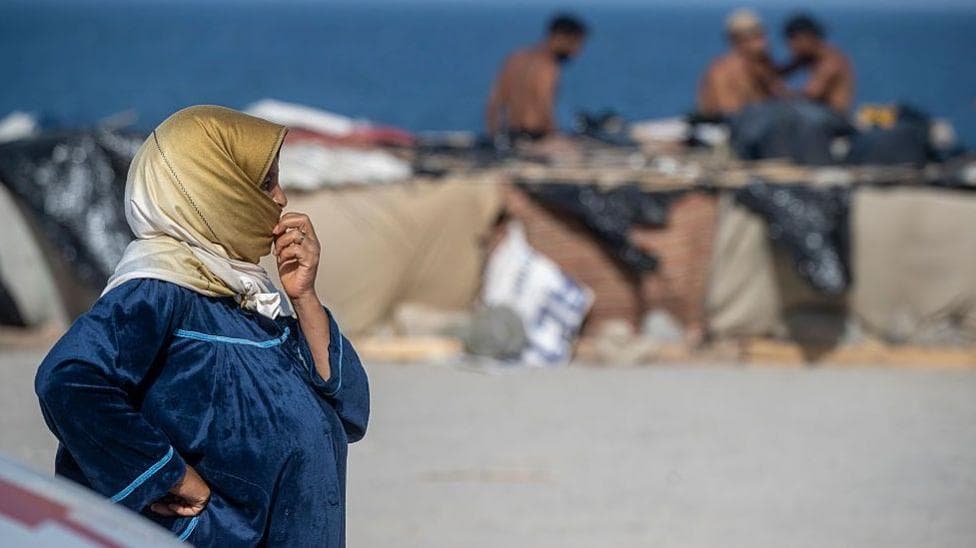
Among those identified as suspected attackers are four Moroccan nationals, three Spanish citizens, and one Belgian national, according to reporting from Efe news agency. Police and courts have continued investigating individual cases, including arrests of three Moroccan nationals over alleged sexual assaults. According to reporting from international media outlets, alleged assaults have been concentrated on the beach and in wooded areas where migrants were sheltering.
What measures are being taken to protect vulnerable migrants?
Economy Minister Carlos Cuerpo announced that the cabinet had approved a multi-million euro aid package to provide essential services and support care for unaccompanied children. The Spanish government is preparing to relocate roughly 500 migrant girls from Ceuta to mainland Spain for their safety, according to reports from international news sources. This relocation effort represents a significant intervention aimed at removing vulnerable minors from the conditions that have enabled assault.
However, residents and business leaders have expressed frustration with the government's broader response. Arantxa Campos, president of the Ceuta Employers' Confederation, stated:
We can't do anything unless these people leave. We don't have a plan from the government. We don't have anything. We don't even know when they're going to finish screening everyone.
Human rights organisations have documented severe conditions in the territory. According to human rights monitoring groups, people in Ceuta have been living in a legal vacuum with inadequate shelter, food, and sanitation for weeks following the mass influx. Court authorities processed 13 sexual-assault cases between 30 July and 17 August 2026.
How is the political crisis unfolding?
Sánchez convened his second national security meeting in a week on Tuesday to address the escalating situation. The prime minister announced that King Felipe VI would visit Ceuta "as soon as conditions allow," a move interpreted as an assertion of Spanish sovereignty over the territory. However, this announcement carries diplomatic risks: Morocco maintains a long-standing claim over Ceuta and its sister autonomous city of Melilla. When a Spanish head of state last visited in 2007, Morocco withdrew its ambassador from Madrid.

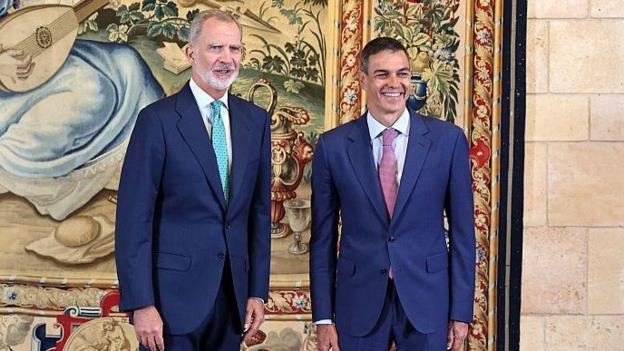
In remarks to Cadena Ser radio, Sánchez stated that the king had not visited Ceuta for 20 years, despite Felipe having reigned for only 12 years—it was his predecessor Juan Carlos who visited in 2007. Sánchez also emphasised that he was the only sitting prime minister to have made an official visit to Ceuta while in office, having travelled there on 31 July as the crisis unfolded. Spanish commentators noted that his statements appeared to contain implicit criticism of the monarchy, whom he met later that day.
The conservative mayor of Ceuta, Juan Jesús Vivas, called on Spaniards to participate in demonstrations across mainland Spain in support of Ceuta on Wednesday, coinciding with the city's annual holiday. Residents staged protests in early August demanding stronger government action on the migration crisis, and fresh anti-migrant demonstrations with police clashes continued into late August.
The Spanish government faces intense criticism from political opponents over its crisis management. The hard-right Vox party declared that Sánchez had not "lost control of Ceuta—he has handed it over." The opposition People's Party criticised the prime minister for "exonerating" Morocco and directing blame elsewhere, with party spokesperson Borja Sémper arguing that such a large-scale movement could not have occurred without Moroccan knowledge.
What is Spain's position on Morocco's role?
Unlike his political rivals, Sánchez has deliberately avoided attributing responsibility to Morocco. On Monday, he stated that no intelligence reports indicated "any involvement in one way or another" from Moroccan authorities. Instead, he pointed to disinformation campaigns on social media "associated with both Russia and Israel and an international far-right movement that always uses migration, not only to attack Spain but also Europe."
Sánchez told Cadena Ser that such activity did not necessarily originate from state actors and appeared to have intensified after the initial influx. Government spokeswoman Elma Saiz later confirmed his allegation, stating there was evidence that "various digital forums amplified what happened with the intention of fracturing and polarising Europe."
Both Russia and Israel have rejected these accusations. Israeli Foreign Minister Gideon Sa'ar accused the Spanish prime minister of "a blatant lie," while Russia's foreign ministry spokeswoman demanded proof to support Sánchez's claims. Morocco has also denied orchestrating or participating in the mass crossing.
A substantial volume of social media posts circulated in August portraying the border fence between Morocco and Ceuta as safe and accessible, despite at least 100 deaths occurring during attempts to swim around the fence, according to figures from the mayor. Spanish fact-checking website Maldita reported that before 30 July, messages on Moroccan social media had encouraged crossing attempts following a June ruling by Spain's Supreme Court.
What happens next?
Spain's ministry of youth and childhood is preparing to transfer approximately 500 girls to the mainland as part of its safety initiative. Ceuta is scheduled to mark its local holiday on 2 September, alongside a planned solidarity rally. The city's efforts to complete screening procedures and relocate vulnerable minors remain an ongoing administrative challenge that will require sustained coordination between regional and national authorities.
Key Facts:
- 23 sexual assaults, including 9 against children, recorded in Ceuta since late July 2026, with later reports confirming at least 15 documented cases
- Approximately 5,000 migrants remain in Ceuta from the initial influx of 72,000–49,000 people, including 1,400–1,600 children
- Spanish authorities plan to relocate roughly 500 migrant girls to mainland Spain for protection
- At least 100 people died attempting to cross the border fence between Morocco and Ceuta
- The crisis has triggered political tensions within Spain and diplomatic risks with Morocco over sovereignty claims