Seven armed opposition groups operating across Ethiopia have announced the formation of a unified coalition aimed at removing Prime Minister Abiy Ahmed's administration and establishing a transitional government. The alliance, formally unveiled on 20 September 2026, brings together militias and liberation movements that have waged separate insurgencies across multiple regions of the country.
The coalition, known as the Ethiopian Peoples' Forces Alliance for Survival, comprises the Amhara Fano National Movement, the Oromo Liberation Army (OLA), the Tigray People's Liberation Front (TPLF), and four additional groups: the Ogaden National Liberation Front (ONLF), the Afar Revolutionary Democratic Unity Front, the Benishangul Peoples' Liberation Movement, and the Gumuz Peoples' Democratic Movement. According to reporting from the region, TPLF vice president Amanuel Assefa stated that the coalition's aim is to "remove the regime" and facilitate a transitional government.
The seven groups have levelled serious accusations against the federal government, claiming that Abiy's administration has presided over "war, genocide, mass destruction, and utter poverty" and warning that Ethiopia faces the risk of disintegration. The coalition's founding declaration was released on Tigrai TV on 20 September 2026, marking a significant moment of coordination among previously separate opposition forces. The federal government has not yet issued a formal response to the alliance announcement.
What regions does the alliance control or operate in?
The coalition's geographic reach spans half of Ethiopia's 12 regional states. Beyond the three most conflict-affected areas—Oromia, Amhara, and Tigray—the alliance also maintains armed presence in the Somali, Afar, and Benishangul-Gumuz regions, giving it influence across a substantial portion of the country's territory and population.
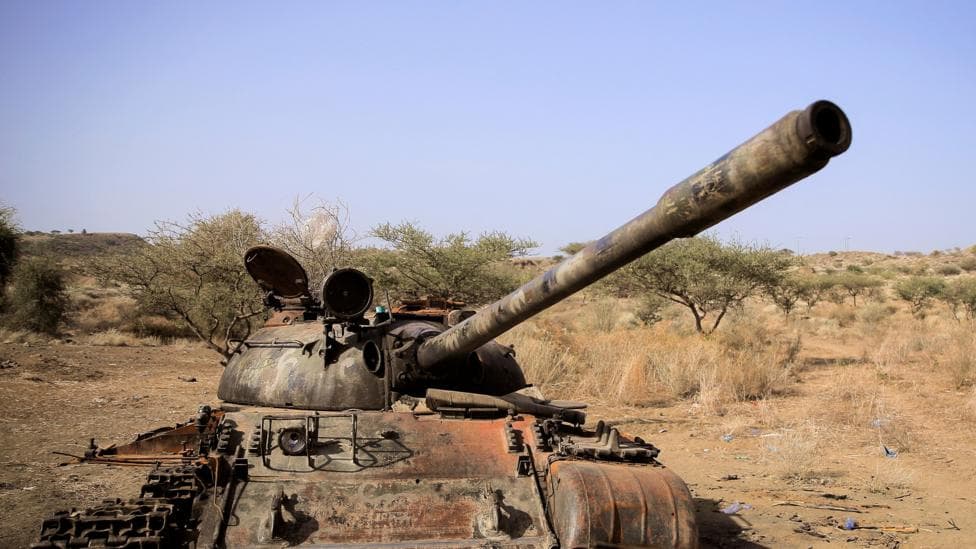
Ethiopia has endured years of armed conflict in Oromia and Amhara, the two most populous states. The northern Tigray region has experienced renewed tensions following a devastating two-year civil war that resulted in hundreds of thousands of deaths and displaced millions of people. An African Union-brokered peace agreement concluded that conflict in 2022, yet both the federal government and the TPLF have accused each other of violating the terms of that settlement, raising concerns about a potential return to full-scale warfare.
Why did these groups decide to unite now?
The decision to form a unified alliance reflects a broader conviction among the opposition that coordinated action offers a stronger path to political change than separate insurgencies. According to international reporting on the announcement, the coalition's broader claim is that Ethiopia requires a transitional arrangement after years of conflict and political fragmentation.

Abdikadir Addaani Hirmooge, spokesman for the ONLF, articulated the groups' grievances in detail. He accused the government of failing to honour a peace agreement signed in 2018 to resolve the conflict in the Somali region.
Ethnic conflict, insecurity, and mutual oppression and pushing each other aside have not been eradicated, resulting in a need that has affected every ethnic group.He characterised Abiy's Prosperity Party as an "obstacle to the people" and claimed it had been "unleashing" wars and causing numerous deaths.
The coalition members have framed their objective in terms of democratic governance and self-determination.
Our objective is for the communities to have democracy and to exercise their right to self-determination, to genuinely govern themselves.Addaani stated that the groups in the new coalition were working to bring together communities that have been divided against one another.
What is the history of conflict between these groups and the government?
The OLA has been fighting federal forces in Oromia since 2018, making it one of the longest-running insurgencies in the current conflict landscape. The Fano coalition has fought federal forces in Amhara since 2023, emerging as a major challenge to government authority after initially fighting alongside federal troops during the Tigray war.
Fano's trajectory illustrates the shifting allegiances within Ethiopia's conflict. The militia fought as a federal ally during the Tigray civil war but turned against the government in an armed insurgency less than a year after that war ended, following its refusal to comply with government orders to disarm. This defection transformed Fano from a government asset into a significant opposition force.
The TPLF, now part of the alliance, dominated Ethiopian politics for nearly three decades before Abiy Ahmed took office in 2018. The party's inclusion in the coalition represents a major realignment, bringing together a former ruling party with newer insurgent movements in a unified political challenge.
How has the government responded to previous opposition actions?
The federal government has not yet publicly commented on the alliance announcement. However, Abiy has previously responded to reports of opposition coordination with confidence in Ethiopia's military capacity. In July, after reports of an alleged alliance between the TPLF and neighbouring Eritrea, Abiy told lawmakers:
Even if others were added, we do not have an iota of fear regarding Ethiopia's sovereignty.
The government's handling of opposition movements has been contested. The country held a general election in June, with Abiy's Prosperity Party retaining its overwhelming parliamentary majority, despite the poll being overshadowed by ongoing conflict, accusations of repression, and minimal participation by opposition parties. Both the Fano and OLA rebel groups rejected the election and its results. The Tigray region and its six million inhabitants were completely excluded from the poll, reflecting the depth of political division.
Key Facts
- The Ethiopian Peoples' Forces Alliance for Survival was publicly announced on 20 September 2026, uniting seven armed groups across six of Ethiopia's 12 regions.
- The coalition includes the Amhara Fano National Movement, Oromo Liberation Army, Tigray People's Liberation Front, and four smaller liberation movements.
- The groups accuse Prime Minister Abiy Ahmed's government of presiding over war, genocide, and mass destruction, and call for a transitional government.
- The OLA has fought federal forces since 2018, while Fano turned against the government in 2023 after initially fighting alongside federal troops in the Tigray war.
- The TPLF, which dominated Ethiopian politics for nearly three decades before Abiy took office, is now aligned with newer insurgent movements in this unified opposition coalition.