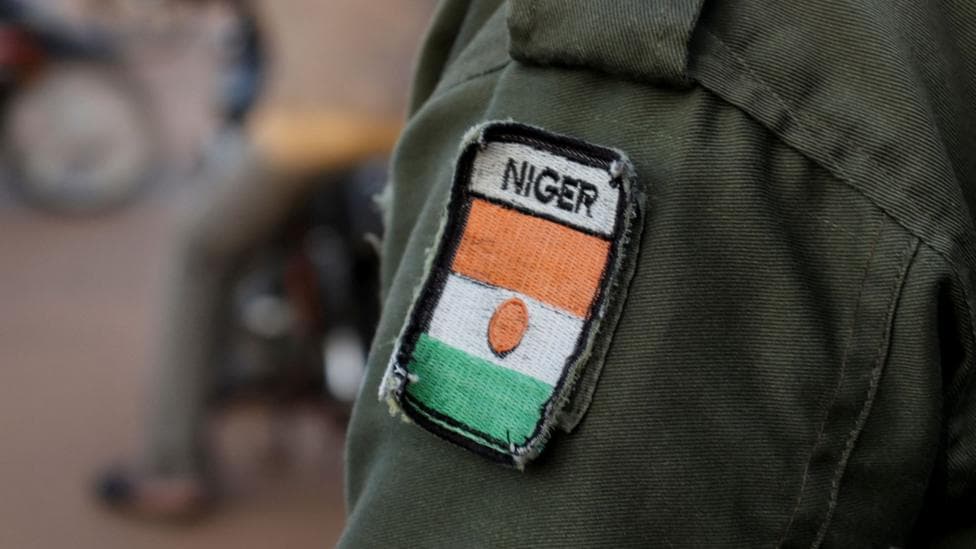
Moscow announced on Sunday that its military personnel had assisted Niger's government in suppressing an armed rebellion that erupted early on Saturday across the capital, Niamey. Gunfire and explosions reverberated through multiple districts, striking the presidential palace and Air Base 101, a strategic military installation at Diori Hamani International Airport. By afternoon, Niger's authorities declared the uprising contained.
The foreign ministry in Moscow stated that Nigerien forces had defeated the assault "with the assistance of servicemen of the African Corps of the Russian Ministry of Defence." Officials added that Russia would maintain its commitment to helping Niger combat "extremists," while emphasizing that "the situation was now under the control of the legitimate authorities headed by President Gen Abdourahmane Tiani."
According to , Niger's government confirmed it had regained control of Air Base 101 following the mutiny, which represents the latest test for military ruler Tiani as his administration grapples with an entrenched jihadist insurgency. Africanews reported that dozens of soldiers were arrested or killed in the aftermath of the attempted takeover.
What role did Russia play?
Russia's Africa Corps has emerged as a crucial security partner for numerous military administrations across the Sahel region, which have struggled to manage prolonged jihadist campaigns. According to sources cited by Africanews, Russia's Africa Corps supplied both aerial and ground support to local forces during the response to the mutiny. The corps operates alongside Italian military personnel at Air Base 101, which hosts Nigerien military aircraft, drones, and a counter-terrorism unit run jointly by Niger, Mali, and Burkina Faso.
Who was behind the attempted coup?
The Alliance of Sahel States—comprising Niger, Mali, and Burkina Faso—characterized the uprising as "a betrayal by a group of soldiers involved in an attempt at destabilisation." However, Niger's authorities have disclosed neither the number of soldiers who participated nor casualty figures from the incident. Gen Tiani, who assumed the presidency last year after deposing the nation's elected leader, has not made any public statement addressing the mutiny. The nation's state broadcaster released video footage showing several alleged mutineers being apprehended by the Presidential Guard.
What is the broader security context?
The attempted mutiny underscores a critical vulnerability for Niger's military leadership: internal fractures within the armed forces themselves, occurring alongside an external jihadist threat. Air Base 101, where the rebellion originated, had already endured two jihadist assaults in 2026—one by an Islamic State affiliate and another by an al-Qaeda-linked group. This pattern reflects the persistent challenge facing all three Sahel nations, where jihadist violence continues to spread despite their realignment away from Western partners toward Russia.
Niger, Mali, and Burkina Faso have all severed diplomatic and military ties with Western nations and deepened cooperation with Moscow. Yet despite this strategic shift, extremist violence remains endemic across the region. For Niger's government, Saturday's internal rebellion signals that military cohesion cannot be taken for granted even as external security threats intensify.
How did the capital respond?
On Sunday, Niger Press Agency reported that commercial life was resuming normalcy, with petrol stations, retail outlets, and other enterprises reopening their doors. Crowds of government supporters assembled in a central Niamey square to demonstrate backing for the security forces and Tiani's administration. Nigerien authorities have stepped up security patrols around sensitive locations throughout the capital, including the main airport entrance and the presidential pavilion, following the attempted takeover.
What is the regional significance?
The incident reflects deepening instability within the Sahel's military-led governments, which have increasingly turned to Russia as a security guarantor. All three Alliance of Sahel States members have adopted anti-Western stances and strengthened Moscow's military presence within their borders. Yet this geopolitical realignment has not translated into reduced jihadist activity. The mutiny demonstrates that these governments now face dual pressures: containing external insurgencies while managing discontent within their own officer corps, a challenge that may test the durability of their current leadership structures and international partnerships.