A quarter of young Africans believe US aid cuts could have a positive impact, saying the loss of foreign money will force leaders to confront and solve their own challenges, according to a new survey. In Ghana and Nigeria, almost half of respondents aged 18 to 24 were optimistic, while a further one in 10 were uncertain about the impact.
The African Youth Survey interviewed almost 5,000 people across 16 of the continent’s 54 recognised countries and found that views on the closure of USAID were sharply divided. While many young people welcomed the idea that African governments should take greater responsibility, nearly half said they expected harmful consequences.
Why do some young Africans see the cuts as positive?
Some respondents said losing foreign money would force African leaders to confront their own challenges and take more responsibility for their countries' problems. In Ghana, 41% of young people aged 18 to 24 were optimistic about the cuts, and in Nigeria the figure was 40%; Liberia was not far behind at 37%.
The Trump administration announced in early 2025 that it was and $60bn in overall US assistance around the world. US foreign aid had been designed to play a critical role in tackling poverty, hunger and inequality worldwide.
Other countries, including Britain, France and Germany, have also been slashing aid budgets. The that the aid budget would be cut from 0.5% of gross national income to 0.3% in 2027, its as a percentage of national income since records began. The UN target is 0.7%.
Ivor Ichikowitz, whose South African family foundation commissioned the report, said:
“The big picture [from the survey] is that the youth is concerned about governments that are overly influenced by foreign powers. What they’re saying is that African governments need to take agency and responsibility for their own reality.”
How significant is Africa’s youth population?
Africa has the youngest population in the world, with 70% of sub-Saharan Africa under the age of 30. The median age of the continent is 19 years and six months. By 2030, Africa will be .
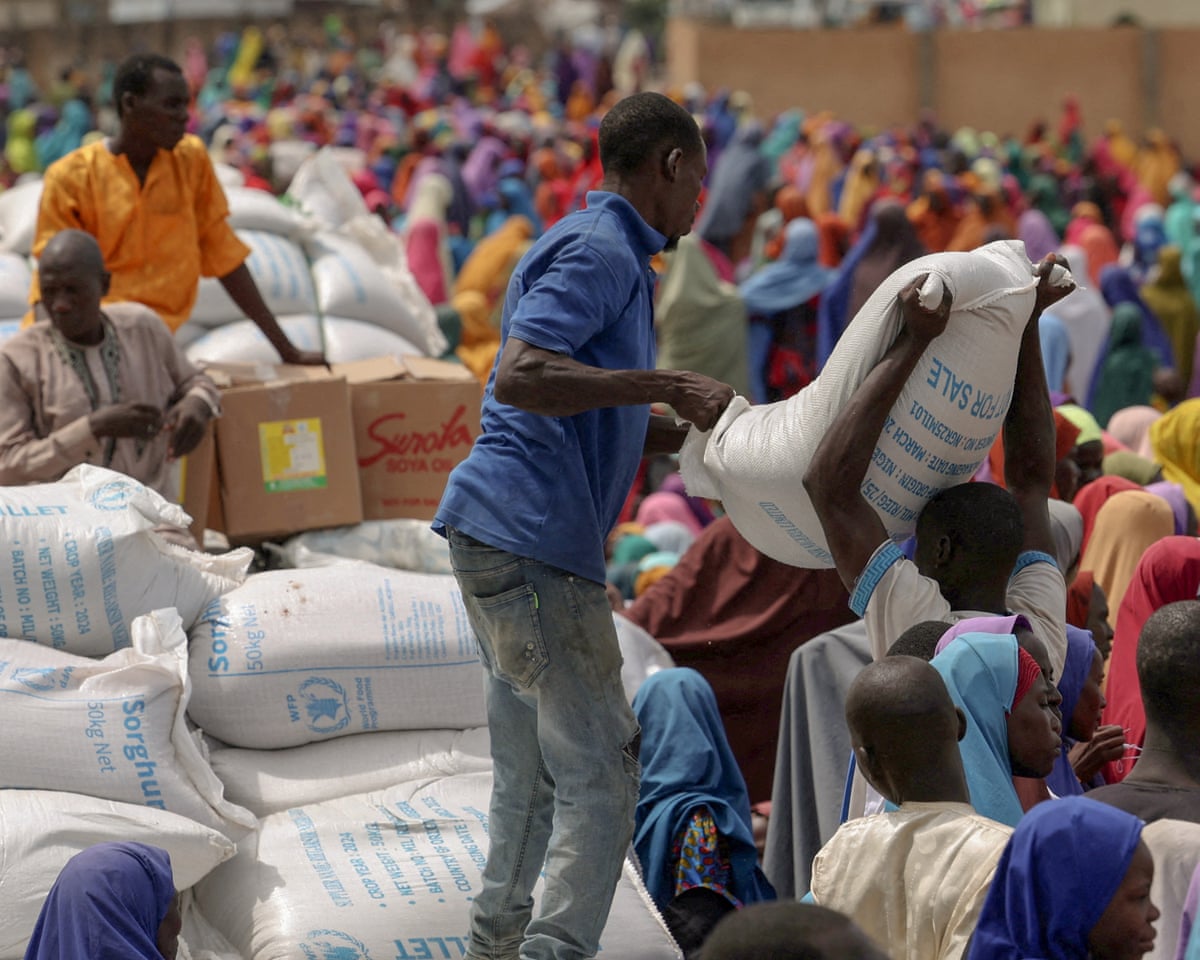
The sudden cuts were met with public outrage and pushback from development and humanitarian organisations. They caused the closure of vital services, including maternity clinics, and medicine shortages at a time when UN agencies are struggling to find money for their humanitarian work and food insecurity has been worsened by the climate crisis.

How worried are young people about the impact?
According to the survey, nearly half of African youth, 46%, did believe the closure of USAID would have a damaging impact on their countries, with healthcare services and disease prevention seen as the areas most affected. This anxiety is highest in Mozambique at 76%, followed by Kenya and Rwanda at 63% each, where youth feel the cuts will disproportionately affect the most vulnerable members of society.
Degan Ali, executive director of incubating ideas and enterprises to lower aid dependency, said that while the cuts were carried out in a
“hugely irresponsible and inhumane”manner, she was not surprised that a significant proportion of young people saw positivity there.
She said:
“I think it’s a reflection of the general feeling. A lot of people find aid very demeaning,”
“They didn’t feel that the aid was being used for the right things and there is a sense of ‘We can do this for ourselves’. The younger generation feel like our leaders are the duty bearers and are supposed to be handling the needs of our communities.”
She said people believed that the aid that comes into a country is not going to the right causes or the right people.
“There’s all this money going into the development sector, but they’re not really seeing major changes on the ground,”
“The younger generation is very politically active and more savvy. They are pushing back and trying to hold their leaders accountable.”
Are young Africans looking to local role models?
Ali also said that the youth was looking towards African role models on the continent, a move exemplified by the popularity of Burkina Faso’s military leader, Ibrahim Traoré, who portrays himself as a pan-Africanist figure leading his nation out of the clutches of western imperialism and neocolonialism.
She said:
“He is one of the more popular leaders across the entire continent of Africa,”
“There are matatus (minibus taxis) that have his name on in Nairobi, Kenya. The youth see that he is turning around a very poor country and that he really cares about his people. That further motivates young people to protest and say, ‘We don’t need aid, we have enough resources in our country and we need our leaders to behave differently.’”
What does the aid cut mean for organisations?
Hibak Kalfan, executive director of Near, a network of civil society organisations from the global south, said the shuttering of USAID had led to the closure of initiatives and organisations across the whole continent, but had also created the opportunity to reconsider resources and sustainability.
She said:
“It has put a real light on the fact that [organisations] have been highly dependent on bilateral external funding for years, and the future of aid will depend on a diversity of resources,”
Key Facts
- A quarter of young Africans said US aid cuts could have a positive impact.
- The African Youth Survey interviewed almost 5,000 people across 16 of 54 recognised countries.
- In Ghana, 41% of 18- to 24-year-olds were optimistic; in Nigeria the figure was 40%; in Liberia it was 37%.
- Nearly half of African youth, 46%, expected USAID’s closure to have a damaging impact.
- Concern was highest in Mozambique (76%), followed by Kenya and Rwanda (63% each).