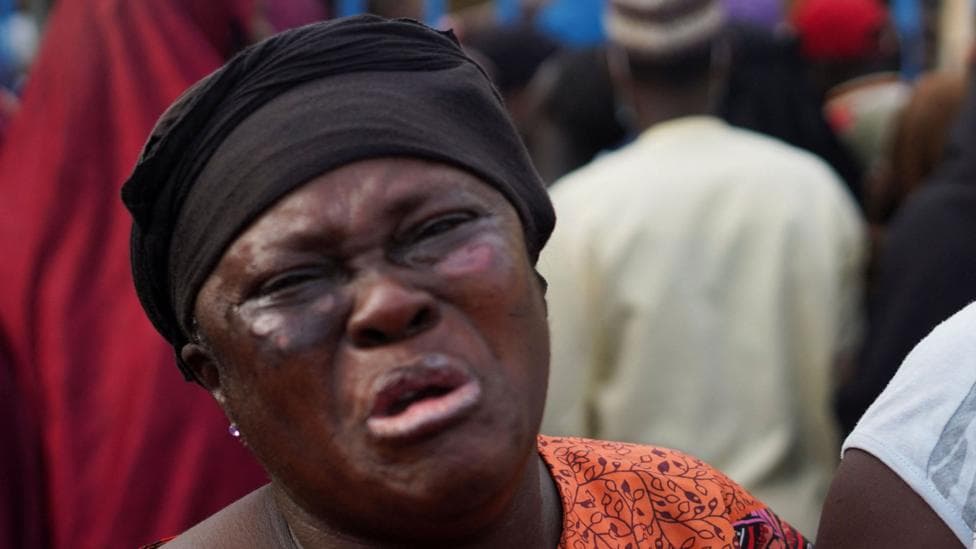
Aisha Mohammed lost three daughters in a boat disaster that killed more than 100 people in Kwara state three years ago. Her loss is part of a wider pattern in Nigeria, where deadly boat accidents keep recurring despite repeated promises by officials to improve safety.
This time, a search-and-rescue team is looking for survivors of a capsized wooden canoe in Jigawa state. Forty people were thought to be on board, mostly female farmers and labourers, when it sank on Sunday, and seven bodies have been recovered so far.
Last month, a boat accident on the River Benue in central Nigeria claimed the lives of 12 people, including a pregnant woman and six children. Earlier this year, 14 people died when their boat capsized in Gumbi, Kebbi state, as they were returning from a wedding ceremony and accompanying the bride to her new husband's home.
So far this year, more than 55 people have already lost their lives in boat accidents, with dozens of bodies yet to be recovered.
Why do so many Nigerians depend on risky boats?
For millions of Nigerians, particularly in rural areas, rivers are the most practical means of transport. With many villages on or close to waterways and few bridges and poor roads to aid travel, rickety wooden boats are often the only way for people to reach family members elsewhere, to take goods to market, or to see the outside world.
For people like Isiyaka Bello, the painful memory of losing someone to water is still fresh. Last year, his wife was returning from a village market in Kebbi state when she and eight others lost their lives.
"It seems like just yesterday. She left behind four children, and I am still struggling to adjust to raising them on my own.
"Whenever I pass by a large body of water, all I think about is her," he said.
The reasons why water transport in Nigeria is so risky are painfully predictable: failure to enforce basic safety rules like wearing life jackets. After every disaster, authorities promise to do better. But on the water there is little, if any, change.
As one local observer puts it:
"These are not acts of fate. They are the predictable consequences of systemic negligence."
However, Ibrahim Husseini, director of information at the National Emergency Management Agency of Niger state, says the government regularly provides life jackets, but that people who have spent their whole lives by the water say they don't need them, or find them uncomfortable.
"We have people who are born and raised in riverine communities who take it for granted that this is the life they are used to," he told the BBC. "Sometimes it is difficult to force them to wear life jackets."
In riverine communities, whereas a high proportion of men often know how to swim, few women do, meaning they are particularly at risk if a boat capsizes. And yet it is often women who attend big family events such as weddings, or who take goods to market.
After a particularly deadly accident last year in Niger state, in which at least 32 passengers died, the National Inland Waterways Authority (Niwa) announced that life jackets were obligatory throughout the country. In an attempt to stop vessels picking up passengers in unsafe areas and ensure that regulations are followed, Niwa director general Bola Oyebamiji also said that commercial passenger boats were only allowed to pick up travellers at places that were recognised and registered by the authority.
But these are not new rules. They are all contained in the Water Transport Code, which was first passed in January 2023. However many of its provisions are routinely ignored.
Timothy Iwuagwu, president of the Institute of Safety Professionals of Nigeria, said:
"The law requires that for any boat operating on a large body of water where someone cannot easily swim to shore, all passengers must wear life jackets,"adding,
"But these laws are hardly implemented. Any regulation is as good as its implementation."
He also pointed to a lack of proper training:
"The majority of these local boat operators are not trained nor licensed. A boat operator should understand the behaviour of the water - the waves, the tide, the current. Boat owners need to be well trained and must obtain a licence before they can operate."
Again, this recommendation is often ignored in practice. He also said that the maximum capacities of passenger boats should be clearly indicated to avoid overloading, which is often one of the causes when boats capsize.
Where life jackets are available, Iwuagwu said they are often of poor quality and passengers frequently do not know how to put them on properly.
Last year, the government called for wooden boats to be phased out. Iwuagwu agrees with this but says it will take time and that there are immediate measures which are more important, such as strict enforcement of existing regulations, and involving safety professionals in the design and implementation of water safety policies.
The introduction of water marshals to oversee terminals and prevent overloading has not yet made a difference. Husseini says there are simply not enough marshals to cover all the terminals.
A further problem is that many Nigerian waterways are full of tree stumps following years of logging. At low tide they are visible. But when the tide rises, they become hidden - and boats can crash into them and overturn. These have been blamed for several boat disasters over the years.
Husseini said this was usually a result of poor dredging:
"The plants in the water are not removed from the root."
He added that removing or dealing with tree trunks or roots in water is not the responsibility of the state government which he works for but Niwa which handles inland waterways.
Then there are the boats or canoes themselves - generally old, weak, rickety wooden vessels that have often been used for years without upgrades or major repairs.

"A lot of Nigeria's passenger boats have been in use for many years"
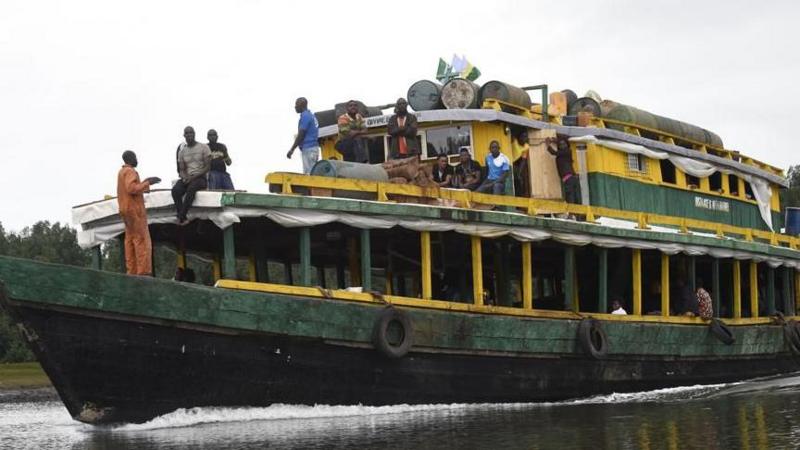
Nigeria's Minister of Marine and Blue Economy Adegboyega Oyetola acknowledged the problem late last year.
"The time has come for a decisive break from outdated practices," he said. "Wooden boats have served their time, but they cannot be the future of water transport in Nigeria. The tragic mishaps we continue to witness are a direct consequence of the continued reliance on unsafe vessels."
He was speaking after a boat accident on the Jaranja River in the northern Sokoto state, where nine people died heading to a local market.
"Our ministry has mandated the compulsory use of life jackets, and we have supplied them in thousands to riverine states," he said. "But life jackets alone cannot guarantee safety without safe boats."
He appealed to state governments to ensure that boat operators invest in fibre and aluminium boats, which are considered much safer than traditional wooden vessels due to their superior strength and durability.
How has Lagos reduced boat deaths?
An example of how water safety can be improved can be found in Lagos, Nigeria's biggest city, which lies on the coast with roughly a third of its area covered by water. It is notorious for traffic gridlock, so water transport is a common way of getting around.
Boat accidents used to happen frequently in the city, whose very name comes from the Portuguese word for lake, with 92 recorded deaths between January 2018 and October 2023.
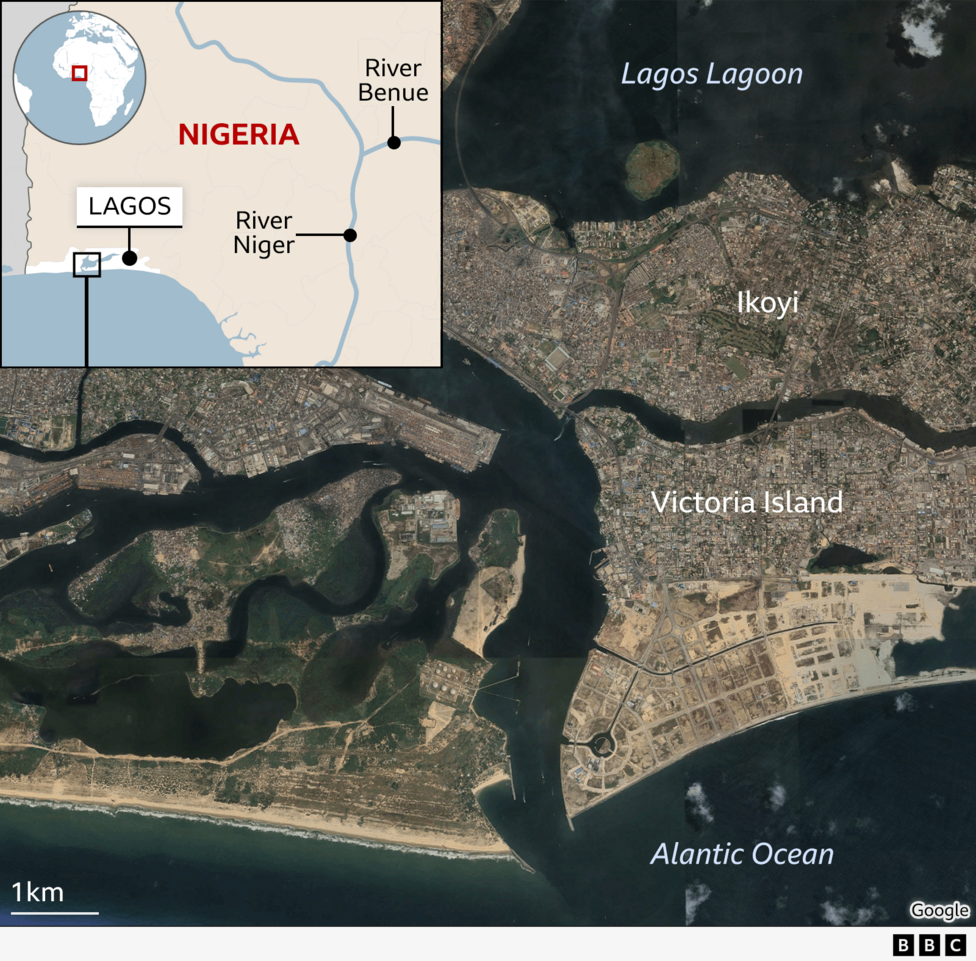
But in recent years, there has been a dramatic reduction. Statistics from Lagos State Water Authority (Laswa) showed that only one person died in a boat accident in 2024 and 6 people in 2025, with no fatalities recorded so far this year.
Abdulbaq Balogun, managing director of Lagos Ferry Services, put the improvement down to four measures taken by the state government: providing new, standard boats and life jackets; employing water guards at every jetty and terminal; and ensuring that all boat operators are trained and licensed.
"Even when there is an accident or mechanical fault, the water guard quickly informs the control room and a rescue boat is deployed in record time," he said.
The Lagos government acquired a huge stockpile of life jackets, which it distributed to boat operators. Following repeated public awareness campaigns, many passengers now ask for one before boarding - something which rarely happens elsewhere in the country.
But replicating the Lagos model across the whole country will take time.
What do survivors and artists say about the crisis?
Popular singer Aminu Bagwai was one of only four survivors of a river disaster that killed 36 people, including a bride being taken to her new husband's house, in Kano state 18 years ago. None of the passengers on that ill-fated journey wore life jackets, he told the BBC.
He wrote a song in the Hausa language titled Ruwan Bagwai (Bagwai's water) about the tragedy, which became a huge hit and turned him into a household name across northern Nigeria, with people sympathising over what he had gone through.

He spoke of his sadness that nothing has really changed since then.
"I still think about it every day, and it is sad I still see boat accidents happen leading to loss of lives.
"My prayer at the time was that ours would be the last one."
## You may also be interested in:
Mothers died trying to save children - Nigeria boat survivor
Tragic death of Adichie's young son pushes Nigeria to act on health sector failings
One death every seven minutes: The world's worst country to give birth
Go to BBCAfrica.com, external for more news from the African continent.
on Twitter @BBCAfrica, external, on Facebook at BBC Africa, external or on Instagram at bbcafrica, external
##
## BBC Africa podcasts
Key Facts
- A capsized wooden canoe in Jigawa state was believed to have carried 40 people on Sunday; seven bodies have been recovered.
- More than 55 people have died in boat accidents in Nigeria so far this year, with dozens of bodies still missing.
- Niger state recorded a significant share of nearly 860 deaths across Nigeria between January 2023 and October 2025.
- Lagos recorded only one boat death in 2024 and six in 2025, with no fatalities so far this year.
- Nigeria’s Water Transport Code was first passed in January 2023, but many provisions are routinely ignored.