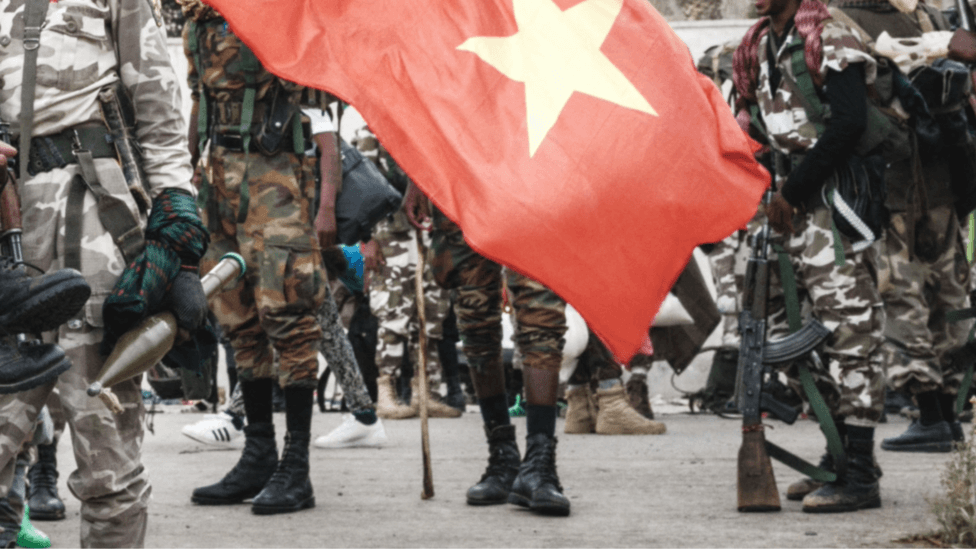
Ethiopia's federal government and the Tigray People's Liberation Front (TPLF), which administers the northern Tigray region, have traded accusations of launching military offensives, raising the prospect of renewed large-scale warfare after a fragile ceasefire that has held since 2022.
Getachew Reda, a cabinet minister and adviser to Prime Minister Abiy Ahmed, stated that Tigrayan fighters had seized control of federally administered airports in Tigray and initiated offensive operations across neighbouring Afar and Amhara regions. In response, Tigrayan authorities characterised their military movements as a forced entry into a defensive posture, a declaration that came after reports of aerial bombardment across Tigray.
The escalation marks a dangerous deterioration in relations between the two sides. The original conflict, which lasted from 2020 to 2022, stands among the deadliest wars of the current century. The African Union's mediator estimated approximately 600,000 deaths resulted from the fighting, which brought the region to the edge of famine and displaced millions of people.
On 21 September 2026, the TPLF announced the formation of a broad anti-government coalition. According to regional reporting, the alliance, termed the Ethiopian Peoples' Forces Coalition for Survival, comprises seven armed groups: the TPLF, Fano, the Oromo Liberation Army, the Ogaden National Liberation Front, the Afar National Unity Revolutionary Front, the Benishangul Peoples' Liberation Movement and the Gumuz Peoples' Democratic Movement. TPLF vice president Amanuel Assefa stated that the alliance's objective was to remove the regime and facilitate a transitional government.

Getachew described the TPLF's actions in stark terms, saying in a statement distributed via social media:
It is rather heartbreaking to learn that, despite efforts by many, including the international community, to avoid yet another round of war in Tigray, the TPLF leadership early this morning launched an all-out offensive against government positions in Afar and Amhara.The adviser, who previously administered Tigray under federal appointment, broke with the TPLF in 2025 and joined the central government.
Following the reported seizure of airports, Ethiopian Airlines suspended all flight operations to Tigray. Residents in Mekelle, the region's principal city, reported that local forces took control of the city's airport from the national police early on Wednesday.
What triggered the immediate escalation?
The current military confrontation follows weeks of intensifying clashes and aerial strikes. According to Human Rights Watch, fighting between the Ethiopian National Defense Force and Tigrayan forces resumed on 1 August 2026, with near-daily drone strikes reported since then.
On Tuesday, 19 September, a drone strike on Alamata, a town in southern Tigray, killed at least 14 people and wounded 22 others, according to Tigrayan authorities. Mogos Shiferaw, the town's mayor, told international media that more than five drones and one fighter jet conducted over 21 strikes beginning around 03:30 local time.
This caused a lot of psychological trauma in our city and our people were in a state of panic,he said.

Mogos asserted that all casualties were civilians and that federal forces had deliberately targeted two secondary schools. He contended that the schools, which had functioned as federal military bases during the earlier civil war, were unoccupied because the academic year had not yet begun. The federal government has not publicly responded to these allegations, and independent verification has not been completed.
The United States State Department's Bureau of African Affairs separately condemned a drone strike on Monday that targeted a convoy of Catholic vehicles transporting food aid, calling for an investigation and urging all parties to pursue dialogue and prevent further such incidents.
How has the peace agreement unravelled?
Both the federal government and TPLF leadership have faced international criticism for delays in implementing critical provisions of the Pretoria Agreement, the African Union-brokered accord that formally concluded the conflict in November 2022. The agreement has been under growing strain over implementation disputes.
In July 2026, Prime Minister Abiy addressed parliament and accused the TPLF of preparing for renewed warfare. Just before the May general election, which was not held in Tigray due to security concerns, the TPLF restored its pre-war administration and dissolved the interim authority that Abiy had appointed. Reports have also emerged of the TPLF forcibly recruiting young men into its military forces.
On 18 September 2026, the Ethiopian National Defense Force reported a significant development in the opposite direction: nearly 300 TPLF fighters surrendered to federal forces in the Tekeze area, handing over more than 280 weapons. However, this surrender has not halted the broader military escalation.
What is the humanitarian toll?
On Wednesday, Tigrayan authorities accused Addis Ababa of launching an
open invasionof the region and called on residents to support regional forces and maintain unity. The authorities further alleged that the government had violated international humanitarian and human rights law, disrupting public services and critical infrastructure throughout Tigray.
The renewed tensions carry severe implications for civilians. In early September 2026, rights organisations warned that escalation in Tigray was threatening civilian populations and forcing some residents to flee into neighbouring Sudan.
What happens next?
The newly formed anti-government coalition has signalled its intention to pursue coordinated political and military action. The alliance announcement on 21 September followed weeks of intensifying clashes and came after reports that Tigrayan forces had seized the main airport in the northern region. The armed groups have indicated they are coordinating efforts to pursue a transitional government, suggesting further political and military developments may follow. However, no specific ceasefire negotiations, scheduled talks, or formal diplomatic processes have been publicly announced at this time.
The international community, including the African Union and major powers, faces mounting pressure to prevent a return to the catastrophic conflict that devastated the region between 2020 and 2022.