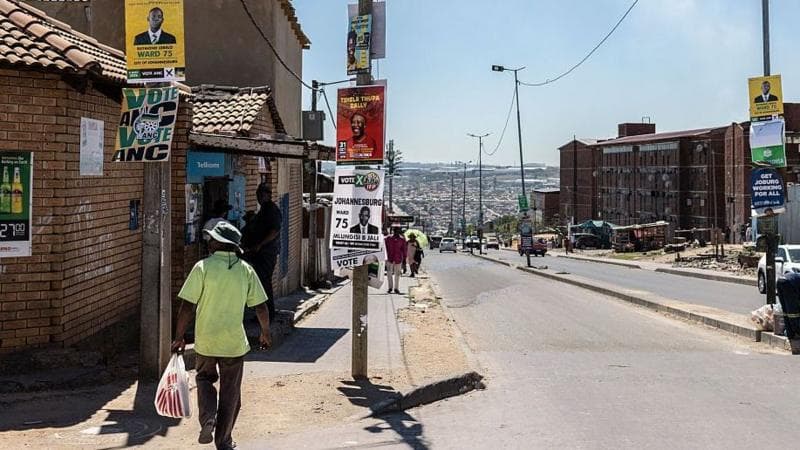
South Africans are casting ballots in intensely competitive local elections expected to inflict further damage on the African National Congress (ANC), the nation's dominant party since the end of apartheid in 1994. According to BBC News, more than 500 political parties are contesting the vote, with polls predicting the ANC's support will fall to levels not seen since the party's formation. The elections determine leadership of nearly 300 municipalities responsible for delivering water, electricity, refuse collection and other essential services that have deteriorated across much of the country.
The campaign has been marked by unconventional theatrics: politicians have performed stunts ranging from swimming in crater-sized potholes to wading through flooded roads, attempting to draw attention to infrastructure failures that have become defining symbols of municipal mismanagement. For the ANC, the outcome represents a critical moment to demonstrate it retains the capacity to govern effectively after suffering its worst national election result in 2024, when it lost its parliamentary majority for the first time since democracy began.
The party's electoral decline reflects mounting public frustration over endemic corruption, unemployment and violent crime. At its peak in 2004, the ANC secured 70% of the national vote. By 2024, that share had collapsed to 40%, a trajectory that has accelerated in recent years. Polls conducted by Ipsos suggest further deterioration, placing ANC support at 30% heading into these municipal contests, down from the 45.59% it achieved in the 2021 local elections. The 2026 election contests 10,526 council seats across South Africa, making it a comprehensive test of the party's remaining strength.
President Cyril Ramaphosa has rejected suggestions his party is in terminal decline.
"What I'm seeing here is that the ANC is going higher and higher and on the 4th [of November] we will show those naysayers,"he declared at the party's final rally on Sunday, a statement that contradicts virtually all available polling data and expert analysis.
What is driving voter disillusionment in townships?
In Alexandra, a sprawling township north-east of Johannesburg where the ANC has traditionally commanded overwhelming support, the party's grip is visibly unravelling. The BBC visited the area a week before polling day and found residents grappling with the consequences of years of poor governance. Sanele Ntombela, an 18-year-old first-time voter, articulated the frustrations many residents share.
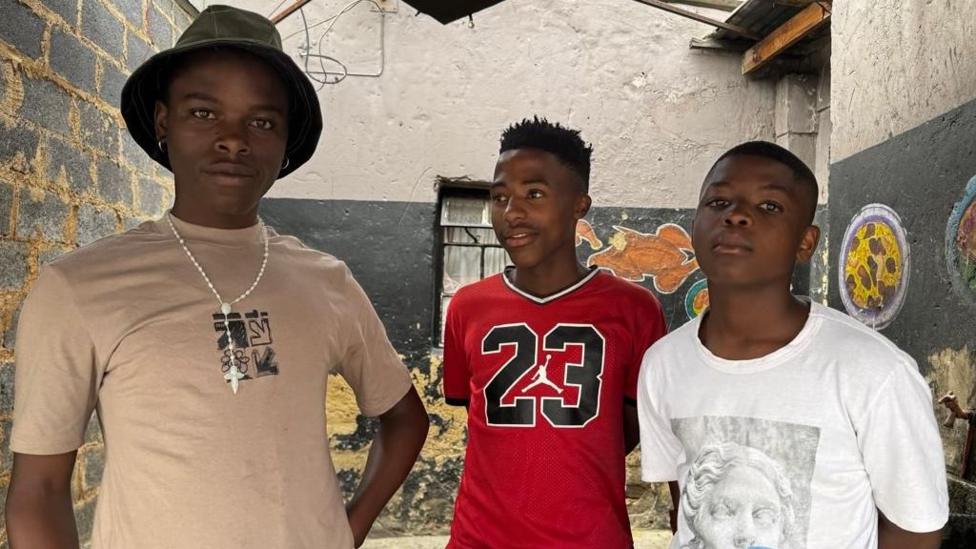
"We face many challenges in Alexandra. There's rubbish everywhere and we struggle with electricity and water and many other issues,"Ntombela said while standing with friends on a street corner. Most of his peers expressed no intention to vote, citing the absence of meaningful change and deteriorating service delivery. Yet Ntombela retained hope that casting his ballot might catalyse improvement.
The physical landscape of Alexandra underscores why such pessimism prevails. Heaps of rubbish accumulate beneath streetlight poles plastered with election posters. Drain water trickles through potholes that have fractured the roads. The stench of raw sewage and uncollected refuse hangs heavy in the air, a reality residents have grown accustomed to enduring.
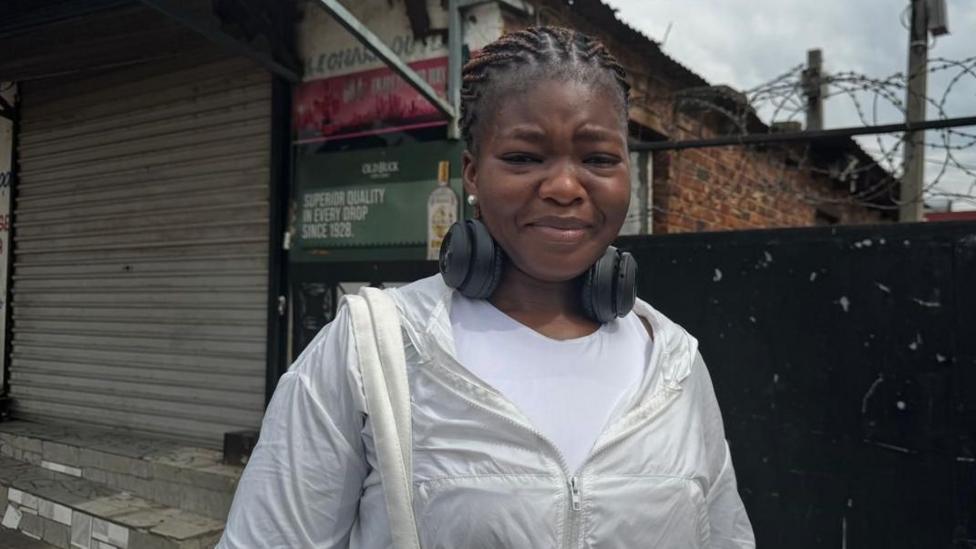
Zandile Mncube, a 33-year-old registered voter, chose not to participate in the election despite her eligibility.
"It makes no difference [whether I vote or not]. Things have gotten worse over the years,"she said, reflecting a sentiment that has contributed to declining voter turnout across South Africa. Over 29 million citizens remain registered to vote, yet participation rates, particularly among young people, have fallen steadily.
Alexandra sits mere metres from Sandton, Africa's wealthiest commercial district, yet the contrast could scarcely be starker. Sandton features gleaming skyscrapers, designer retail outlets and immaculately maintained roads. In Alexandra, houses are compressed together, rubbish is piled haphazardly or strewn across pavements, and basic sanitation infrastructure has failed.
How widespread is the service delivery crisis?
The dysfunction evident in Alexandra is not isolated to that township. Driving through Gauteng province reveals consistent patterns of neglect and deterioration, particularly in residential areas. Soweto, situated south of Johannesburg, appears marginally cleaner than Alexandra but residents there voice identical complaints about service delivery failures.
Mduduzi Makhubo, 45, has spent his entire life in Soweto and described to the BBC the community's chronic struggles accessing water and electricity.
"Every Monday we know we won't have water after 2pm,"he said. Despite these hardships, Makhubo intends to vote, hoping to challenge what he characterises as the arrogance of local leaders and fundamentally alter the status quo.
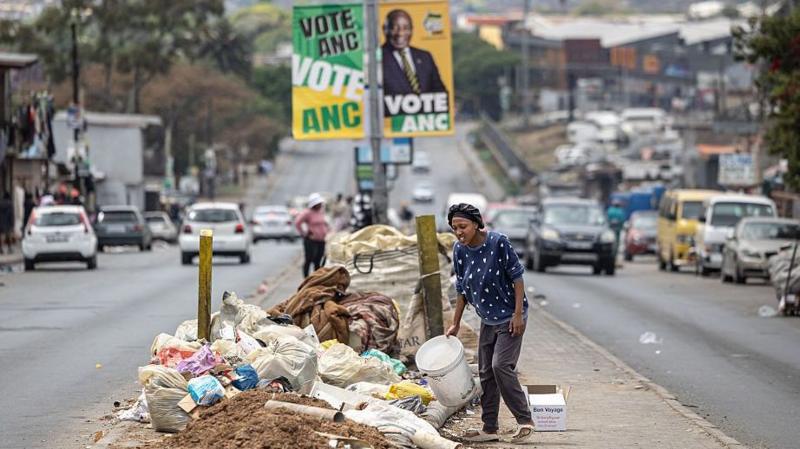
National audits have documented the severity of municipal dysfunction. The auditor-general's office reported that only 39 municipalities achieved clean audits—the highest possible ranking for public entities—during the 2024-2025 period. None of Gauteng's three major metropolitan areas—Johannesburg, Tshwane and Ekurhuleni—featured among those 39. Auditor-General Tsakani Maluleke warned lawmakers that Johannesburg
"needs ongoing attention. If we don't that, we are going to continue on this slide where financial health deteriorates [and] where service delivery continues to be compromised, which is what we are living."
Johannesburg has been described as "effectively bankrupt" due to the catastrophic state of its finances. Filthy streets, unreliable electricity supply and persistent water shortages have plagued the city for years. Experts monitoring the election have identified the eight largest metropolitan areas, particularly those in Gauteng, as critical barometers of the ANC's electoral performance and governing capacity.
What do political analysts predict about coalition governments?
Of South Africa's eight metropolitan municipalities, only three are governed by a single party. All three Gauteng metros operate under coalition arrangements, with the ANC as the largest partner. Political analyst Melanie Verwoerd characterised the election as a
"verdict ... and judgment"on the ANC, predicting the party would achieve its worst-ever electoral result.
Polls point to modest gains for the Democratic Alliance (DA), the country's second-largest party. Ipsos projects the DA will capture 25% support in this election, up from 22% in 2021. DA leader Helen Zille has mounted an unconventional campaign for the mayoral position in Johannesburg, gaining widespread attention through theatrical stunts including swimming in enormous potholes, ziplining over sinkholes and arriving at her final rally in a classic BMW 325i, a vehicle known locally as a "Gusheshe".
"Towns and cities that work best are under DA governance,"Zille told local radio broadcaster 702.
Verwoerd predicted that coalition governments would remain the dominant arrangement across Gauteng following the election. Such arrangements have frequently been characterised as unstable and chaotic at the municipal level, with constant leadership changes caused by party disputes regularly disrupting service delivery. Verwoerd suggested that the most durable coalitions would replicate the power-sharing model the ANC and DA have established at the national level, where historic rivals have agreed to govern together.
Cape Town, governed by the DA since the late 2000s when it displaced the ANC, is widely regarded as South Africa's best-performing metropolitan area. Verwoerd assessed it unlikely the DA would lose control of the coastal city. By contrast, Ethekwini, which encompasses the port city of Durban in KwaZulu-Natal, presents a fundamentally different scenario. The uMkhonto weSizwe (MK) Party, founded by former President Jacob Zuma, has been projected to perform strongly in the area but may fall short of the outright majority required to govern independently. Polls suggest the party will require coalition partners, a prospect complicated by its refusal to work with either the ANC or DA.
Zuma, addressing supporters on Sunday, expressed confidence the MK Party would secure control of multiple municipalities following the election. Dr Levy Ndou, another political analyst, concurred with Verwoerd's assessment that a DA-ANC coalition appeared unavoidable in most metropolitan areas.
"We're not sure whether the arrangement of the government of national unity could have the potential to influence how the metros are going to be run,"Ndou observed.
Why is voter turnout declining?
Both analysts highlighted the troubling decline in voter participation across South Africa's elections. Dr Ndou attributed the trend to the
"calibre"of candidates campaigning and the minimal visibility of local councillors—the officials typically elected to lead their neighbourhoods—in election campaigns. The absence of prominent local leadership in public discourse has contributed to disengagement, particularly among younger voters who perceive little connection between electoral participation and tangible improvements in their circumstances.
What happens next?
The Independent Electoral Commission has established procedures for rapid result compilation. The IEC begins counting at each station after it closes; initial results can arrive within hours, and the Commission has seven days to declare the election official. Special voting took place on 2 and 3 November ahead of the general polling day, allowing certain voters to cast ballots early. The IEC confirmed that special voting occurred on those dates to accommodate voters unable to participate on the main election day.
Parties have 14 days following the election to establish governing structures in municipalities they will control or co-govern. This timeline means coalition negotiations will commence immediately after results are announced, potentially determining the character of local government across the country within a fortnight. The stakes are particularly high in Gauteng, where the ANC's capacity to maintain influence through coalition arrangements will significantly shape the province's governance trajectory over the next five years.