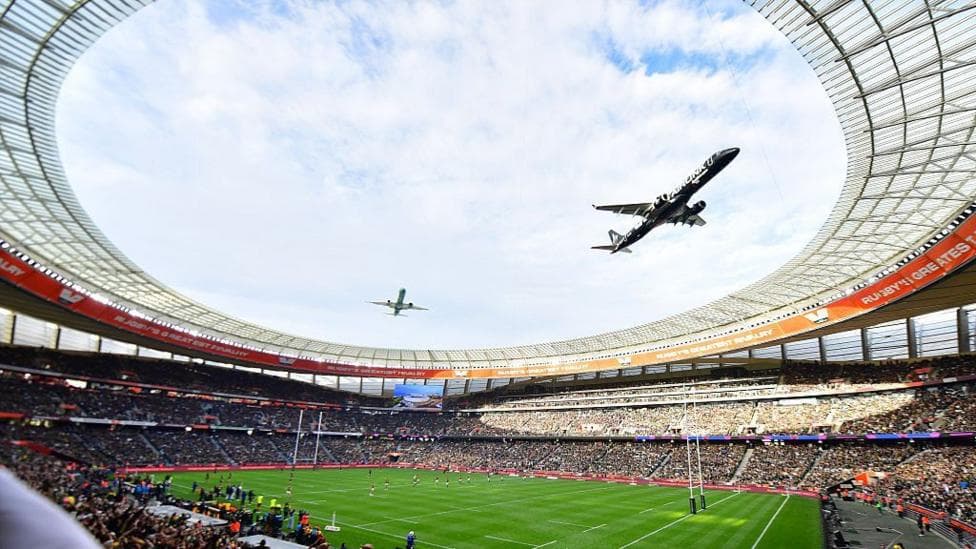
South African airline Airlink has withdrawn its application for a planned aerial display ahead of this weekend's rugby match between South Africa and New Zealand at Johannesburg's FNB Stadium, citing unfavourable weather conditions. The decision comes just days after the carrier executed a dramatic low-altitude formation flight over Cape Town's DHL Stadium before last weekend's opening fixture of the same rivalry.
The Cape Town manoeuvre generated worldwide attention and divided public opinion sharply. According to aviation coverage, flight-tracking analysis indicated the lead aircraft's clearance was roughly 41 to 46 feet above the stadium roof—lower than initial estimates. The two jets, one painted green and one black, flew in close formation amid coloured flare smoke, creating striking visual footage that circulated globally.
The stunt has triggered an active regulatory investigation. The South African Civil Aviation Authority (SACAA) announced on Wednesday that it had initiated compliance verifications, engaged the operator, and obtained flight data recordings from both aircraft. According to local news sources, the regulator stated it was reviewing the operation following "discussions in the media" and would issue a full report with recommendations to Airlink once its assessment is complete.
Airlink CEO de Villiers Engelbrecht defended the Cape Town operation in a statement on Wednesday, asserting that the flights were performed with "approved and rehearsed safety altitude and speed limits for the flypast" and were conducted by a "highly experienced crew." According to aviation industry reporting, six senior captains took part in the operation, which had pre-approval from SACAA and Air Traffic and Navigation Services. The airline voluntarily provided the aircraft's digital flight data recordings and stated that the recorded data showed the manoeuvre stayed within the approved altitude and speed limits.

Why was the second flyby cancelled?
Airlink withdrew the FNB Stadium display scheduled for this weekend due to weather forecasts predicting unfavourable conditions for a safe formation flight. Engelbrecht acknowledged the "widespread enthusiasm for a flyby at FNB Stadium this weekend" but prioritised safety considerations over the planned spectacle. The airline noted it had submitted multiple flypast applications tied to the rugby fixtures, including requests for Ellis Park and DHL Stadium, before withdrawing the FNB Stadium request.
What is the regulatory review examining?
The SACAA's ongoing investigation is examining whether the Cape Town flyby complied with aviation safety standards and regulations. The authority has collected flight data recordings from both aircraft and requested additional information from Airlink. According to regulatory statements, the matter is being interrogated "with clear minds and data" to determine whether any safety concerns warrant further action or policy changes. The regulator's analysis remains ongoing, with no public conclusion yet announced.
How has the public reacted?
The stunt divided opinion sharply. Some observers praised the precision and expertise demonstrated by the highly experienced crew executing the formation flight at such a low altitude. Others labelled the manoeuvre reckless and raised valid safety concerns about conducting such an operation over a packed stadium during a major sporting event. Engelbrecht acknowledged both responses, stating:
We never intended to become the news or upstage Rugby's Greatest Rivalry.The airline expressed gratitude for the enthusiastic appreciation while also recognising the legitimate questions raised about the operation's safety.
What is the history of such flypasts in South Africa?
Aerial displays have been a recurring feature at major sporting and presidential events across South Africa for several years, utilising both military jets and commercial aircraft. The Cape Town flyby was part of a series of rugby-related flypasts connected to "Rugby's Greatest Rivalry," the traditional competition between South Africa and New Zealand. This particular display marked a notable moment in the airline's history, generating unprecedented public interest and media scrutiny.
What happens next?
The SACAA will continue its compliance assessment and issue a full report with recommendations to Airlink upon completion. The planned FNB Stadium flyby for this weekend will not proceed. No further aerial displays have been announced at this time, and the regulator's findings could influence whether similar operations receive approval in the future.
Key Facts
- Airlink cancelled its planned FNB Stadium flyby this weekend due to unfavourable weather forecasts
- The Cape Town flyby saw two aircraft pass between 41 and 46 feet above the stadium roof, lower than initial "less than 50 feet" estimates
- The South African Civil Aviation Authority is conducting an active compliance review and has obtained flight data recordings from both aircraft
- Six senior captains participated in the operation, which had pre-approval from aviation authorities before execution
- A full regulatory report with recommendations will be issued to Airlink once the assessment is complete