Thirty-seven suspected illegal goldminers, many of them children, died in a holding cell operated by Nigeria's paramilitary security force this week in circumstances that survivors say involved severe overcrowding and a complete lack of fresh air. The deaths occurred in the custody of the Nigeria Security and Civil Defence Corps (NSCDC) following raids on suspected illegal mining operations in the city of Minna, capital of the mineral-rich state of Niger. On Friday, police deployed teargas against crowds protesting the deaths, and authorities imposed an overnight curfew as anger spread through the city.
The detainees were arrested during operations conducted on 15 and 16 September in the Wushishi-Lukoto area west of Minna. According to reporting from 20 September 2026, 67 people had been held in the cell, with 37 deaths occurring in the section housing male detainees. The NSCDC initially attributed the deaths to disease, but an intelligence report examined by Agence France-Presse indicated that overcrowding combined with inadequate ventilation was the likely cause.
State Governor Mohammed Umaru Bago confirmed the death toll and acknowledged that many victims were children aged 14 to 18 who had abandoned schooling to work in the mines.
"There are issues of illegal mining and it is taking a toll on our children,"he stated. The governor declared three days of mourning and postponed the launch of election campaigning scheduled for January.
One survivor, Dauda Shehu, described the conditions inside the cell to journalists at a hospital on Friday.
"We were jam-packed in the cell, no ventilation for us to breathe well. All of a sudden we realised that we could not breathe and we were all scampering for where to get fresh air, we even appealed to them several times, banged the cell door, but they refused to answer us."Another survivor who requested anonymity explained that he survived because he was positioned near the cell entrance where air circulation was marginally better.
"We were screaming for help,"he said, noting that detainees repeatedly told guards that
"people are dying one after the other. They did not believe us."
Video footage circulated online showed dozens of bodies of young men, most appearing to be teenagers, laid out in the open wearing only shorts. Volunteers in protective gloves stood nearby while veiled women attempted to identify their deceased relatives. Voices in the background could be heard cursing those held responsible for the deaths. The bodies were buried on Thursday in accordance with Islamic tradition, without any forensic examination being conducted.

What sparked the protests?
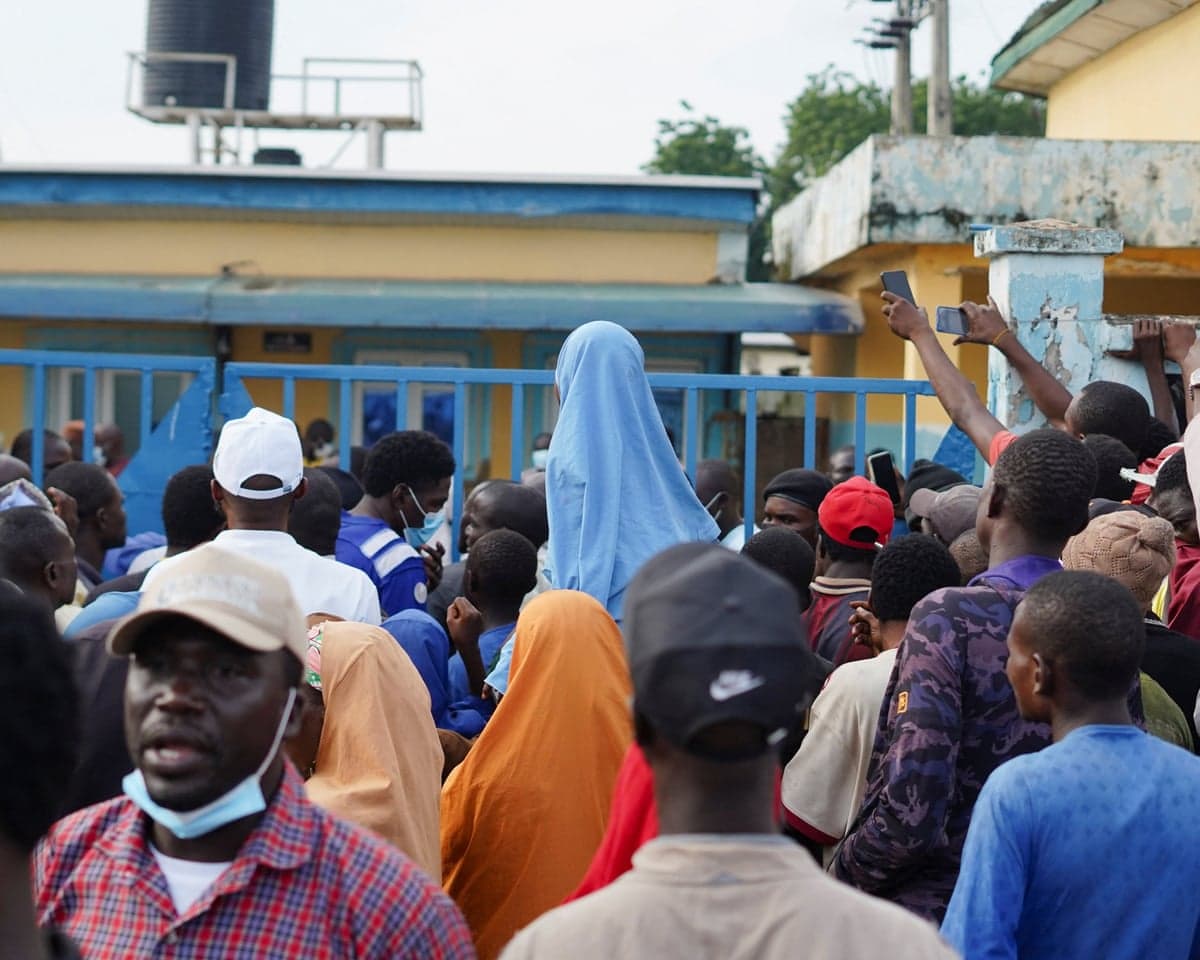
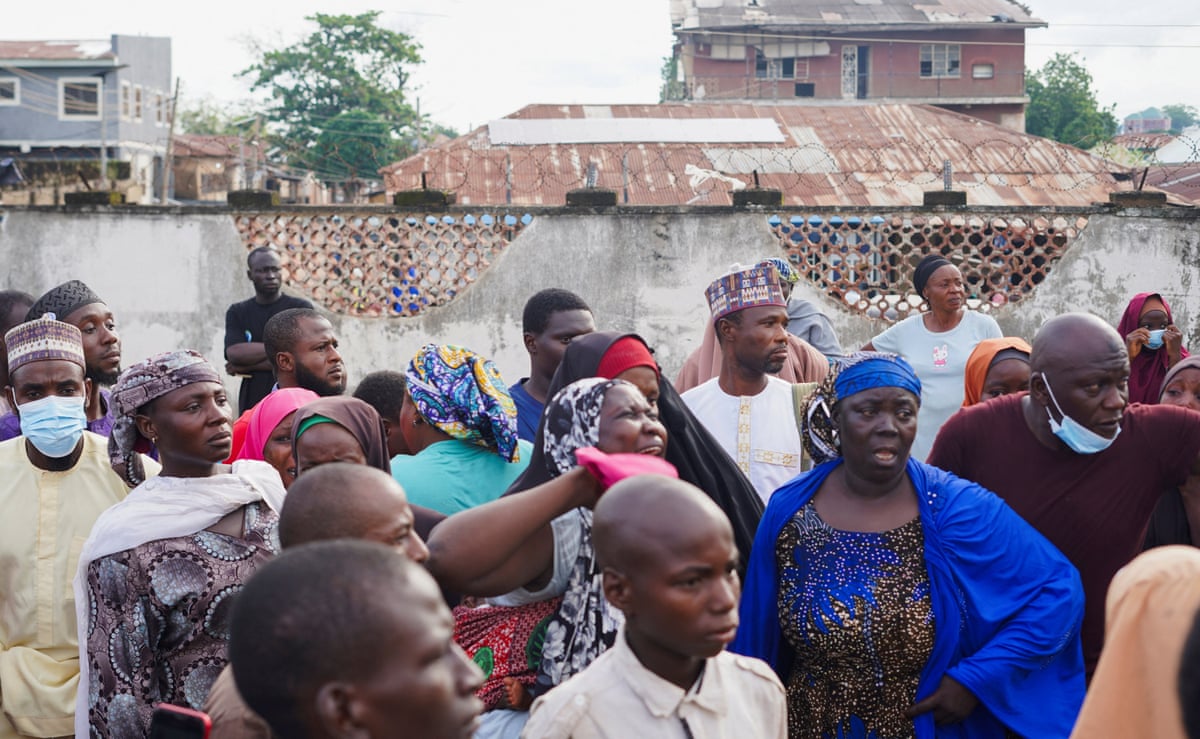
Anger over the deaths ignited demonstrations that began Thursday evening in Minna and intensified on Friday. Dozens of young people, including miners and family members of the deceased, gathered near the NSCDC's office in the city. Police established a perimeter around the area and used teargas to attempt dispersal of the crowd. According to witness accounts, security personnel also fired live ammunition at protesters, some of whom carried sticks, machetes, and traditional hunting rifles. In the Tunga neighbourhood, some demonstrators attempted to set fire to government buildings.
"We are not thieves – we are simply seeking a way to make a living by mining,"said Yusuf Auwal, a miner participating in the protests, in comments to a news agency. At least one body remained visible on the streets as soldiers and police worked to restore order. By 6pm local time on Friday, when a curfew took effect, security forces had at least temporarily brought the situation under control.
What is the government's response?
President Bola Ahmed Tinubu ordered a formal investigation into the incident after his administration suspended several senior officials. Nigeria's interior minister, Olubunmi Tunji-Ojo, immediately suspended Niger state's NSCDC commandant, Suberu Siyaka Aniviye, pending the investigation's outcome. The government has since taken a more substantial step: according to reporting on 20 September 2026, Nigeria's government appointed a 10-member independent panel to investigate the deaths. The NSCDC's national headquarters cautioned against premature conclusions about the cause, stating that the exact cause of death had not been established and that medical and laboratory tests must be completed before any disease could be blamed.
Why are illegal mining operations so prevalent in Niger State?
Niger State, Nigeria's largest state and more than twice the size of Belgium, sits atop vast mineral deposits that attract thousands of artisanal miners seeking gold and other valuable resources. The state contains reserves of tantalite, copper, and lithium in addition to gold—minerals in high demand for electric vehicle batteries and renewable energy technology. The scramble for these resources has created a dangerous environment in which criminal gangs exercise control over mining operations. These gangs impose taxes on miners and demand a percentage of extracted ore as payment for access to the pits, fuelling violence and instability across mining regions.
Most gold extracted illegally from Niger State is smuggled to the United Arab Emirates, where it enters the legitimate global supply chain through laundering operations that distribute it to Europe, the United States, Asia, and South Africa, according to a 2024 Swissaid report. The crackdown that led to the detentions was part of a broader effort by authorities to address the illegal mining crisis, which has been linked by officials and experts to widespread child labour, with school-age boys abandoning education to work in mines.
What happens next?
The 10-member independent investigation panel represents the next formal step in the government's response, though no hearing date or completion deadline has been publicly announced. The panel's findings will determine whether criminal charges are pursued against NSCDC officials and whether systemic reforms are implemented to prevent similar incidents in the future.
Key Facts
- Thirty-seven suspected illegal miners, many aged 14–18, died in an NSCDC holding cell in Minna on 15–16 September following raids on mining operations
- Survivors and preliminary intelligence reports attribute the deaths to severe overcrowding and inadequate ventilation rather than disease
- Protests erupted in Minna on Thursday and Friday, with police using teargas and live ammunition to disperse crowds demanding justice
- The NSCDC commandant was suspended and an independent 10-member investigation panel was appointed by the government on 20 September 2026
- Illegal gold mining in Niger State is controlled by criminal gangs and most extracted ore is smuggled to the United Arab Emirates for laundering into global supply chains