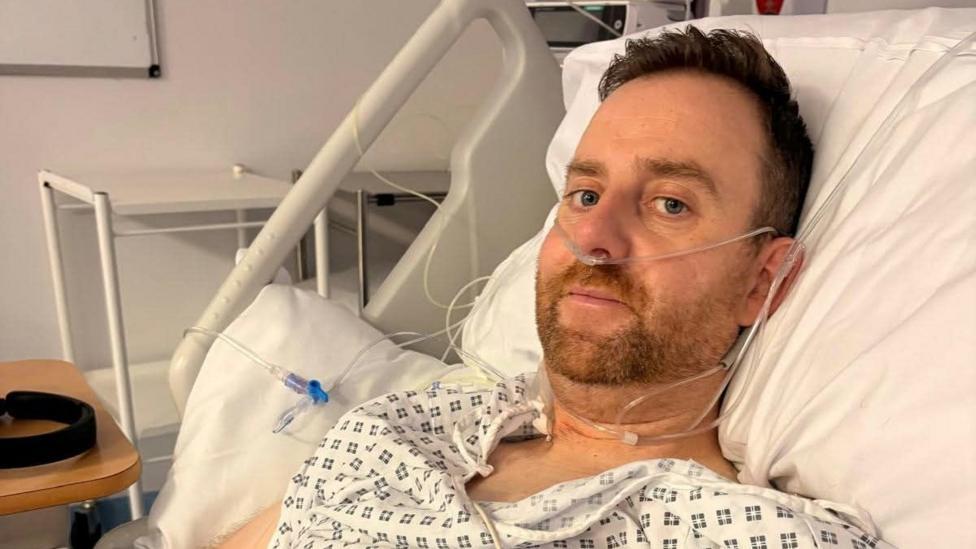
A 42-year-old man from Llanrwst in Conwy county has described his recovery from a life-threatening chain of medical emergencies that began with what appeared to be a routine toothache. According to BBC News, Danny Ellis was given antibiotics by his dentist in April but the pain persisted, eventually leading to a diagnosis of endocarditis, sepsis, and multiple strokes. Doctors told him he had just a 1% chance of survival, yet he pulled through after emergency heart surgery.
"It's a miracle that I'm still here,"Danny said of his ordeal. His recovery will continue for at least another 12 months, and he will likely require medication for the rest of his life, but he is marking progress through small achievements.
"At the moment, I'm able to take my daughter to school, and that's enough for now,"he explained.
"I still feel different on my left side, and I can easily get tired and forget what I'm supposed to say at times, but I hope that will improve with time."
How did a toothache become life-threatening?
When the initial tooth pain worsened, an X-ray at his dentist in Colwyn Bay revealed no obvious signs of infection, and Danny returned home with another course of antibiotics. Over several weeks, a cycle developed in which the discomfort would ease temporarily before returning. During this period, Danny noticed he was losing physical strength and red marks were beginning to appear across his body.
"The pain was terrible and I had to take a week off work, something I would never do,"said Danny, who operates the Spar shop in Betws-y-Coed as well as Gwalia bakery in Pwllheli, Gwynedd.
"The symptoms were starting to get worse, and the pain too, especially in my legs. I didn't know what was going on."
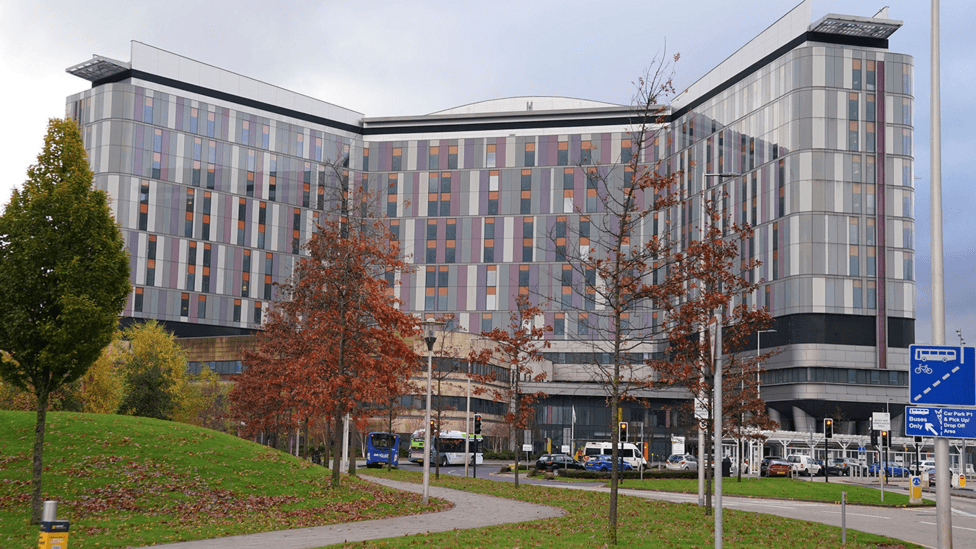
By Father's Day on 21 June, Danny's condition had deteriorated significantly. He felt disoriented and could not recall what gifts he had received that day. When his wife Ceri arrived home from work, she discovered him lying on the sofa with bruises covering his body. The couple attended their GP surgery in Betws-y-Coed on 23 June, and after several tests, Danny was rushed by ambulance to Ysbyty Gwynedd in Bangor.
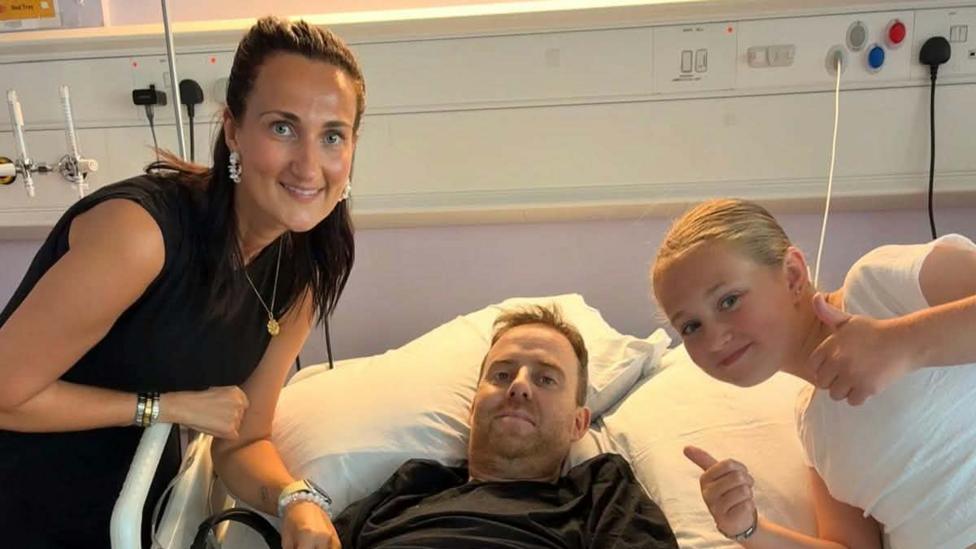
"I remember seeing the nurse run out of the room to call for an ambulance,"Danny recalled. When he informed hospital doctors that he had experienced a toothache and had been taking antibiotics, their demeanour changed immediately. They ordered an echocardiogram to examine his heart.
What did the scan reveal?
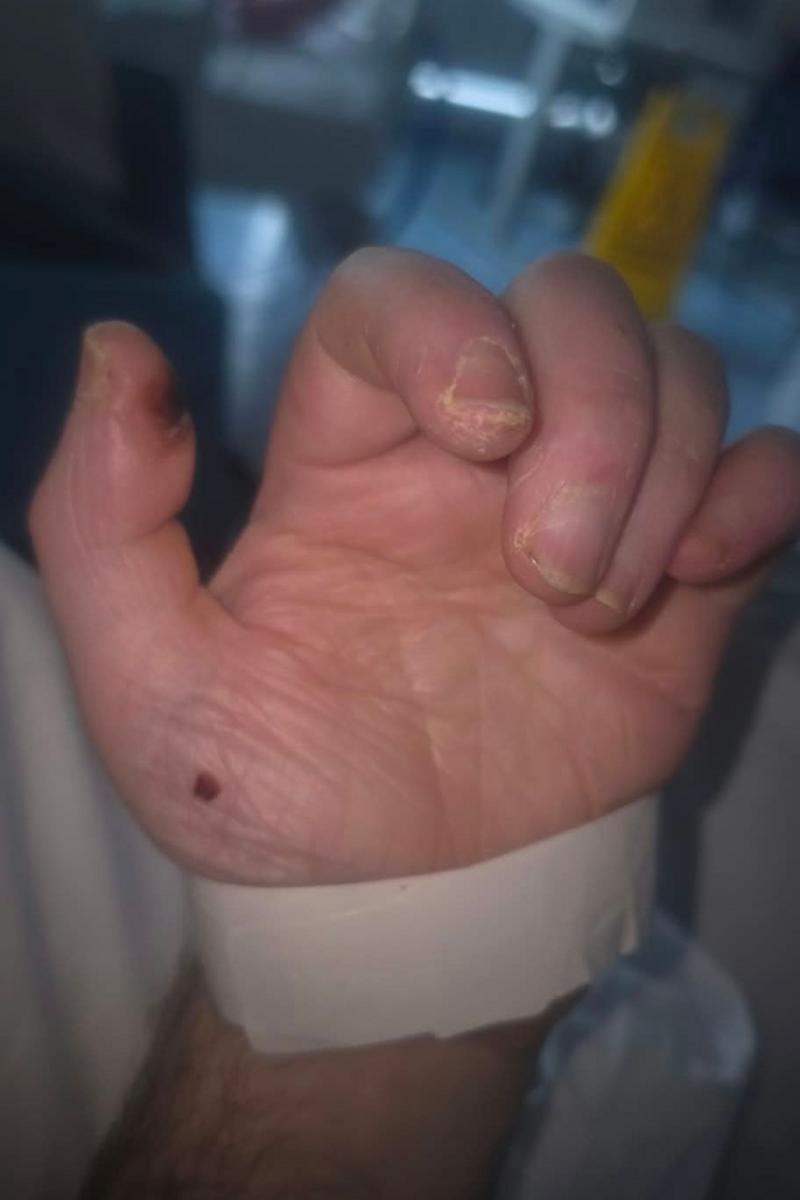
The echocardiogram discovered a hole in the mitral valve of Danny's heart. Simultaneously, doctors identified that he had developed sepsis and fluid had accumulated in his lungs. The red marks on his body had darkened to black, a sign that the sepsis was progressing rapidly.
"The marks on my hands had turned from red to black – the sepsis was killing me,"Danny said.
"The doctor said at the time that I was lucky to be alive but I was fighting for life."According to medical literature, these marks are believed to be Janeway lesions, which can indicate endocarditis.
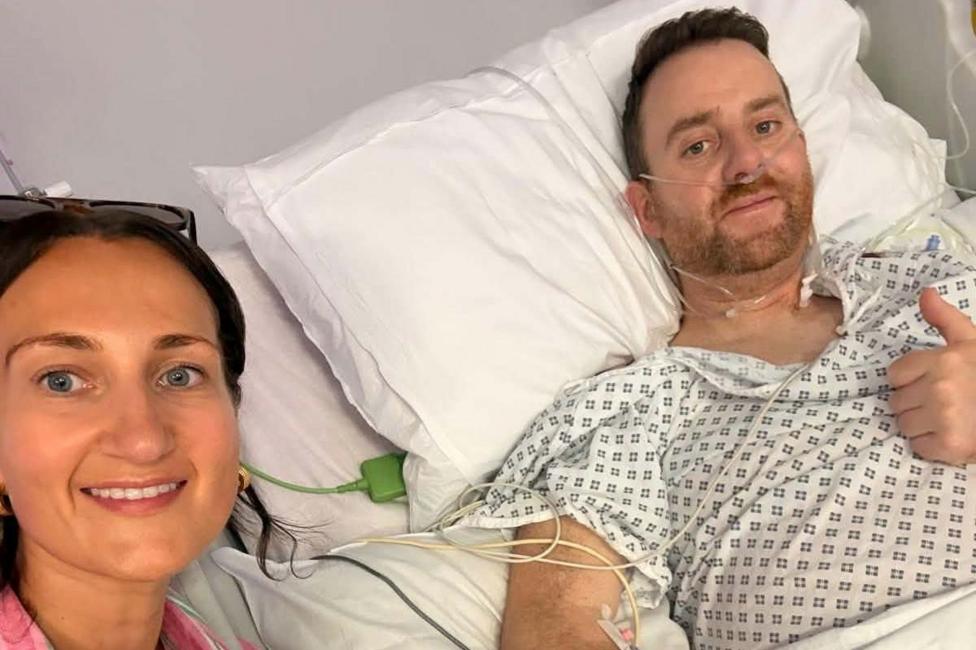
Danny was diagnosed with endocarditis, a rare inflammation of the inner lining of the heart usually caused by infection. The NHS explains that endocarditis typically occurs when bacteria or fungus enters the bloodstream through the mouth or skin and travels to the heart—which explained why Danny's initial symptoms had presented as tooth pain. Common symptoms include high temperature, headache, extreme fatigue, joint or muscle pain, night sweats, breathlessness, loss of appetite, and unexplained weight loss.
Sepsis, the life-threatening reaction to infection that Danny had developed, can progress with alarming speed.
"They wanted to transfer me to Broadgreen Hospital in Liverpool but I wouldn't have survived the journey,"Danny explained. He remained at Ysbyty Gwynedd until he had regained sufficient strength for the transfer, then underwent heart surgery in Liverpool on 6 July, an operation that lasted six hours.
What happened during the surgery?
"My brother told me after that the operation was unsuccessful,"Danny said.
"That was the first time the situation hit me on an emotional level and I felt really sad. I told my brother that I was tired of the whole thing, tired of fighting."According to BBC News, the initial six-hour operation in Liverpool on 6 July proved unsuccessful, but within days a doctor informed Danny that a specialist machine had become available to help his blood clot properly, and they wished to attempt the procedure again.
The second operation succeeded. The infection was cleared and the hole in the mitral valve was closed. However, during his time in and out of consciousness, Danny had suffered a series of strokes.
"When the doctor was reading his notes afterwards, he said it was a miracle that I was still alive,"Danny recalled, noting that he had been told
"the probability of survival was 1%."He was transferred back to Ysbyty Gwynedd to begin his recovery process.
How has Danny's recovery progressed?
"I couldn't walk at first, I didn't have the strength to do anything,"Danny said of the immediate aftermath. However, after a couple of weeks, he began to see tangible improvement.
"I walked with my daughter, Harriet, for the first time in months and that was very emotional."He credits his family with playing a crucial role in his recovery.
"My family were a big part of my recovery and a big help as I fought through the whole thing. That's what got me through."Danny was discharged from hospital on 19 August and one of his first actions was to visit his dentist.
"It wasn't his fault at all, my case and how it developed was something so rare,"Danny said of his dental care.
"I look after my teeth, clean them twice a day, so there's nothing I could have done differently. It's still a mystery to tell the truth."
"I had the worst possible scenario in my experience. Anyone can have toothache but, when endocarditis is part of it, that's when things change."According to BBC News, the second operation succeeded after doctors obtained a machine to help his blood clot, clearing the infection and closing the valve hole.
What does the future hold?
Danny expressed profound gratitude for the medical care he received throughout his ordeal.
"All the staff at Liverpool, Bangor – they've been amazing,"he said.
"I'm meeting the surgeon from Broadgreen in Liverpool for the first time since the operation – that will be very emotional."
He emphasised the critical role his wife played in his survival.
"But Ceri made the first call, she was worried at first. If I had waited for another day or two, the story would have been very different."Danny's recovery journey continues, with ongoing physiotherapy and medication management expected to extend for many months ahead. His focus remains on celebrating incremental progress, from managing daily activities to spending time with his daughter, as he rebuilds his life following his brush with death.