A public inquiry into crimes committed by nurse Lucy Letby has concluded that deaths and near-deaths of babies at a hospital could have been prevented through proper application of safeguarding procedures. Letby, now 36, was convicted of murdering seven infants and attempting to murder seven others—including one baby twice—at the Countess of Chester Hospital. The inquiry, led by Lady Justice Thirlwall, found systemic failures in management, governance and institutional response that allowed her attacks to continue unchecked.
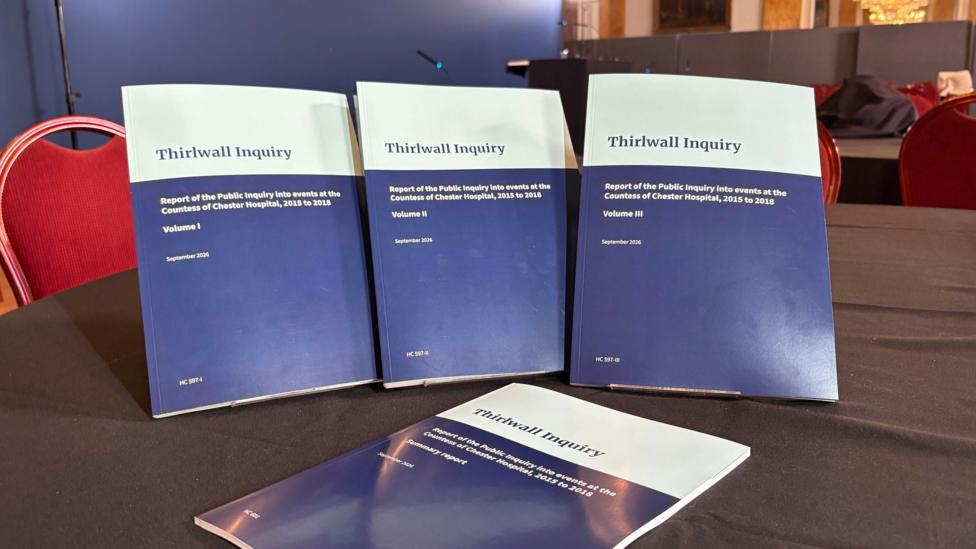
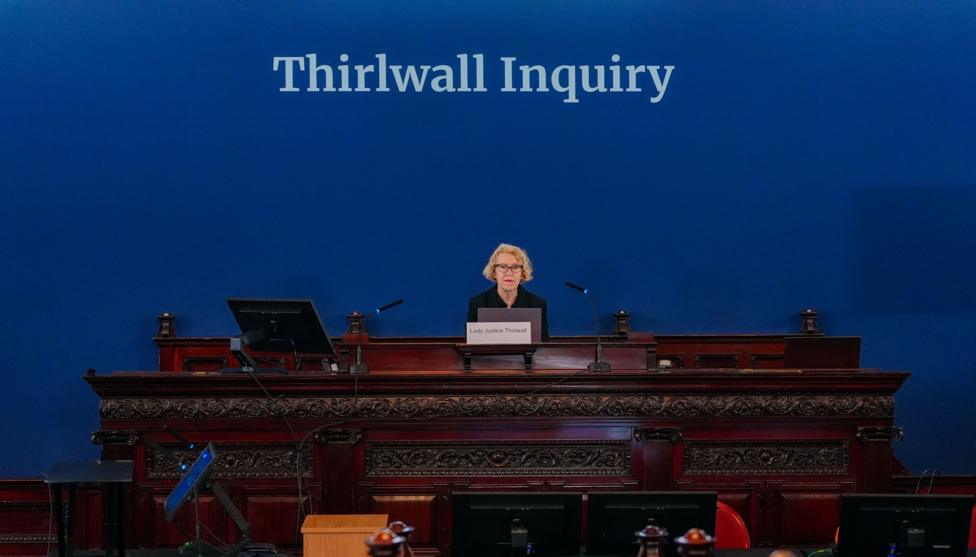
According to the inquiry's official website, the final report was published on 15 September 2026 in Liverpool. Lady Justice Thirlwall delivered her findings after an investigation spanning months of hearings and over 1,100 pages across three volumes. The inquiry's remit, as previously confirmed by the chair, focused on how the hospital's leadership handled concerns about Letby rather than reviewing her convictions themselves.
Scale of preventable harm
Lady Justice Thirlwall established that the true extent of preventable deaths cannot be determined with certainty, yet the evidence points to substantial institutional failure. She noted that if all seven babies murdered by Letby were excluded from the hospital's annual mortality statistics, the neonatal unit would have recorded three deaths in 2015 and three in 2016—figures consistent with historical patterns. Since July 2016, only one death occurred on the unit, in September 2019, suggesting the removal of Letby from the ward dramatically improved safety outcomes.
The inquiry identified multiple points where intervention could have halted the sequence of attacks. The first three deaths in June 2015 (babies designated A, C and D) represented the entire annual death toll concentrated into a fortnight, yet were not recognised as a cluster. The fourth death in August 2015 (baby E) was reviewed at a serious incident panel attended by the medical director and director of nursing, but the process was treated as routine rather than as a trigger for deeper investigation. Thirlwall observed that despite this being the highest death toll since 2008, no connection was drawn to the earlier losses.
A critical missed opportunity arose when a doctor identified in the report as Dr ZA disregarded an insulin test result for baby F in August 2015. Had this result been acted upon with appropriate safeguarding measures, the subsequent attacks on babies G, H, J, K, L, M and N would have been prevented, along with the deaths of babies I, O and P. Similarly, if safeguarding action had been initiated by October 2015 following baby I's death—by removing Letby from the ward—the deaths of babies O and P would have been averted, as would attacks on babies J, K, L, M and N.
In February 2016, consultant Dr Ravi Jayaram should have escalated concerns regarding baby K. Later that May, when hospital executives met to discuss the situation, no participant raised safeguarding issues; had they done so, the deaths of babies O and P could have been prevented.
How did hospital leadership respond to concerns?
Hospital executives repeatedly breached their duty of candour toward parents, investigators and regulators, the inquiry found. Thirlwall characterised their conduct as
"high-handed, against all safeguarding principles, and foolhardy."
Medical director Ian Harvey actively shaped the narrative surrounding events on the neonatal unit. He ensured that only documents supporting his preferred account reached decision-makers, sometimes authoring new records to reinforce his position. Director of nursing Alison Kelly, who held responsibility for safeguarding, understood her obligation to act when a baby's harm was suspected and others faced potential risk, yet failed to do so. Chief executive Tony Chambers adopted a dictatorial stance toward consultant staff and presented board-level reports as exercises in public relations rather than honest assessment. His actions prolonged the delay in involving police and his consistent approach was to obstruct or stall the investigation—a strategy that succeeded in delaying police involvement by nearly a year.
Karen Rees, director of nursing for urgent care, had
"lost all judgement"and displayed a
"hostile approach,"according to Thirlwall's assessment. Unit manager Eirian Powell's professional judgment was compromised by her conviction that Letby was an exceptionally skilled practitioner.

What was the impact on families and medical staff?
Parents of affected babies were kept uninformed for years about evidence suggesting their children had been deliberately harmed. Thirlwall described this treatment as
"reprehensible"and noted that hospital leadership cynically invoked the risk of parental distress as justification for withholding information from police. The inquiry found that executives weaponised concern for parents' feelings to avoid triggering criminal investigation.
Medical staff faced systematic marginalisation. Rather than fostering a collaborative approach to patient safety, the hospital created an adversarial environment framed as nurses against doctors. Consultants were denied protection under the Speak Out Safely whistleblowing policy, and senior management attempted to force out dissenting physicians through threats of referral to the General Medical Council. Thirlwall emphasised that
"it should never have been about nurses against doctors … it was about keeping babies safe."
What did the inquiry reveal about Letby's conduct?
Beyond her criminal convictions, the inquiry documented Letby's pattern of insubordination and dishonesty within the workplace. She disregarded management instructions when they conflicted with her preferences and raised her voice toward supervisors. She falsified clinical records and an infant under her care was discovered covered in faeces. Her interactions with colleagues and patients were marked by repeated untruthfulness, and observers noted her manner as inappropriate and callous.
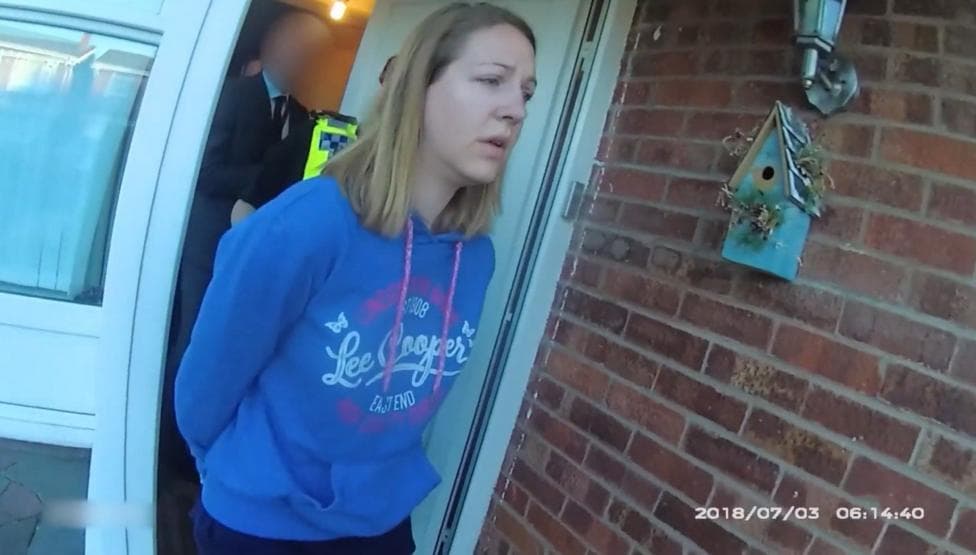
Letby was arrested in 2017 after a 14-month police investigation, at which point she was 28 years old. She faced arrest three times during the inquiry process before being charged with multiple counts of murder and attempted murder in November 2020. Her trial at Manchester Crown Court ran from October 2022 for approximately ten months. The jury convicted her on seven counts of murder and six counts of attempted murder, with evidence establishing that she had attempted to kill one infant on two separate occasions. She was acquitted on two attempted murder counts, and the jury could not reach verdicts on six others.
In 2023, Letby received 14 whole life sentences. A 2024 retrial on one of the previously undecided attempted murder counts resulted in conviction, adding a 15th whole life term.
What systemic failures did the inquiry identify?
Thirlwall found a pervasive misunderstanding of safeguarding obligations among hospital staff.
"No-one seems to have understood that safeguarding action is required when a member of staff is suspected of causing deliberate harm - and does not require colleagues to be sure of guilt."She underscored that
"all the safeguarding guidance in the world makes no difference to the safety of babies if those to whom concerns are expressed do nothing."
The inquiry noted that the NHS currently lacks a unified protocol addressing suspected deliberate harm by staff members. This absence of standardised procedure contributed to the ad-hoc, ineffective responses that characterised the Countess of Chester Hospital's handling of concerns about Letby.
What recommendations has the inquiry made?
Thirlwall's report contains 17 formal recommendations aimed at preventing similar failures. She called for neonatal unit cots and incubators to be equipped with baby monitors to create continuous visual records. Access to insulin—the substance Letby was convicted of administering to two of her victims—should be restricted through biometric identification systems or CCTV surveillance.
The inquiry recommended creation of a formal
"suspicion of deliberate harm"policy that specifies the steps managers must take when concerns arise. NHS staff should be contractually bound to comply with this policy and other safeguarding guidance, establishing clear legal obligations rather than relying on voluntary adherence.
What happens next?
Lady Justice Thirlwall delivered public remarks at the report's publication in Liverpool on 15 September 2026, with proceedings streamed live. The Criminal Cases Review Commission is expected to examine the inquiry's findings closely should any future application for review of Letby's convictions be submitted. Related inquests into the deaths were previously scheduled for May 2027, allowing time for the inquiry's conclusions to inform those proceedings.