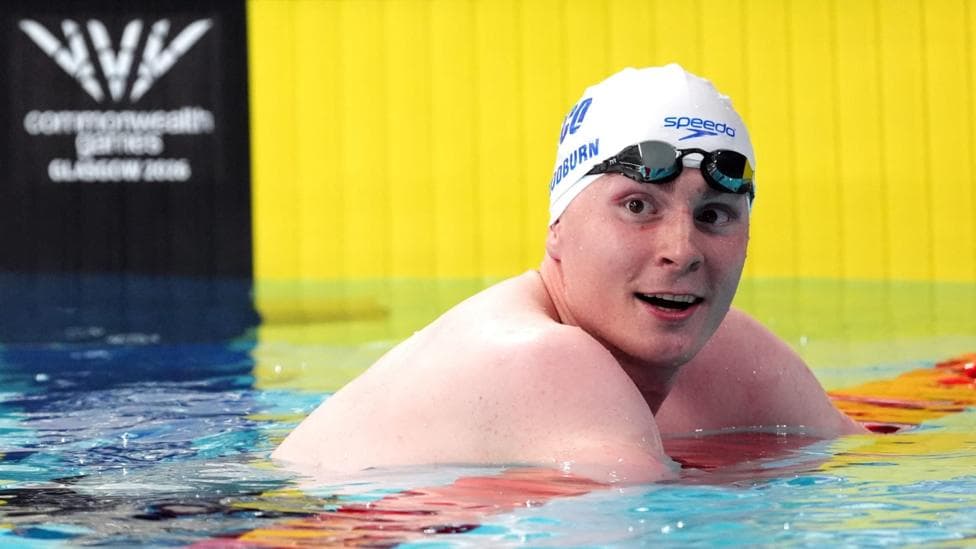
Archie Goodburn, a Scottish competitive swimmer diagnosed with three inoperable brain tumours two years ago, is scheduled to meet Prime Minister Andy Burnham to press for increased investment in brain cancer research and treatment. The 25-year-old made an emotional appeal during a television appearance, describing the condition as causing "unbearable suffering" to patients and their families, and calling for systemic changes to how the UK approaches rare brain cancers.
Goodburn's diagnosis came in 2024 after he experienced numbness and seizures while training for the Olympic trials. Medical tests revealed three large oligodendrogliomas, a rare type of cancer affecting the brain and spinal cord. He underwent chemotherapy and radiotherapy, but surgery to remove the tumours proved impossible. Since July 2025, he has been taking vorasidenib, a drug that has halted the growth of his tumours, though he initially had to fight for access to the medication.
During his appearance on a national broadcaster's breakfast programme, Goodburn made an impassioned case for policy reform.
"Please establish a national brain cancer lead and give us a chance to fight for our lives because the things that patients are going through out there are unbelievable and so unjust,"he said. He highlighted the disparity in available treatments, noting that
"There are clinical trials around the world, in the US, in Australia, in China, that could change lives. We are not seeing them in the UK and it is unfair and unjust."
Goodburn's advocacy has gained significant traction. His petition calling for a full-time national brain cancer lead passed 100,000 signatures and was debated in Parliament earlier in 2026. The swimmer, who reached the final of the 50m breaststroke at the 2026 Commonwealth Games in Glasgow, has become a prominent voice for the brain tumour community.
What funding gap exists in brain cancer research?
Brain tumour research receives a disproportionately small share of national cancer funding. According to analysis by Brain Tumour Research, charities provide 74% of brain tumour research funding, while government provides 26%. This funding imbalance reflects a broader historical pattern: between 2002 and 2021, brain tumours received just 1% of national cancer research funding, according to figures cited by campaigners. The government has stated that £45.2 million has been spent on brain cancer and tumour research since its 2018 pledge, but advocates argue this remains insufficient given the disease's impact.
Charity Brain Tumour Research has identified the disease as the cancer most likely to kill patients under 40 in the UK, yet it remains chronically underfunded compared to other malignancies. Goodburn's calls for a dedicated national brain cancer lead aim to address this systemic neglect by creating a focused point of responsibility for research and clinical trial access.
What legislative progress has been made?
The Rare Cancers Bill, led by Edinburgh South West MP Scott Arthur, became law earlier in 2026. The legislation aims to incentivise research and investment into rare types of cancer, defined as those affecting fewer than 1 in every 2,000 people. Oligodendrogliomas fall within this definition, making the act relevant to Goodburn's condition.
However, Goodburn and his supporters argue the legislation does not go far enough.
"We cannot accept the status quo in the system, we cannot be risk-averse. People are dying,"he said ahead of his meeting with the prime minister. Arthur acknowledged the act's importance but recognised the potential for further progress.
"There is real opportunity in the sector to dismantle the barriers to research that charities, clinicians, and researchers have known about for decades,"he said, expressing hope that Goodburn's meeting with Burnham could catalyse additional action.
What is the government's current position?
According to reporting on the meeting announcement, the Department of Health and Social Care stated that the National Cancer Plan includes faster access to clinical trials, a national clinical lead for rare cancers and a rapid brain tumour test. The department indicated that ministers were considering what further improvements could be made.
Brain tumour experts and scientists have urged the government to make a renewed commitment to research, innovation and faster access to effective treatments ahead of Goodburn's meeting with the prime minister, according to reports from the announcement. This coordinated pressure from the medical and research community suggests broad support for the changes Goodburn is advocating.
What happens next?
The meeting between Goodburn and Prime Minister Burnham was scheduled for Wednesday, 14 October 2026, according to reports of the planned discussion. Goodburn has described the meeting as a
"unique opportunity for change"and expressed hope that his advocacy could inspire broader action.
"My advocacy has opened doors to have conversations at the highest level of government about the injustices faced by the brain tumour community and campaign for change for myself and for them. But I hope I can also inspire people on an individual level,"he said.
The outcome of this meeting could shape policy direction on brain cancer research funding, clinical trial access, and the establishment of dedicated leadership structures within the health system. Goodburn's combination of personal experience, public profile as a Commonwealth Games athlete, and sustained advocacy has positioned him as a significant voice in pushing for systemic reform in how the UK addresses rare brain cancers.