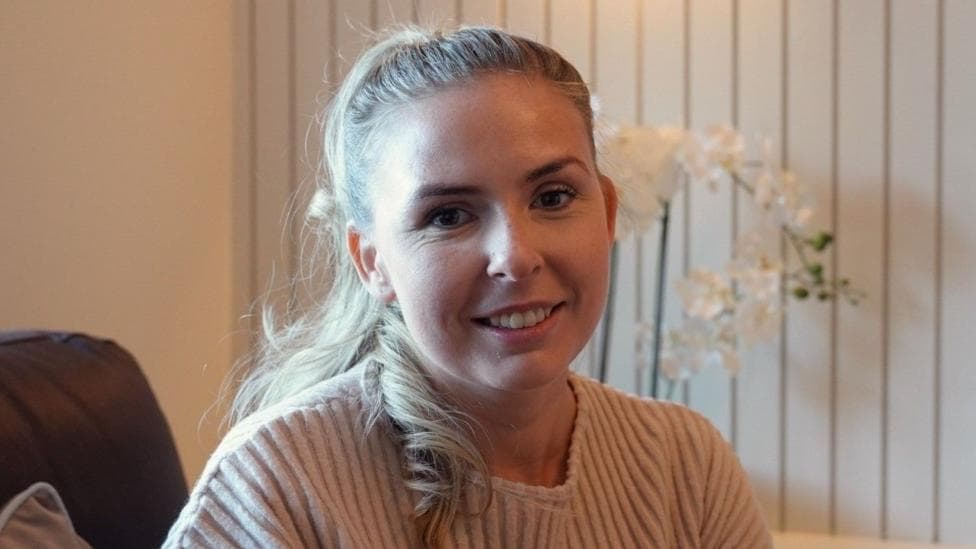
Romi Loffler communicates by spelling out words one letter at a time through eye movements, a process that typically consumes roughly thirty minutes per sentence. The 21-year-old resident of Netherlee in East Renfrewshire lives with Rett Syndrome, a rare genetic neurological condition that prevents speech and voluntary movement while bringing additional complications such as seizure disorders.
For decades, medical professionals and educators assumed that individuals with Rett Syndrome experienced severe intellectual impairment. Romi is working to overturn this misconception. She relies on specialised eye-tracking technology to express herself and has already demonstrated her academic capability by completing coursework for a National 4 history qualification, which she obtained the previous year.
Her next objective was to advance to National 5 level, the higher qualification tier that would require sitting a formal examination. That ambition has been blocked by Qualifications Scotland, the body responsible for Scotland's qualifications framework, which declined the family's requests for necessary accommodations.

What adjustments did Romi's family request?
Beginning approximately eighteen months before the scheduled exam date, Romi's college and parents initiated formal discussions with the qualifications authority to explore possible modifications. They proposed that Romi be permitted to complete the examination across multiple sittings—potentially spanning weeks or months—answering one question at a time rather than the entire paper in a single session. Although this arrangement would mean Romi taking a different exam paper from other National 5 candidates, the assessment would remain at the same academic standard.
The family also requested permission for Romi to use a pre-approved vocabulary list of relevant terms, which would eliminate the need to spell out each individual letter and substantially reduce the cognitive and physical burden of the examination process.
Why did Qualifications Scotland refuse?
The qualifications body rejected both proposals. However, their decision stands in stark contrast to recent developments south of the border. Two young people using eye-gaze technology have successfully completed GCSE examinations in England during the current year, with one student who has cerebral palsy taking five months to finish the exam.
Romi's mother, Gael Gordon, expressed her frustration at this inconsistency:
If it can be done for GCSEs, I simply don't understand why it can't be done for Nat 5.
Qualifications Scotland suggested instead that Romi complete the entire examination in one continuous session. Her mother dismissed this as impractical, explaining that the mental and physical exhaustion of communicating through eye movements makes such an arrangement impossible. The qualifications body also raised concerns that granting extended time and question-by-question completion might provide Romi with an unfair advantage relative to other candidates.

What does Romi's family say about fairness?
Gael Gordon rejected the notion that her daughter would gain an unfair edge.
I think she is starting from a position of such incredible disadvantage that just getting her to the starting line is incredibly difficult. She is not wanting to be given it and given a pat on the head. She wants to sit the exam in a way she can demonstrate everything she knows. It is about proving her capacity and proving her worth and showing what she can do because if she gets that certificate no-one can take that away from her.
Romi herself took time to communicate her perspective through her eye-gaze system.
Other students got the chance to get their National 5 and I didn't. That was unfair. I deserved the same chance as everyone else. They shouldn't expect us to fit around their exam system. The exam system should adapt so that disabled students have a fair chance to show what they know. People sometimes underestimate what I can do because I am disabled. A recognised qualification gives me evidence of what I can do.
What support has Romi received from disability advocates?
Tracey Campbell, representing Rett UK, the national charity for individuals with the condition, condemned the decision as discriminatory.
To have these extra barriers put in place is completely unfair and unjust. What has been fabulous about exam boards in England is that people have been allowed to sit their exams over a long period of time, one question at a time.Campbell noted that Romi has faced exclusion and dismissal throughout her life and that this qualification would provide tangible evidence of her capabilities.
What is the college's position?
Glasgow Clyde College, where Romi is enrolled, has expressed strong support for her candidacy. Claire Donaghey, the institution's assistant principal for arts and continuing education, stated:
Despite considerable discussion with Qualifications Scotland, the mitigating arrangements we have proposed have not been deemed compatible with these requirements. We remain fully committed to supporting Romi and will continue to work constructively with her, her family and Qualifications Scotland to explore every available option and achieve the best possible outcome for her.
What is Qualifications Scotland's response?
The qualifications body maintains that it is committed to implementing reasonable adjustments enabling disabled learners to have equal opportunity to demonstrate their knowledge and abilities. A spokesperson noted that over 39,000 learners benefited from assessment arrangements during the current year. The organisation also emphasised that it has a responsibility to preserve the credibility of qualifications and must ensure that any reasonable adjustments do not compromise academic standards.
Qualifications Scotland was established under the Education (Scotland) Act 2025, taking on the role previously held by other bodies in managing Scotland's qualifications framework. The organisation continues to develop its policies around accessibility and assessment arrangements for learners with additional support needs.
Key Facts
- Romi Loffler has Rett Syndrome, a genetic neurological disorder that prevents speech and movement but does not necessarily affect cognitive ability
- She communicates using eye-gaze technology, spelling out words letter-by-letter, a process requiring approximately thirty minutes per sentence
- She successfully completed National 4 history coursework but was denied the opportunity to sit the National 5 examination with requested accommodations
- Two students using eye-gaze technology have successfully completed GCSE exams in England this year, with one taking five months to finish
- Qualifications Scotland cited concerns about maintaining qualification standards and fairness to other candidates in rejecting the accommodation requests