

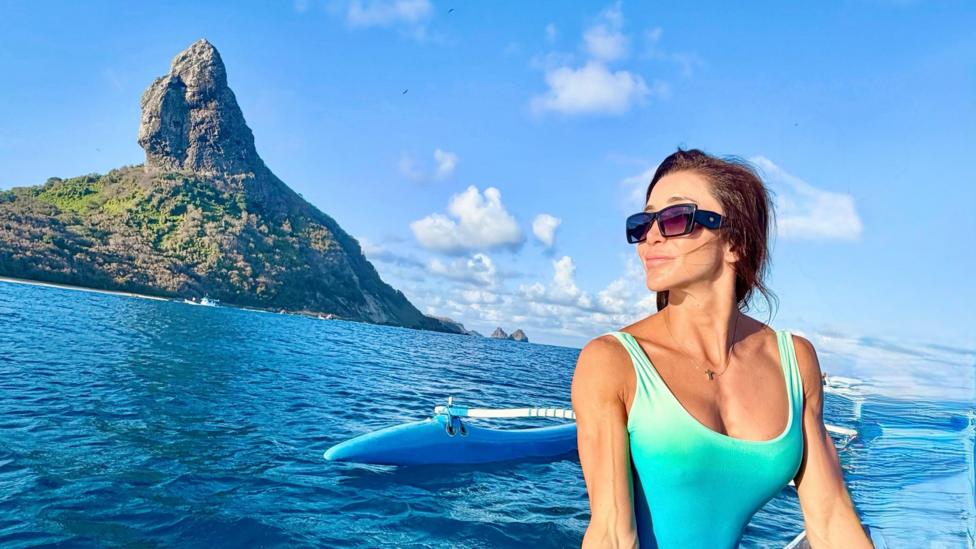
A 37-year-old Brazilian lawyer and social media personality, Tayane Dalazen, was bitten on the thigh by a nurse shark measuring more than seven feet (two metres) long while diving off the Brazilian coast in April 2025. She escaped after the animal released her following several seconds underwater, sustaining lacerations that she described as "very frightening," and footage of the incident has since been viewed tens of millions of times online.
Dalazen, who is based in Sao Paulo, told reporters she sensed something unusual before the bite occurred.
"I knew something was different because the sharks were on the surface," says Tayane Dalazen, a 37-year old Brazilian lawyer and social media personality.
"There were a lot of them," she says. "Later, I discovered [the tour organisers] were feeding the sharks so that they would interact with the tourists."
What happened during the shark-diving trip?
The lawyer said the pain from the bite was intense in the moment it happened.
"When the shark bit me, the pain was very strong," she says. "I stayed calm because I knew I couldn't fight the animal."
Despite the ordeal, Dalazen maintains she did not set out to create viral content and did not provoke the animal, although she concedes she was positioned too close to the group of sharks.
How common are these incidents becoming?
Shark bites on humans remain statistically very rare, yet at least three social media influencers have been bitten within roughly a year while attempting to film themselves near the animals. In a case that occurred after the original reporting on Dalazen, New Zealand fishing influencer Henry Gibbs survived a shark attack in Fiji in July 2026, later revealing he required four surgeries and a skin graft, according to a celebrity news outlet. A separate account of the same Fiji incident reported that Gibbs was bitten while spearfishing during a dive and was expected to make a full recovery after receiving treatment, as detailed by a European news site covering diving safety. One report on the Fiji case also suggested the shark may have been drawn in by blood released during the spearfishing activity, according to an entertainment news report.
Shark scientist Kristian Parton, who hosts the 'Shark Bytes' YouTube channel, says the frequency of such videos has climbed sharply in recent years.
"I'm seeing these videos every single week now and it's way more than it ever used to be," says shark scientist Kristian Parton. "We're going to see people ending up in really serious incidents with sharks."
In July, a fishing influencer nearly lost his leg after a reef shark attacked him while he was spearfishing, and in December a Chinese content creator was bitten in the Maldives; both incidents were captured on camera. Researchers at the International Shark Attack File, which tracks human-shark interactions globally, say they have observed a marked rise over the past three years in people being bitten while attempting to film sharks. A recent study of "swim with wildlife" expeditions found that influencers and photographers were the group most likely to disregard safety instructions during such tours.
What do the statistics show?
The International Shark Attack File recorded 65 unprovoked shark attacks worldwide in 2025, up from 47 in 2024, according to an environmental news report. The Florida Museum, which maintains the database, describes it as the world's only scientifically documented, comprehensive record of known shark attacks, according to the museum's own research page. A separate 2025 report noted that shark attack deaths climbed above the decade's average that year, with unprovoked bites defined as those occurring in a shark's natural habitat without any prior human contact, as reported by a regional broadcaster.
Despite these year-on-year increases, the broader long-term trend has remained relatively steady. The overall number of unprovoked shark attacks worldwide has held at roughly 70 bites per year for the past three decades, suggesting that while recent figures have ticked upward, the odds of being bitten remain extremely low on a historical basis.
In February 2024, a tourist in the Caribbean lost both hands after a bull shark bit them while they attempted to photograph the animal from shallow water, according to local authorities. Two months later, a snorkeller in Israel carrying a "selfie stick" was killed by sharks, reportedly while trying to capture photographs.

Why are scientists worried about influencer behaviour?
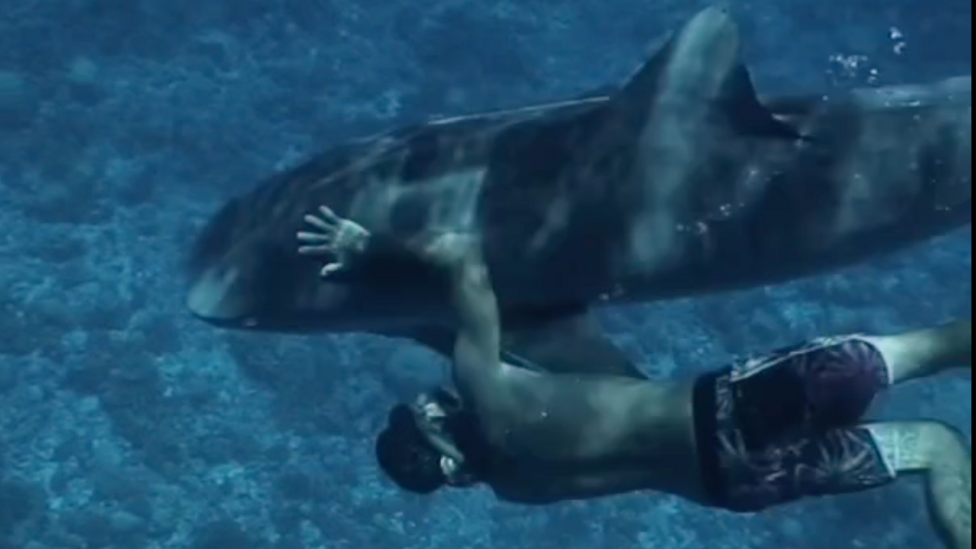
While Dalazen's encounter involved a nurse shark, a species generally regarded as docile, other content creators have been filmed touching tiger sharks and even great white sharks. Parton argues the comparison to other wild predators is instructive.
"We're talking about a true apex predator, a very large wild animal," says Parton. "You wouldn't walk into the Serengeti and try and put your hand on the face of a lion."
He notes that sharks often deliver defensive or "exploratory" bites when an unwelcome human enters their personal space. Beyond the physical danger to people, Parton says human interference can also harm the animals themselves. Scientific studies have found that approaching or touching a shark raises levels of hormones called glucocorticoids, which can weaken the immune system, increase mortality, and cause aborted offspring.
"If you're approaching the shark and stressing it out, whether it be in a nursery habitat, a breeding ground, or a feeding area, you're depriving that shark of an area that's important to it to survive," explains Parton, "and that's definitely a problem."
What do the influencers themselves say?
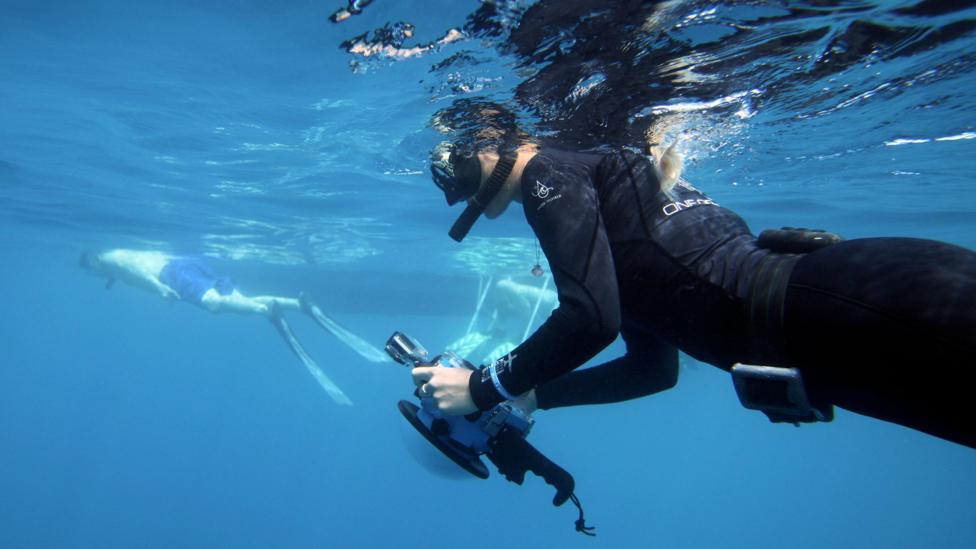
One of the most prominent shark content creators is Ocean Ramsey, a 38-year-old former model who gained widespread attention in 2019 after being photographed swimming alongside one of the largest great white sharks ever recorded. She frequently posts footage of herself touching sharks and grasping their dorsal fins, and currently runs paid shark tours called "Dive with Ocean" from a boat based in Hawaii.
"My intent with all of my content has never been to gain views, it's to gain protection for sharks," Ramsey says. "I've contributed to research articles, data collection... all of my work stems down to education."
She rejects the suggestion that her close contact with the animals is harmful.
"Most of my work and what I share is respecting and observing from a distance," she says. "I observe their behaviour and they choose to interact with me. They always make the first approach."
Asked whether footage of people touching sharks might encourage others to take similar risks, Ramsey placed the responsibility on viewers.
"You've got to give the general public some accountability," Ramsey insists. "I think most people are observing what I'm sharing with an educational message and they're not going out to just replicate that."
Several other content creators interviewed said they were not motivated by views, clicks or revenue, and framed their work as supporting conservation or reshaping public attitudes toward sharks. Shark expert Dr Jack Cooper dismissed such justifications.
"I really cannot explain how going up to a shark and touching it or riding it is doing anything to aid conservation," he says. "All you're doing is showing a shark getting harassed by a human. And that's not promoting any policies about what we could do to reduce overfishing or to give more protections for sharks."
"And it's certainly not providing scientific data that will tell us how the shark populations are doing or what policies might actually help conserve them."
Is public perception of sharks changing?
Eric Clua, a marine biologist at the École Pratique des Hautes Études in Paris who has researched the motivations behind shark bites, says incidents caused by people getting too close to sharks are increasing partly because the public now views the animals as less dangerous than in the past.
"The message transmitted by influencers is 'Look! Touch the shark, nothing will happen to you,'" he says.
Shark swimming and diving tourism continues to grow worldwide. The travel platform TripAdvisor currently lists more than 140 such experiences in the Maldives alone, with some listings marketed explicitly as offering "the ultimate selfie" opportunity with sharks.
What happens next?
No confirmed hearings, policy decisions or scheduled reviews tied to these incidents have been identified in available reporting, according to the Florida Museum's shark attack database. Experts, however, continue to warn that the pursuit of dramatic footage for social media carries genuine physical risk, both for the influencers involved and for the animals they seek out.
Key Facts
- Tayane Dalazen was bitten on the thigh by a nurse shark over seven feet long off Brazil's coast in April 2025 and required treatment for lacerations.
- New Zealand fishing influencer Henry Gibbs survived a shark attack in Fiji in July 2026 and needed four surgeries and a skin graft.
- The International Shark Attack File recorded 65 unprovoked attacks worldwide in 2025, up from 47 in 2024.
- Global unprovoked shark attacks have averaged roughly 70 per year over the past three decades, despite recent upticks.
- TripAdvisor lists more than 140 shark swimming and diving experiences in the Maldives alone.


