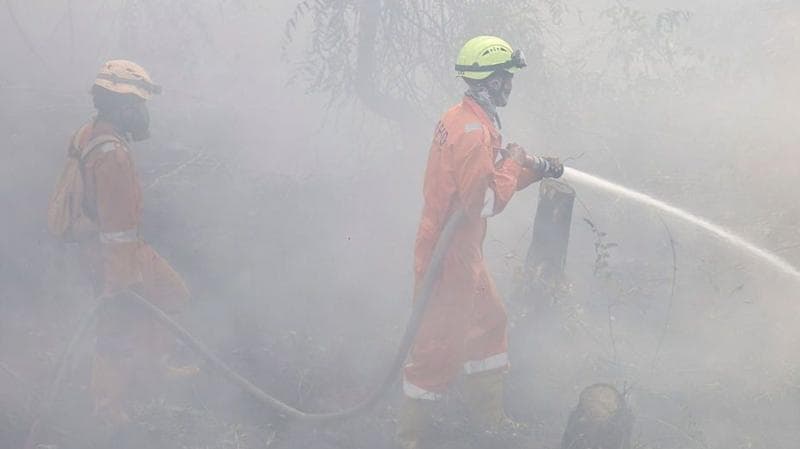
Respiratory illness cases in Indonesia have surged to approximately 174,700 between August and late September, with more than 40,000 affecting young children, as weeks of uncontrolled wildfires continue to blanket the nation and neighbouring countries in hazardous smog. According to health ministry data, the figure represents a dramatic escalation from 113,336 cases recorded on 9 September, underscoring the accelerating public health crisis driven by the fires ravaging Borneo and Sumatra.
The respiratory infections range from mild coughs to severe conditions including bronchitis and pneumonia. Children under five account for more than 20% of reported cases, with approximately 26,545 young patients treated across affected provinces. A clinic in West Kalimantan documented 187 breathing-difficulty cases in the first eleven days of September alone, compared with 422 for the entire month of August, indicating the intensity of the crisis.
How widespread is the exposure to haze?
More than 12.5 million people have been exposed to toxic smog across seven provinces, according to health ministry figures. The fires have blanketed parts of Indonesia, Malaysia and Singapore in air quality conditions classified as "unhealthy," with pollution levels reaching dangerous concentrations. The haze has extended as far as the Philippines, where local officials have urged residents to remain indoors, and Singapore, where authorities have begun issuing daily haze advisories.
This crisis builds on earlier warnings about the severity of the outbreak. Previous reporting documented pollution levels reaching 15 times above World Health Organization standards as the El Niño phenomenon intensified in early September.
Why are the fires so difficult to control?
Indonesia has deployed more than 54,000 officials and dozens of aircraft to Borneo and Sumatra for water-bombing operations, yet the fires persist due to the vast territory involved and the challenging conditions presented by peatland terrain. Underground smouldering in peatland areas continues to drive hazardous pollution levels across the region, making traditional firefighting methods less effective.
The scale of the disaster has been amplified by a so-called "Godzilla" El Niño event, which has created extremely dry conditions across Southeast Asia. The independent forest monitoring platform Nusantara Atlas detected approximately 734,000 hotspots across Indonesia as of mid-September—a figure exceeding 2019 levels, one of the nation's worst wildfire seasons on record, by more than 30%. Since January, at least 895,657 hectares of land, nearly six times the size of Greater London, have burned.

Indonesia's Cabinet Secretary Teddy Indra Wijaya stated on 8 September:
"From the air to the ground, all forces continue to move. Everything is being done to extinguish the fires, reduce the impact of the smoke, and, most importantly, protect the public from the threat of forest and land fires."
What international assistance is being provided?
Japan's Self-Defense Forces arrived in Borneo earlier in September to assist with firefighting efforts, including participation in cloud-seeding operations. Indonesia has conducted several rounds of cloud seeding in recent weeks, a technique involving the dispersal of salt crystals or silver iodide into clouds to encourage rainfall. However, meteorologists remain divided on the effectiveness of this approach.
In the Malaysian state of Sarawak, one of the worst-affected areas outside Indonesia, authorities launched a five-day cloud-seeding operation in mid-September. Beyond addressing the immediate haze crisis, the operation aimed to boost declining water levels at hydroelectric dams ahead of a severe dry spell forecast for October. Sarawak's Deputy Premier Douglas Uggah Embas told reporters:
"October might be hotter and drier. We want to increase the water levels as much as possible while we still can."
What impact have the fires had on wildlife and communities?
The toxic smog has devastated wildlife populations, particularly critically endangered orangutans. Late in August, an Indonesia-based wildlife foundation released footage showing an orangutan in severe distress on a palm oil plantation in West Kalimantan. The animal was discovered by a farmer, rescued and provided emergency treatment for hypoxia, but subsequently died.
The wildfires have triggered widespread school closures and a surge in hospital admissions across Indonesia. Indigenous and civil society groups in West Kalimantan filed a class action suit against the central government and local administrations, alleging deliberate negligence in failing to adequately address the fires. The group's lawyer Glorio Sanen stated:
"This is a disaster that occurs every year. This recurring pattern proves our view that the defendants knew about the potential haze disaster and the risks of disaster from forest and land fires."
When will the crisis end?
According to reporting on statements from Indonesia's environment minister, the wildfire season may persist until early November. This extended timeline means respiratory health risks and air quality degradation will likely continue affecting millions across the region for several additional weeks.
Indonesia regularly experiences wildfires during its annual dry season, typically spanning July through October. However, the health ministry's latest data showing 174,694 acute respiratory infection cases between 1 August and 21 September across seven provinces demonstrates that this year's crisis has reached unprecedented severity. The combination of El Niño-driven drought conditions and peatland fire dynamics has created a public health emergency requiring sustained international coordination and resources.
Key Facts
- Respiratory illness cases reached 174,700 by late September, with more than 40,000 involving young children
- More than 12.5 million people across seven provinces have been exposed to hazardous haze
- Indonesia has deployed 54,000 officials and dozens of aircraft for firefighting, with support from Japan's Self-Defense Forces
- Approximately 734,000 hotspots have been detected, exceeding 2019 levels by over 30%
- The wildfire season is forecast to continue until early November