
Vaping among secondary school pupils in Wales has declined significantly for the first time in several years, according to a fresh survey of more than 130,000 young people. The shift marks a reversal of a trend that had seen youth vaping rise sharply in previous years, with public health officials attributing the change partly to the ban on disposable vapes introduced in June 2025.
Data from the biennial student health and well-being survey, conducted by Public Health Wales, Cardiff University and the Welsh government, reveals that 9,100 learners in Years 7 to 11 now vape regularly—a reduction of 3,200 from the 2023 survey. Over the same period, the proportion of pupils who reported ever trying a vape fell from 25.7% to 21%, while those describing themselves as regular vapers or smokers dropped from 8% to 5.9%. Regular smoking rates have halved to just 1,600 pupils, with only 1.8% now smoking on a regular basis.
The survey relies on self-reported data from participants, which means findings depend on the honesty and accurate recollection of young people, but the results offer a snapshot of behaviour patterns spanning nearly a decade since vaping questions were first added in 2017.
What is driving the decline?
Several factors appear to be contributing to the falling rates. School-based education initiatives highlighting the health risks of vaping have proven influential, with pupils citing lessons about conditions such as "popcorn lung" as powerful deterrents. Tighter school policies, including restrictions on toilet breaks to prevent vaping in cubicles, have also reduced opportunities for use during the school day.
Peer attitudes are shifting as well. Younger cohorts appear to view vaping less as a trend and more as a health risk, with some pupils actively encouraging friends to quit. The normalisation of vaping that characterised earlier years appears to be reversing, particularly among older secondary students who may have avoided the initial wave of popularity.

Harrison, a 14-year-old Year 10 student at Whitmore High School in Barry, explained that health concerns and the impact on athletic performance have been significant factors in his decision not to vape.
Social media comes into it, a lot of people on Youtube and TikTok do it, they're smoking or vaping and people think that's cool to do, he said, though he acknowledged that despite the illegality of vape sales to under-18s, access remains possible for some young people.
Amelie, 17, from Barry Sixth Form, suggested that her peer group's greater health consciousness compared to younger year groups acts as a deterrent. She also highlighted the role of school support:
Our school is very supportive, they've taken the correct steps to educate us, including the health education lessons, and they brought in a demonstration of what our lungs could look like - the 'popcorn' lung - so that helped.

Anabella, 14, observed a clear generational shift in attitudes.
I've seen a few people start to quit, people are starting to realise the health risks, and they're seeing the people they're around that do that sort of thing, aren't the people they should be around. Everyone was doing it so it was a trend, and now that it's died down, less people are starting in the first place.

Why are girls vaping at higher rates than boys?
Despite the overall decline, the survey found that girls continue to vape at higher rates than boys. Marketing and product design appear to play a role in this disparity. Amelie attributed the difference to targeted marketing strategies:
I'd say it's because of the marketing and the product, colourful packages, flavours. I'd say vaping is more targeted towards girls than boys.
Henriette Bertheux, responsible for personal and social education at Whitmore High School, suggested an additional factor: higher participation rates among boys in extra-curricular sports may contribute to lower vaping prevalence in that group, as young athletes are more likely to be aware of the performance-related health impacts.
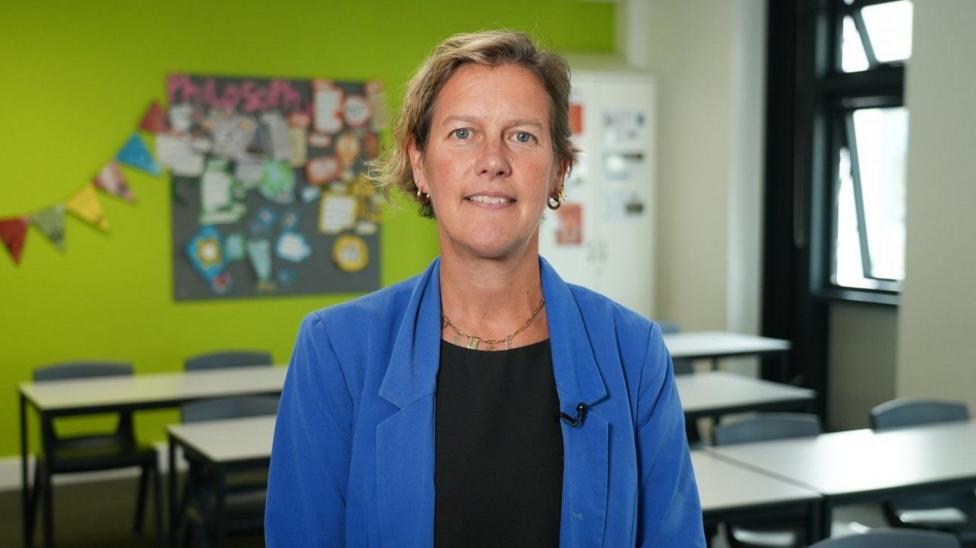
Bertheux described the school's multi-pronged approach to tackling vaping.
We had a year group that were targetted quite heavily when they were in year 7 and 8, it was coming on social media and they were susceptible to that, she explained, noting that cohort had since left school.
We've definitely seen a drop in the younger years.The combination of education about health implications and stricter rules governing toilet breaks had proved effective in reducing the problem, she added.
What role has legislation played?
The decline in vaping coincides with the introduction of the disposable vape ban, which took effect on 1 June 2025 and applies to both nicotine and non-nicotine single-use products. The ban was introduced because single-use vapes were linked to youth vaping and environmental harm, including litter and plastic pollution.
Public health officials have cautioned, however, that the full impact of the legislation is still being evaluated. Mary-Ann McKibben from Public Health Wales outlined the broader policy context:
We've had the introduction of some quite strong legislation with the ban on disposable vapes last year and then a lot of publicity surrounding the Tobacco and Vapes Act that will be coming into place with restrictions on packaging, marketing and content and flavours of vapes going forward. That all influences behaviour change, together with a rising awareness of the harm that vapes can cause.

McKibben stressed the importance of supporting young people who have been using nicotine-containing vapes, given their addictive properties.
Technically young people shouldn't be able to get hold of vapes through legitimate means if they're under 18, so often they are at risk of illicit products that are sold on the black market that may contain all sorts of contents that are even more toxic than the normal vapes. So be very, very careful in terms of what you're consuming because it could really damage your health.
What is the broader context?
The decline in Wales reflects a reversal of earlier trends. A 2024 Welsh Government impact assessment noted that the number of children and young people using vapes had tripled in the previous three years, which formed part of the policy backdrop for the later ban. In January 2026, Public Health Wales published new advice for secondary schools on vaping and urged schools to expand smoking and behaviour policies to address it.
The latest data also reflects broader health concerns about youth vaping. Earlier research has highlighted the risks posed by vaping to young people's respiratory health and development, strengthening the case for regulatory action.
What happens next?
The UK-wide Tobacco and Vapes Bill 2024 remains the key upcoming legislative development, with the Welsh government indicating it will introduce further restrictions on vape sales to under-18s and ban vending machine sales of vapes once the legislation comes into force. Schools are expected to continue their education and enforcement efforts, while public health agencies will monitor whether the current downward trend in youth vaping continues.
Key Facts
- Regular vaping among Years 7 to 11 pupils fell from 12,300 in 2023 to 9,100 in the latest survey, a reduction of 3,200 young people
- The proportion of pupils who have ever tried a vape declined from 25.7% to 21% between 2023 and the latest survey
- Regular smoking rates have halved to 1,600 pupils, with only 1.8% now smoking regularly
- The disposable vape ban came into effect on 1 June 2025 and applies to both nicotine and non-nicotine single-use products
- Girls continue to vape at higher rates than boys, with marketing and product design cited as contributing factors