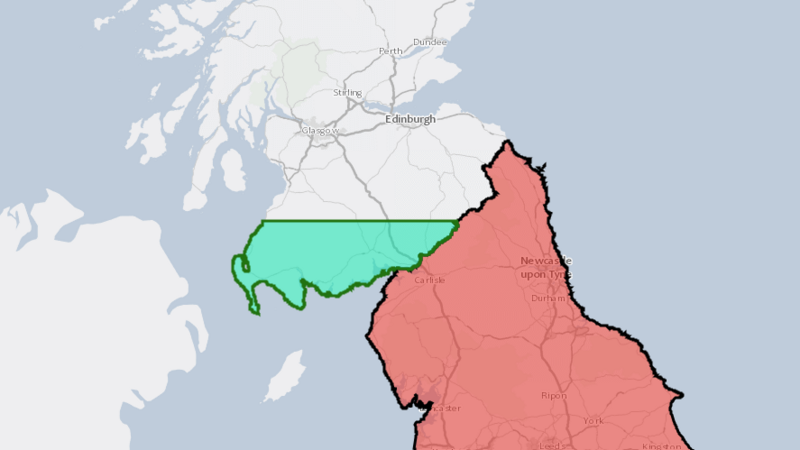
Scottish ministers have introduced temporary restrictions on moving livestock in Dumfries and Galloway after bluetongue virus was confirmed on six farms in the region, including one near Lockerbie. The measures follow the detection of the disease in a lamb at Creetown, 54 miles (87km) away, which became Scotland's first confirmed case earlier this month, and are designed to slow further spread of the potentially fatal virus.
Investigators believe strong winds carried virus-infected midges from England into southern Scotland, seeding the outbreak. Under the new rules, all movement of animals susceptible to bluetongue — chiefly sheep, cattle and goats — within the restricted area can now only happen under licence, alongside increased surveillance and testing of animals in the vicinity.
Susceptible animals travelling from anywhere in Scotland into the wider UK restriction zone must now return to Scotland on the same day, a significant tightening of the previous rule that allowed up to four days away. From 10 September 2026, livestock moving into Scotland from elsewhere in the UK will also need to be vaccinated before travel, with an exemption for animals returning under the same-day rule.
What is bluetongue and how does it affect animals?
Bluetongue serotype 3 (BTV3) poses no risk to human health or food safety, but it can be lethal in sheep and cause fertility problems in cattle. Affected animals may show nasal discharge, swelling and redness around the lips, nose and muzzle, lameness or a reluctance to stand, reduced milk yield, and diarrhoea in cattle. Confirmed cases must be reported to the UK government's Animal and Plant Health Agency, which issues daily updates on the outbreak.
The number of confirmed cases does not equate to the number of animals affected. According to the Scottish government, seven sheep and 13 cattle in Scotland have been affected by the virus, and some infected animals have been euthanised on welfare grounds. England currently has 496 recorded cases and Wales has 15.
How does this fit into the wider outbreak?
Scotland's outbreak began earlier this year when a Dumfries and Galloway lamb tested positive, prompting the country's first confirmed case amid a wider UK outbreak that had already surpassed 330 cases. A third case followed near Creetown, though official figures at the time listed only two Scottish cases as investigators worked to confirm the scale of spread. Days later, a cow on a fourth affected farm became Scotland's first confirmed bovine case, and the farmer at the centre of the outbreak, Fiona Johnson, spoke publicly about the impact on her Creetown farm as vaccine stocks began to run low.

There is some inconsistency in the official record of how the outbreak has progressed. According to the Scottish government's latest situation update, only four holdings in Scotland have been affected, with five animals confirmed positive — figures lower than the six farms and 20 affected animals (seven sheep and 13 cattle) cited elsewhere. Separately, UK government guidance states that a further case in a bovine animal in Dumfries and Galloway was confirmed on 18 August 2026 through epidemiological follow-up linked to an earlier case, and that this animal showed no clinical signs of the disease. There is also some variation over when Scotland's outbreak actually began: the Scottish government's own guidance states the first Scottish case was confirmed on 8 August 2026, whereas earlier reporting dated the first case to 11 August 2026.
Why has the outbreak reached Scotland now?
Bluetongue is spread by biting midges, and Scotland's control period is set to run from 1 June to 9 September 2026, reflecting the fact that the risk of transmission declines as temperatures fall in autumn, according to Scottish government guidance. The wider 2026 to 2027 outbreak season is recorded as having begun with the first English cases on 10 July 2026, before spreading north. Movement controls in Scotland apply specifically to susceptible animals and germinal products travelling from bluetongue Restricted Zones in England, Wales, Northern Ireland and the Isle of Man.
Separate guidance also states that any animal that has spent time on a premises with a confirmed case within the previous six months cannot be moved into Scotland to live there permanently, even if it later tests negative, according to the Scottish government's movement restriction rules.
The Scottish government said it was continuing to work closely with the livestock industry to manage the outbreak. Agriculture minister Jim Fairlie acknowledged the strain the restrictions would place on farmers.
I do not underestimate the pressure this places on those affected. I am very grateful for their continued constructive engagement as we work together to introduce an effective control strategy while minimising restrictions on businesses as far as possible.
We will ensure that control measures are proportionate. This is a dynamic situation while further investigations are carried out, and we will continue to monitor it closely, considering further control measures as necessary in partnership with industry.
Since the first Scottish case emerged, veterinary practices have reported running short of bluetongue vaccines amid a sudden surge in demand from farmers seeking to protect their herds and flocks.
Vaccination remains our best long-term defence, and I would strongly encourage all farmers to discuss this with their vets and place vaccine orders now to ensure access to supplies.
We continue to work with other UK nations, manufacturers and distributors to ensure timely access to vaccine, with more doses being brought in from continental Europe and additional supplies now in production.
What happens next?
From 22 August 2026, a same-day return rule takes effect for animals attending shows or markets in bluetongue-affected areas of England and Wales, according to Scottish government guidance. The current movement controls are expected to remain unchanged until at least 9 September 2026, after which the requirement for susceptible livestock entering Scotland from a bluetongue control zone to be vaccinated is due to take effect on 10 September 2026, subject to limited exemptions.
- Bluetongue has been confirmed on six farms in Dumfries and Galloway, including one near Lockerbie.
- Seven sheep and 13 cattle have been affected in Scotland, according to the Scottish government, though separate official figures cite only five confirmed positive animals across four holdings.
- England has recorded 496 cases and Wales 15 to date.
- From 10 September 2026, livestock moving into Scotland from elsewhere in the UK will need to be vaccinated, except under the same-day return exemption.
- Movement controls are due to remain in place until at least 9 September 2026 as officials continue to monitor the outbreak.