Summer 2026 is on track to become the warmest ever recorded in the UK, with the Met Office confirming that only average temperatures for the rest of August would be enough to break last year's record. Provisional figures show the UK's mean temperature for meteorological summer so far (1 June to 10 August 2026) stands at 16.48C, some 1.88C above the 1991-2020 average, and above the 16.10C recorded across the whole of summer 2025.
The persistently high readings, which factor in both daytime highs and overnight lows, align with long-running scientific evidence that summers in the UK are becoming hotter and drier as a result of climate change.
What has made this summer so exceptional?
This summer has been marked by a relentless run of heatwaves. A late-spring hot spell set a fresh May temperature record, and this was followed by further heatwaves in June and a particularly prolonged spell in July that stretched over two weeks in some regions. Additional short bursts of extreme heat have pushed several areas past heatwave thresholds repeatedly since June.
The Met Office has now confirmed that the record for the number of days reaching 30C or higher in a single year has been broken. After several locations exceeded 30C on Sunday 9 August 2026, a total of 35 days this year have now reached that threshold, beating the previous benchmark of 34 days set in 1995. That tally is widely expected to be topped again on Wednesday and Thursday, with temperatures forecast to peak in the mid-to-high 30s Celsius across the Midlands and south-east England.
Separately, Reading University's Atmospheric Observatory recorded 15 days reaching 30C in 2026, compared with 14 days during the benchmark hot summer of 1976, according to figures reported by BBC News. The Met Office has also said the UK has already seen a record nine days above 34C this year, according to a report citing Met Office data.
The UK's earlier coverage tracked this pattern as it developed: temperatures were already easing after one spike when forecasters warned of a fresh heatwave developing as July began, with highs expected to reach the mid-30s Celsius. Before that, the UK had already logged its hottest June day on record at 36.1C in Hampshire, a reading that surpassed marks set in 1976 and 1957 and triggered widespread school closures and travel disruption. That June heat also prompted rare red heat warnings for parts of England and Wales, and was later confirmed as the UK's hottest June day on record with temperatures surpassing 35C, before cooler conditions and thunderstorms moved in, as detailed in our coverage of the record June heat and its aftermath. That June spell followed on from a May in which the UK broke its May heat record twice, with temperatures soaring above 35C, causing transport delays, water shortages in Kent and multiple heat-related fatalities.
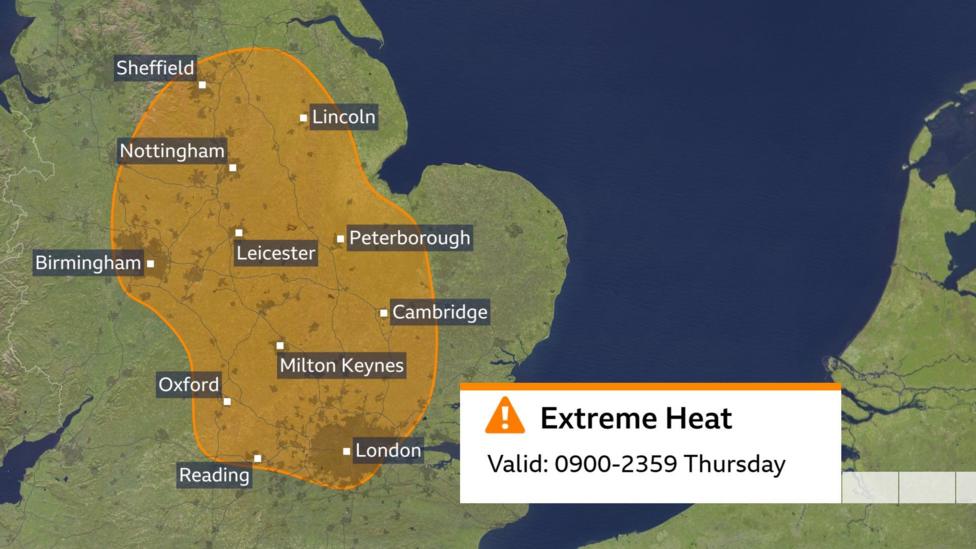
So far this season, the highest temperature recorded has been 38C at Lingwood in Norfolk on 26 June 2026. The Met Office has now issued an amber extreme heat warning for parts of England, covering Thursday, and it remains possible that the Norfolk high could be matched or exceeded later this week. Forecasters say temperatures could potentially reach 38C again on Thursday, which would equal the highest reading of the summer so far and would mark the hottest August day since 2003, when 38.5C was recorded. The last time temperatures climbed above 36C in August was in 2020, when 36.4C was measured at Heathrow and Kew Gardens.
Both England and Wales are individually on course for their own warmest summers on record. England's mean summer temperature currently stands at 18.19C, 2.46C above average, while Wales has recorded 16.8C so far, 2.17C above its long-term average.
How does this compare with past extremes?
Long-standing heat benchmarks have fallen one after another this year. According to the Met Office, 2026 is the first year on record in which temperatures of 35C or higher have been reached in three separate calendar months — May, June and July — and forecasters now expect a fourth month to be added to that tally given the 38C predicted for Thursday, according to the Met Office's mid-summer review. If confirmed, this would be the fourth calendar month this year to record 35C or more, which forecasters describe as unprecedented.
The same review noted that by 15 July 2026, the UK had already logged more days above 30C than during the entirety of 1976, a year still remembered for its long and intense heatwave. Met Office science manager Amy Doherty was quoted in the same review saying:
We're only halfway through summer, yet 2026 has already delivered more days above 30C than the whole of 1976 and become the first year on record to reach 35C in May, June and July.
Separately, the Met Office has said that June 2026 was England's warmest June on record, while the UK as a whole and Wales individually recorded their second-warmest June since comparable records began in 1884, according to Met Office data. A national broadcaster's weather report also stated that 2026 has produced 37 consecutive days of heatwave conditions, according to a BBC weather report.
July itself proved historic in another respect: it was the driest July on record for both England and Wales since record-keeping began in 1836, with southern England experiencing its driest calendar month ever recorded.
Met Office senior scientist Mike Kendon said the figures illustrate a broader shift in the country's climate.
These statistics are a clear reminder – if one were needed – of the stark changes that we are seeing in the UK's climate.
He added that no single hot spell determines a seasonal record, but that the cumulative effect of sustained warmth has driven the exceptional averages seen this year.
While individual hot spells do not determine seasonal records on their own, sustained periods of warmth throughout the summer have contributed to the exceptionally high average temperatures we've seen so far.
Why has this pattern been building for months?
Concerns about the UK's readiness for repeated extreme heat were raised earlier in the summer, when temperatures first reached 37C and prompted questions over whether the UK's infrastructure could cope with rising summer temperatures. Around the same time, forecasters also flagged the likelihood of the UK breaking its June temperature record outright, which led to rare red heat warnings being issued for parts of England and Wales amid fears over health and infrastructure risks.
This year's extremes also sit within a longer documented trend. The Met Office's climate summary for 2025 had already identified that year as the UK's warmest spring and summer on record, with every month from March to August ranking among the ten warmest on record for that month, according to Met Office climate analysis. The organisation has since described climate extremes as becoming the new normal for the UK, framing this summer's heat as part of an ongoing pattern rather than an isolated event, according to the same Met Office assessment. The Met Office has separately published an update describing the heatwave continuing with an unprecedented run of 35C days, according to the Met Office's media centre.
How severe is the resulting drought?
The extended dry, sunny conditions have triggered drought declarations across more than two-thirds of England and the whole of Wales. The National Drought Group has confirmed that all of England is now experiencing pressure on its water resources.
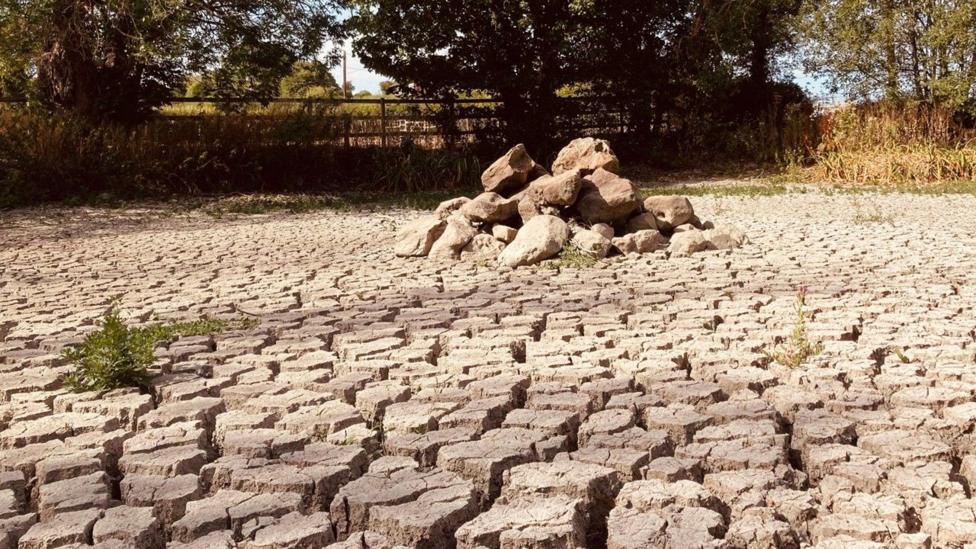
An estimated 45 million people in England are currently living in a designated drought area, and more than 27 million are subject to water use restrictions. No rain is forecast across most of England and Wales for the remainder of this week, though forecasts for Sunday show early signs of an Atlantic weather system bringing rain-bearing fronts into Wales and southern England. While this rainfall is not expected to be heavy or long-lasting, it could mark the first meaningful precipitation for many areas in nearly two months. Meteorologists note that months of above-average rainfall would be needed to meaningfully alleviate the drought.
What is driving this pattern of heat?
Persistent high-pressure systems have dominated the UK's weather for much of the past few months, an unusual pattern but one that scientists have long predicted as a consequence of climate change. As global average temperatures rise, driven mainly by the burning of fossil fuels, hot weather is becoming both more frequent and more intense.
If forecasts for this week hold, temperatures will have surpassed 35C in May, June, July and August in the same year — a combination that was extremely rare for any individual month during the late 20th century. Scientists caution that although year-to-year variation will continue, the underlying trend points toward progressively hotter summers as carbon emissions continue to warm the planet, meaning future heatwaves are likely to reach even higher peaks than similar weather patterns produced in the past.
What is the government doing in response?
The scale of this summer's heat, wildfires and drought has prompted a direct government response. Prime Minister Andy Burnham was due to chair a meeting of the government's emergency Cobra committee on Wednesday afternoon to discuss the UK's response to extreme heat, wildfires and drought. A Downing Street spokesperson described the summer as "challenging", particularly for "firefighters tackling wildfires, farmers working in drought conditions, and NHS staff in busy A&E units", adding: "We will continue to take the action needed to keep communities safe, protect water supplies and safeguard the environment."
The UK's Health Security Agency has separately issued amber heat health alerts covering the whole of England. These alerts warn the public and medical professionals when periods of hot or cold weather pose a threat to health, and state that significant impacts are likely across social and health care settings, including a rise in deaths. The alerts are due to remain in place until Friday evening.
What happens next?
Whether summer 2026 ultimately secures the record depends on conditions through the remainder of August, according to a BBC weather report. The amber extreme heat warning covering parts of England remains in place for Thursday, with the hottest weather expected across the Midlands, eastern England, London, the south-east, and Yorkshire and Humber.
This latest heatwave is expected to be shorter-lived than earlier spells this summer, with conditions turning noticeably cooler over the weekend. Scotland and Northern Ireland are not expected to see the same extreme heat as southern England, though eastern parts of Northern Ireland and southern and eastern Scotland will still see temperatures well above the heatwave threshold and notably above average for mid-August, with humidity likely to intensify on Wednesday night into Thursday. Western Scotland and western parts of Northern Ireland are likely to stay somewhat cooler owing to cloud and occasional rain moving in from the Atlantic, which could bring showers or, with low confidence, some prolonged spells of rain.
Looking further ahead, the Met Office has said temperatures are expected to exceed 35C again in the week beginning 10 August 2026, according to the Met Office's forecast, with some forecasts suggesting parts of England and Wales could reach 32C to 34C during a renewed spell of heat, according to a separate weather report. Forecasters will also be watching closely to see whether the Atlantic weather system expected on Sunday delivers the rain that drought-hit areas have been waiting for since early summer.
Key Facts
- UK mean summer temperature (1 June–10 August 2026) stands at 16.48C, 1.88C above the 1991-2020 average.
- Highest recorded temperature this summer: 38C at Lingwood, Norfolk, on 26 June 2026, with forecasters expecting this to be matched on Thursday.
- The UK has now recorded 35 days above 30C in 2026, breaking the previous record of 34 days set in 1995.
- 2026 is the first year on record with 35C-plus temperatures in three separate calendar months (May, June, July), with a fourth expected this week.
- More than two-thirds of England and all of Wales are in drought, affecting 45 million people in England.
- Amber extreme heat and amber heat health warnings are in place for parts and all of England respectively, and the Prime Minister has convened an emergency Cobra meeting.